an hour ago
Reporters for Kosovo's membership in Council of Europe published, read details
Periskopi(3 years ago)
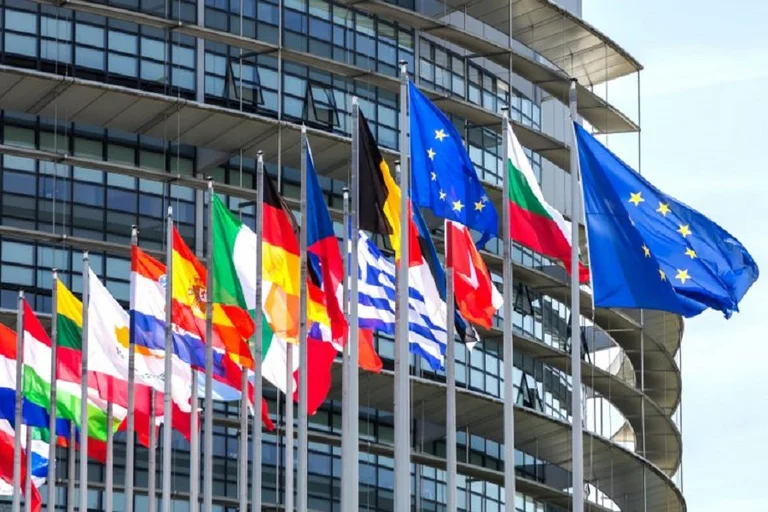
(3 years ago)Reporters for Kosovo's membership in the Council of Europe have become public. This report is divided into six parts: entry, constitutional framework, democracy, rule of law, human rights and key conclusions. In part of democracy, it's primarily about the assembly. “Opposition party representatives confirmed to us that the Assembly Rule offers space [...]
Reporters for Kosovo's membership in the Council of Europe have become public. This report is divided into six parts: entry, constitutional framework, democracy, rule of law, human rights and key conclusions.
In part of democracy, it's primarily about the assembly.
“Opposition party representatives confirmed to us that the Parliament's regulation provides sufficient space for the opposition to hear its voice and that opposition rights are generally respected. Several key commissions are headed by the opposition, one-third of the Parliament's deputies may demand the establishment of an investigative commission, and six members of the Parliament have the right to legislative initiative. ”
Rapporteurs mentioned the Civil Code, which last year failed to be adopted and was no longer prosecuted in the Assembly. According to them, boycotting by Serbian representatives and opposition parties makes it more difficult to work effectively for the Parliament.
“We heard criticism from some Kosovo and international co- talkers of an inefficient legalisation process with the adoption of important laws such as the Civil Code and changes to the law on freedom of trust that is being delayed unreasonablely. The European Commission's report on Kosovo shows the frequent lack of quorum as the reason for such delays. [31] The increased publicisation and boycott of the opposition parties and Kosovo Serb representatives make the Assembly's effective work increasingly difficult. Otherwise, representatives of the Parliament referred to the large number of laws adopted during the current legislature. ”
Representatives of the Parliament reportedly expressed regret over the boycott of the Parliament by representatives of the Serb community and the lack of political pluralism within this community.
“All Serbian representatives belong to a single party, the Serbian List, which is widely considered an instrument of Belgrade politics and not a party interested in protecting the rights of the Serb community in Kosovo. Despite being invited, representatives of the Serbian List did not respond to our invitation to meet. ”
Rapporteurs have estimated that elections in Kosovo are generally considered free, fair and competitive. Elections in the north have also been mentioned in this section, until current mayors are said to lack legitimacy and that a political solution must be found.
The last general elections were won decisively by the previous opposition, and the recent municipal elections were won in most of the seats by opposition party candidates. As mentioned earlier, the recent municipal elections in northern Kosovo were boycotted by the political party representing the Serb community. Therefore, turnout was extremely low (between 1% and 6%) and municipal mayors and municipalities in these municipalities lack legitimacy. A political solution to this problem must be found. ”
The report speaks of Government and its composition, while stressing Minister for Communities and Kthim Nenad Rassic, of whom he says he appears to be motivated to improve the position of non-US communities but has little political support within the Serb community.
“Under the Government exists a deputy Bosnian prime minister on minority issues and human rights and a Serbian minister for communities and returns. There is also a Turkish Regional Development Minister and an Egyptian Minister of Local Power Management. Minister for Communities and Kthim seems motivated to improve the position of non-US communities, but has little political support within the Serb community. His influence and the influence of the deputy prime minister depends on the prime minister's support. The deputy prime minister prepared a project to adopt a draft Strategy for Protection and Promoting the Rights of Communities and Their Members. The budgetary funds for programmes to be implemented under the responsibility of the Minister for Communities and Kthim are limited. ”
Rapporteurs have announced that the Association of Kosovo municipalities has expressed satisfaction with the state of local self-government, including financial decentralisation.
The section of local self-government again speaks of municipalities in the north, where Kosovo authorities reportedly should make efforts to encourage the Serbian electorate to participate in the elections.
The current “Situate in northern municipalities, where current mayors and municipal municipalities do not enjoy sufficient democratic legitimacy due to the April 2023 boycott of the local Serb population's election, is evidently unappatiated. Kosovo authorities must make every effort to encourage the Kosovo Serb electorate to participate in the election process, even if they are not the only ones who have impact on such participation. ”
The issue of the Association of Serb majority municipalities has not been overlooked, which is said to have been the main source of tensions between Kosovo and Serbia, and between Kosovo authorities and the Serb community.
The first “Agreement on principles regulating the normalisation of relations, linked between Kosovo and Serbia in 2013, and mediated by the EU predicts: “there will be an Association/Unitable of Serb majority municipalities in Kosovo” in line with the Local Self-Centity European Charter. - The Kosovo government and law and the Association/Uniship will have full access to areas of economic development, education, health, urban planning and rural rural planning.[34] This agreement, which has been signed by Kosovo (and Serbia) prime minister, has been ratified as an international agreement on 27 June 2013 by the Kosovo Assembly. ”
According to rapporteurs, the origin of these agreements and provisions is found in the report of Martti Ahtisaari, which he says highlighted the position and rights of communities “which is true even today as it was in 2007”.
Kosovo's sub-communities in particular continue to face difficult living conditions. Violence exerted against them in the summer of 1999 and in March 2004 has left a profound legacy. As Kosovo leaders have intensified their efforts to contact Kosovo Serbs and improve standards implementation, protection of minority communities' rights requires their greater commitment. At the same time, Kosovo Serbs must actively engage in Kosovo institutions. They must change their fundamental position of non-co-operation; only with the outcome of their boycott of Kosovo institutions, they will be able to effectively protect their rights and interests.
Based on this assessment, the General Proposal for Kosovo Status Resolution, which was attached to the report by the special envoy, included the framework below under the title of decentralisation:
The broad decentralisation provisions aim to promote good governance, transparency, efficiency and fiscal sustainability in the public service. The proposal focuses particularly on the specific needs and concerns of the Kosovo Serb community, which will have a high degree of control over its affairs. Decentralisation elements include, among other things: extended municipal competencies for Kosovo's majority Serb municipalities (such as the areas of middle health and higher education); broad municipal autonomy on financial issues, including the ability to receive transparent funds from Serbia; provisions for intercommunal partnerships and cross-border co-operation with Serbian institutions; and the establishment of six new or obviously expanded municipalities with a majority of Kosovo Serbs. ”
“A document titled “Association/Unition of Serb-run municipalities in Kosovo ʹ general principles/ the main elements” was prepared in 2015 to implement the 2013 agreement. The then president of Kosovo referred this document to the Constitutional Court for reviewing its constitutionality. The Constitutional Court in December 2015 declared this document unconstitutional in some respects. ”
“Gjykata found that the proposed legal framework “did not fully meet constitutional standards”. However, the Court did not rule out the possibility of such an aprior and general association. The court took note of specific proposals presented in the General Principles, and the Court was disturbed by the vagueness of the term “exercies full overplay” (in English) and its similar, but not identical, translations in Albanian and Serbian. Moreover, the Court noted that the principles concerning the organisational structure of Association/Unitivity raised concerns about respecting the diversity of resident communities within the participating municipalities and reflecting this diversity in personnel and structures of Association/Community as required by the Constitution. The court found that Association/Unibility cannot be given full and exclusive authority to promote the interests of the Kosovo Serb community only in its relations with the central authorities. ”
The report says Kosovo politicians have used the constitutional decision on association to declare that its foundation is unconstitutional and no agreement has been reached on the possible statute of such association.
In addition, it is said that the moment rapporteurs visited Kosovo, the government did not want to establish association.
“This judgment has been used by Kosovo politicians to declare that establishing such an association is unconstitutional in itself and that the new agreement on the possible statute of such an association has not been reached. At the moment of our visit, the current government does not seem to want to establish such an association. ”
However, rapporteurs say such an interpretation of the constitutional decision is abusive.
“73. However, such an interpretation of the Constitutional Court's decision is abusive. While the court was critical of the specific document handed down to it, it expressly said “that the Association/Unition of Serb majority municipalities would be established as envisioned in the First Agreement, ratified by the Assembly of the Republic of Kosovo and proclaimed by the president of the Republic of Kosovo”. ”
As for the association, some conversationors have told reporters that association could become an instrument of Serbian authorities to intervene in Kosovo and that it can be used for separatist freedoms.
“82. Some conversationators expressed concern that such an association could become an instrument of Serbian authorities to intervene in Kosovo and could even be used for separatist purposes in view of the current situation in northern Kosovo and Bosnia and Herzegovina's Republika Srpska entity. It is legitimate to demand that the association's statute be in line with Kosovo legislation. There is also no obligation for Kosovo to accept that competencies are granted such an association that normally belongs to the central authorities. Delegation of additional competencies by central authorities is certainly possible with the agreement of the parties. The extent of municipal competencies is still quite broad, and, according to Kosovo legislation, several Serb municipalities, based on Ahtisaari's proposal, have expanded competencies in the area of medium health care and education, and all Serb majority municipalities have improved. The powers in culture. [38] There seems to be no legal reason why these municipalities should not be able, on voluntary grounds, to co-ordinate the exercise of their competencies and to unite on appropriate occasions the exercise of these competencies. , realizing there are limits to such a union as Serb majority municipalities in the south do not have nearby territory. This approach is in line with Ahtisaari's plan, which envisions that “municipal accountability in the field of their competencies and expanded can be exercised through municipal partnerships”. ”
Next mentioned Kurti's meeting with Vuciqi on 27 February, where they agreed to reyprocal recognition of passports, diplomas, license plates and customs seals and that Serbia will not oppose Kosovo's membership in international organisations.
“83. On February 27th, 2023, Kosovo Prime Minister Albin Kurti and Serbia's president Aleksandar Vuciq agreed on sketches of a new agreement, following EU mediation efforts by High Representative Josep Borrell and Special Representative for Belgrade-Pristina Dialogue Miroslav Lajčac.[4] Both sides agreed, among other things, to mutually recognise their respective national documents and symbols, including passports, diplomas, license plates and customs stamps; and that Serbia would not oppose Kosovo's membership in international organisations, while Article 7 refers to “an appropriate level of self-management for the Serb community in Kosovo”. ”
According to rapporteurs, the establishment of association is Kosovo's international obligation and that it seems necessary to reduce tensions. Rapporteurs have recommended that association should be established in line with Kosovo's judicial rule.
84. The possibility of creating such an association is not a general requirement resulting from the Council of Europe standards. In Kosovo's case, however, it is Kosovo's international obligation and seems necessary to reduce tensions between the majority and the Kosovo Serb community. It is therefore recommended that Kosovo authorities abandon their opposition to the establishment of the Association and enter into confidential negotiations on the possible statute of such an association, which should be fully in line with Kosovo's judicial order. ”