7 hours ago
The Guardian: Vuciq is trying to buy time, use elections to normalise ties with independent Kosovo
Periskopi(3 years ago)
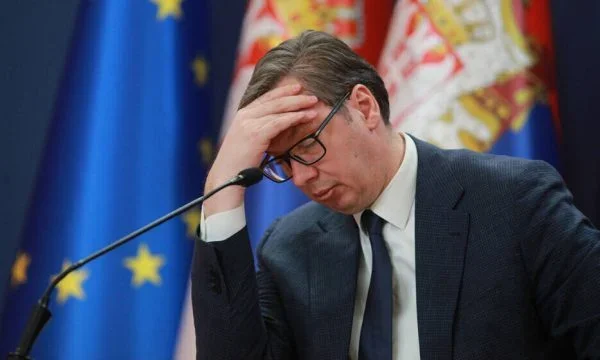
(3 years ago)Serbian President Aleksandar Vucic dissolved parliament and announced early parliamentary and local elections for 17 December, less than two years after his Serbian Progressive Party (SNS) won the last vote. “We are living in difficult times for the whole world, in times of global challenges, wars and conflicts when all must [...]
Serbian President Aleksandar Vucic dissolved parliament and announced early parliamentary and local elections for 17 December, less than two years after his Serbian Progressive Party (SNS) won the last vote.
“We are living in difficult times for the whole world, in times of global challenges, wars and conflicts when we must all be united in preserving the vital national and state interests of the Republic of Serbia”, Vuciq said on Wednesday.
Serbian president is believed to be trying to buy time to consolidate his authority while trying to find the best way to normalise ties with independent, mainly Albanian Kosovo, which Serbia still sees as its southern province, writesGuardian.
Some Serbian opposition parties officially called for voting in September, as the coalition government rejected the demands of mass protests that erupted after a series of shootings in May that killed 18 people, half of them children.
Protest organisers accused the ruling party and the pro-government media of encouraging the culture of violence. Parliamentary elections will coincide with local elections in 65 municipalities, including the capital Belgrade.
European Commission President Ursula von der Leyen said on Tuesday during a visit to Belgrade that Serbia and Kosovo should step up efforts to normalise relations after the recent outbreak of violence if they want to enter the EU.
Belgrade will also have to support Western sanctions against Russia for its invasion of Ukraine, eradicate corruption and organised crime, reform the economy and improve the judiciary, business climate and human rights, the bloc said.
In the last election in April 2022, The conservative SNS ruling since 2012, é and its partners won 120 of the 250 seats in parliament. Vucic, once a staunch nationalist, was elected to a second term as president.
The main opposition parties in Serbia boycotted the 2020 elections and condemned the process as neither free nor fair.
Analysts say the president's move also aims to strengthen his support and reform the SNS, whose popularity has decreased after months of opposition protests following two massive shootings in May.
Polls show that the SNS-led coalition would get about 44 per cent of the vote and would have to seek allies for a majority. The central opposition bloc Against Violence is around 38 per cent and the ultra-nationalist and pro-Russian parties can earn 11 per cent together.
Vuciq resigned from the post of SNS president in May, but he still has significant influence on the party. Opposers accused him and his allies of autism, media oppression, election fraud, violence, corruption and links to organised crime.
Kosovo residents believe Vuciqi's decision to call elections in part explains why he did not agree to a US-EU solution to northern Kosovo governance after five hours of meetings in Brussels last week involving senior EU leaders.
Even though Kosovo agreed to all parts of the plan, which was introduced to the leaders of Serbia and Kosovo at separate meetings last Saturday, Vuciq refused to sign it.
Kosovo has long suspected that Serbia will not sign any agreement on the self-rule of northern municipalities, where Serb populations dominated, because it would be a step on the road to the official recognition of Kosovo by Belgrade.
Von der Leyen told Vuciqi and Kosovo Prime Minister Aljbin Kurti on Tuesday that the EU expects Serbia and Kosovo to respect the agreements they have made this year in Ohrid, Northern Macedonia, to normalise their relations.
Von der Leyen met with Vuciqi in Belgrade a day after she asked Serbia “to meet the de facto recognition of Kosovo”.
After meetings in Brussels, senior EU leaders urged the Kosovo leadership to continue with the self-government plan, known as the Association of Serb-based municipalities, and for Serbia to meet its recognition.