14 minutes ago
Bocsler: Serbia's government playing Kosovo card in elections
Periskopi(3 years ago)
(3 years ago)The ruling Serbian Progressive Party is trying to change the discurs about which elections are based and the game with the Kosovo Charter is based, Free Europe Radio Daniel Bocsler, ordinar professor at the Faculty of Political Sciences in Belgrade, told Radio. The December elections, which have been announced for Serbia's Parliament, are legitimate, even though they are [...]
The ruling Serbian Progressive Party is trying to change the discurs about which elections are based and the game with the Kosovo Charter is based, Free Europe Radio Daniel Bocsler, ordinar professor at the Faculty of Political Sciences in Belgrade, told Radio.
The December elections, which have been announced for Serbia's Parliament, are legitimate, even though they are extraordinary, he said.
However, he estimates Serbia has left democracy.
He believes Serbia, currently, has a competitive authoritarian system, which “means when we have certain elements of authoritarian societies, but there is still electoral competition”.
If you ask me who I can compare Serbia with, I think Serbia is located not only geographically, but also in the democratic aspect between Turkey and Hungary”, Bocsler said.
He does not see a strong tendency in Serbia to strengthen the right, as in some European countries.
“There has always been a very large number of voters in Serbia with a nationalist right orientation, only actors supporting it are changing”, notes Bocsler, who is also associate professor for nationalism and political science studies at Central European University in Vienna (CEU).
He also estimates that there is a phenomenon in the Western Balkans that people do not trust parties, and that personalities are far more important in politics than parties.
“Serbia is no longer democracy”
Radio Free Europe: What does the fact that the December 17th elections will be the fourth extraordinary parliamentary elections since 2012, make citizens' statements meaningless?
Daniel Bocsler: Serbia has a practice that constantly goes to extraordinary elections for no reason, as there is no government crisis in the sense that it has lost support, but if anything is the reason, the ruling party was afraid of the protests we had. But I'm not sure this [extraordinary elections] would make citizens' statements meaningless. I think these choices are still legitimate, even though they're extraordinary.
Radio Free Europe: Such frequent extraordinary elections can they consider a source of democracy or are they indications that Serbia has left democracy?
Daniel Bocsler: If extraordinary elections are constantly called at a time when they fit the government, it opens up the possibility of any strategic manipulation. But neither would I call it undemocratic, nor do I see any major government strategy that can help or harm it, but rather I feel that it has become a futile practice.
Radio Free Europe: How would you describe the political system in Serbia? Which European state would you compare the political situation in Serbia?
Daniel Bocsler: Serbia is no longer a democracy. Serbia has left democracy. Today it is a system that we call competitive authoritarian, that is, when we have certain elements of authoritarian societies, but there is still electoral competition. Any country located somewhere in that gray area between democracy and authoritarian countries is unique because it limits the freedoms of citizens and media in a unique way.
If you ask me who I can compare Serbia with, I think Serbia is located, not only geographically, but also in a democratic way, between Turkey and Hungary. I would mention Turkey as a worse example than Serbia, when you have a higher degree of violence against people who appear in protests, violence against free media, against the opposition, so Turkey is certainly worse.
Let us mention Hungary, since Hungary respects democratic practices a little more, the opposition has a greater rate of opportunity to communicate with citizens through the media. So Serbia is somewhere between Turkey and Hungary.
Radio Free Europe: When you say Serbia is no longer a democratic country, what has led to such an assessment?
Daniel Bocsler: During the 2000s, we had a democracy that was in no way perfect. There were many problems. The institutions did not function well. But then, under the rule of the Serbian Progressive Party, we saw how a party managed to use all these shortcomings in democracy for its party purposes and thus gain extraordinary powers in different spheres of society.
It usurped the media and reduced the possibility for the opposition to appear in the media and has a strong control over the judiciary, which it did not have in the 2000s.
Kosovo or the economy, what do they dominate?
Radio Free Europe: At the start of the election campaign, what do you see as the key issue about which the voter struggle will take place, will national issues, such as Kosovo, or economic, as the standard of living is?
Daniel Bocsler: It's a question of which actors you're looking at. The opposition is trying to show these are systematic elections. We protest violence for almost half a year. The opposition is trying to show that this election has nothing to do with political ideology, it has nothing to do with Kosovo, it has nothing to do with some other divisions in society, but that the goal is to get rid of the long-standing ruling party, which is abusing that power, and to resume the course of democracy, media freedom, plurality.
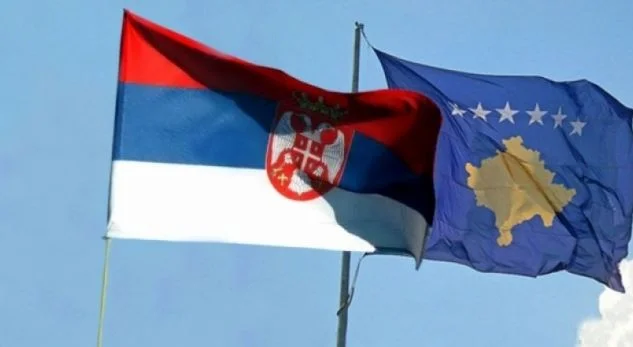
The Serbian Progressive Party is trying to change the disk about which elections are held. It is playing with the Kosovo Charter, not only with the different events of the past few months, but in part because it is an issue the pro-European opposition cannot reconcile.
And, once Kosovo is in first place, conflicts begin within the pro-European coalition. Moreover, the progressers are doing what they did in previous elections, with pensions, direct cash payments ready for different population groups, trying to connect voters with them in a clientistic manner.
“There has always been a strong nationalist trend in Serbia”
Radio Free Europe: Do you think there is the danger of strengthening the right arm in this election, as happened in some European countries?
Daniel Bocsler: I don't think it's a distinct tendency now as in Europe, some countries go one direction, others in another direction, that's what we've always had. Nor do I think that this division to the left and to the right is currently very important in Serbia. In Serbia, during the history of multiparty elections, we always have a very strong nationalist stream.
Sometimes there were radicals, then some other parties. Now we have a new formation, a coalition that is being done on the right side, but I don't see it as anything new. In Serbia, there have always been a very large number of right-wing nationalist voters, only actors who defend it are changing.
Radio Free Europe: So don't you think they can get a bigger number of votes than it was in the previous composition of Parliament?
Daniel Bocsler: Of course they can get a large number of votes, but if you look at what happened earlier, when at some point radicals were the largest party in Serbia, or if you look at what we've had in the last ten years, in the SNS, people with less provocative styles, but who still passed by the Serbian Radical Party. We have always had this in Serbian society and in the Serbian Parliament. It's not new.
Radio Free Europe: Do you think the ruling and opposition parties have just and equal conditions in this election?
Daniel Bocsler: They don't, because on the one hand, the government controls the administrative potential they abuse for elections, which they've done before, people are forced to go out in the rally, forced to put relatives or other people on the list of safe votes, capillaries, forced to go to the polls.
And, on the other hand, the government has tremendous control over the public sphere through public service, does not allow independent television to transmit to national frequencies, controls a large part through the press, which is in a favorable mood and abuses power through media space, has a negative campaign against opposition and journalists.
“in the Western Balkans, people trust personalities more than parties”
Radio Free Europe: Is there a disadvantage in voting for election lists and not for candidates? Do you undermine voters' capacity to vote candidates, extract a person as the owner of the list -- primarily Serbian President Aleksandar Vuciq -- as host of the Serbian Progressive Party election list? He won't be an MP.
Daniel Bocsler: You've connected some things. One is if we can vote for individual candidates, another is whether the president should be on the electoral list, which should not be.
When you vote for lists, you give much more power to parties, and when you vote for individual candidates, those candidates who are elected have more power. In many European countries it is practiced for voters to be able to express their preferences directly for candidates. The disadvantage of this may be that those candidates who have been elected to the assembly will pass to other parties and then you as voters may feel cheated if the party you have elected loses that mandate. But, on the other hand, since we have great party power in Serbia, it probably wouldn't be bad if something changed there.
Second, we have a phenomenon in the Western Balkans when people don't trust parties, but trust personalities and that personalities are far more important in politics than parties. That's kind of weird, but I think it's kind of an injection for the lawyer if Vuciq sits in the Assembly, because it's clear that it's a political option behind him.
“An election unit is legitimate, but there is no good regional representation”
Radio Free Europe: Should we change the system under which Serbia is a single electoral unit?
Daniel Bocsler: The method of electing MPs in Serbia is completely legitimate. Serbia is not the only country to elect a parliament in an election zone. There are other countries in Europe that do this, Holland, Moldova, you have Israel doing the same. The problem with that is that there is no good geographical representation in the Assembly. Belgrade is much more represented than areas on Serbia's outskirts, and if we have more electoral areas or any other system of territorial representation, this would equal representation in the country of various regions in Serbia.
Radio Free Europe: A few years ago, the threshold for entry into the Assembly was reduced to three percent and then caused debate and debate today. Is there any negative side to reducing registration to three percent?
Daniel Bocsler: I think the way Serbia did it is not a big problem. This was very important for the government at the time, as the opposition threatened with boycotts and later made possible the entry into several smaller opposition parties or groups so that the government would not remain alone in the Assembly.
And, today, it is not that important because the opposition will participate in the elections.
It's problematic if you change election rules from elections to elections, according to you. But I don't think it has a big impact on whether the election threshold is three or five percent.
You will be side by side with the opposition. Let's say the pro-European opposition -- even some smaller parties that will lift several votes that big opposition bloc.
If the electoral threshold is low, you have more opposition electoral lists, and on the other hand, you will have some parties that are probably a little closer to the Serbian Progressive Party and will come to the polls, because with the slightest electoral threshold, they are able to enter the Parliament and thus remove votes from the regime party. So, I don't think there's any party effect in favor of the regime or in favour of the opposition.