14 minutes ago
The war between Israel and Hamas is at risk of spreading
Periskopi(3 years ago)
(3 years ago)A new war in October. Over 1,000 people killed in two days, wounded, hostages, and destruction everywhere. The worst anti-Israel sulmim since the NATO war, American Secretary of State Antony Blinken said, referring to the 1973 Arab-Israel War, also known as the October War. E [...]
A new war in October. Over 1,000 people killed in two days, wounded, hostages, and destruction everywhere.
The worst anti-Israel sulmim since the NATO war, American Secretary of State Antony Blinken said, referring to the 1973 Arab-Israel War, also known as the October War.
It all started on October 7, when Palestinian Hamas militants They suddenly attacked Israel from the Gaza Strip.
Thousands of rockets were thrown into habitable neighbourhoods, fighters entered communities, killed residents and took hostages.
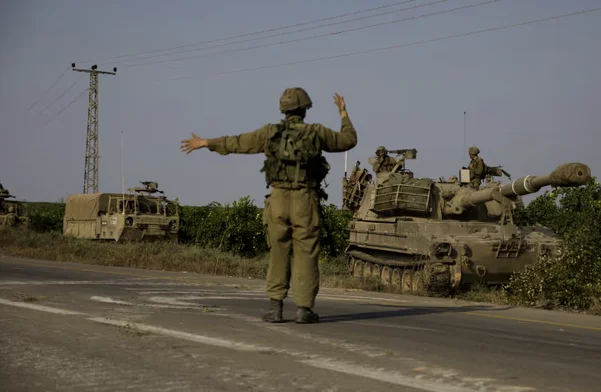
In response, Israel's army launched air strikes at the Gaza Strip, while the country's government officially declared war against Hamas.
Israel will take a firm revenge on Hamas. This war will take time. It will be difficult”, Israeli Prime Minister Benjamin Netanyahu said on Sunday, October 8.
The precise reasons for Hamas' attack are not clear, but the violence between the two sides has been on the rise for months.
Hamas commander Mohammed Deif called on Palestinians and other Arabs to join the group's operation against Israel.
But it is unclear whether Palestinians in the West Coast and East Jerusalem or elsewhere in the region will hear his call.
No one “wants to see any regional escalation”, British Prime Minister Rizi Sunak said.
He said Hamas and his supporters are “fully responsible for the terrible act of terror” in Israel, for “killing civilians and kidnapping innocent people”.
Who could be involved?
A bad scenario would be the involvement of the powerful Lebanese militant group, Hezbollah.
Viewed as a major threat by Israel, the group has been supported by Iran for years and has close ties to Hamas.
On Sunday morning, Hezbollah launched a number of rockets and rockets north of Israel, but without causing casualties.
“If Israel sends ground troops to Gaza or does something else drastic, then Hezbollah can open a front in Lebanon and defend its decision by saying that there is no solution, it should protect Palestine”, he told France24 Hussain Ibish, from the Gulf Institute of Arab States.
We will be able to see Israel in a war of many fronts, with different resistance groups most of them under Iran's control”, he said.
The surprise Palestinian attack inspires fears for a broader <x0 war in the Middle East”, wrote Council on Foreign Relations.
<x0Iran is, of course, the defender of Hezbollah [as well as other militant Palestinian groups]. There is an increasing danger of a two - front conflict that would destroy parts of Israel and much of Lebanon, where Hezbollah is based. There's a risk of escalation”, the New York headquarters institute estimated. / REL