 20 minutes ago
Rama talks to Financial Times, says NATO must restore control in the north
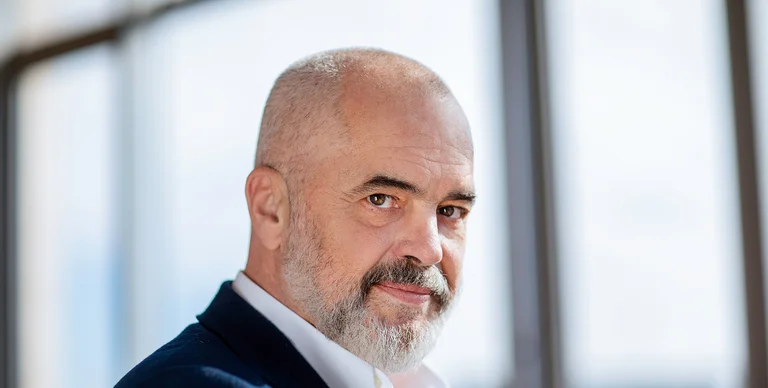
Periskopi(3 years ago)
(3 years ago)NATO must restore control in northern Kosovo, says Albanian Prime Minister Edi Rama, who calls on Western leaders to resolve the endless wisdom among the Balkan countries. “NATO must restore control of northern Kosovo or face continued violence between ethnic Serbs and Albanians in the region, according to the prime minister [...]
NATO must restore control in northern Kosovo, says Albanian Prime Minister Edi Rama, who calls on Western leaders to resolve the endless wisdom among the Balkan countries.
“NATO must restore control of northern Kosovo or face continued violence between ethnic Serbs and Albanians in the region, according to Albania's prime minister”.
Rama, whose country is a member of the military alliance, spoke to the Financial Times after Serbian terrorists took a monastery in northern Kosovo hostage, taking at least four lives, including that of an ethnic Albanian police.
“Kosovo is a hot spot”, Rama said.
Over the years it has become a land of no man where all kinds of crime combine with growing nationalism. The border between crime and politics has faded”, it has been removed for the Financial Times.
NATO said it would deploy as many peacekeeping troops as necessary to stabilise the situation, with Germany and Great Britain already promising hundreds of soldiers at the helm of the existing 4,500-strong force to keep the region under control.
Kosovo and Serbia leaders have also called on NATO to increase its presence and calm tensions. Kosovo has blamed Serbia for sponsoring the attack and for moving army units close to Kosovo's border, in that it showed war purposes. Belgrade denied such plans, but is hosting militia leader Milan Radojicic, who carried out the monastery's siege.
Following that monastery's attack, Kosovo authorities found a large weapons depot, including explosives, heavy artillery and military vehicles. Please use the separating tools found through the front or side of the articles.
Albanians make up the largest ethnic group in Kosovo, which broke away from Serbia in 2008. Belgrade has not recognised it as an independent nation a step taken by the US and most EU countries.
An ethnic Serb minority is concentrated in the northern part of Kosovo and has rejected Pristina's authority by organising numerous protests and blockades over the past year.
The EU, the US and other Western powers have been trying to mediate talks between Serbia and Kosovo, but despite being close to an agreement in March, proposals were dissolved as a result of controversial municipal elections in northern Kosovo.
After that, Albanian Prime Minister Edi Rama opted for a “high-level reference” that includes leaders of France and Germany and the re-agency of the US.
This is the best way to get out of this infinite madness”, Rama said.
The Albanian leader said he had already attracted attention to worsening the security situation in Kosovo during a NATO summit in July.
The goal, he said, was the “full recognition of Kosovo in the EU and the United Nations.
It's not easy to change the course of history, it requires leadership. But if France and Germany can do it [after World War II], if Saudi Arabia and Israel can do it, then we know it can happen.” Rama for a long time refrained from involvement in the Kosovo conflict, instead built warm ties with Belgrade as she sought to make progress on the path to EU membership for the Western Balkans. But given the growing security threat not only for Albanians in Kosovo, but also for the region as a whole of”, Rama said.
According to him, instability in the Western Balkans serves Moscow's interests.
“Russia has long supported Serbia and has not recognised Kosovo's independence. Following Russia's full-scale invasion of Ukraine last year, Belgrade resisted Western calls to impose sanctions on Russia. The Kremlin would also like to see a small Donba in Kosovo and light a separatism fire in the middle of Europe”, Rama said.












