8 hours ago
Northern Serbs ʹpismanli's call for extension of the reregistment deadline in RKS: We blocked ourselves
Periskopi(3 years ago)
(3 years ago)Nenad from Northern Mitrovica drives a car with KM plates (Kosovo's Mitrovica), released by Serbian authorities, which had renovated the census about six months ago. But he cannot use it to move south of the Ibër, nor to go to Serbia. In a proposal for [...]
In a proposal for Radio Free Europe, he has said he has limited his movement by extending the census to the Serbian system and has added that he regrets he has not long received RKS license plates.
I was expecting to see how many people would be registered (at RKS license plates), and then I would put”, Nenad says.
KM plates are issued by Serbian authorities, and after agreement with Kosovo in November last year, the census is renovated under the government's decree of Serbia without issuing registration sheets
Kosovo does not recognise such reregistering, which in practice would imply that those who registered their car with KM license plates in the Serbian system after November last year cannot move on Kosovo's territory.
The issue of removal of plates, which Serbia issues for Kosovo cities, has caused a series of crises in the past two years, as well as the removal of Serbs from Kosovo institutions in the north in November 2022.
The Kosovo Government's deadline for reregistering Serbian license plates in Kosovo has expired in April this year, but there are still a large number of KM license plates on the ground.
What about KM plates?
Nenadi says his decision to renew the census on KM license plates was “wrong” and adds that now, if such an opportunity were created, he would get Kosovo license plates.
That reregistering period (in Kosovo's system) was short, I failed. I thought about it and I didn't make it. But now I want to do it”, he says.
On 17 October, Kosovo Police Deputy Director for the Northern Region Veton Elshani in a statement to REL, has said hundreds of citizens have sought to extend the deadline for reregistering Serbia's license plates.
For this reason, such a request has been forwarded to the Kosovo Ministry of Internal Affairs and Elshani has said they expect to receive a positive response soon.
However, the Kosovo Ministry of Internal Affairs has not answered the REL question whether such an opportunity is being considered, as well as how many cars have been reregistered on RKS license plates so far.
According to some estimates, by October of last year in northern Kosovo municipalities there have been about 10,000 cars with KM license plates.
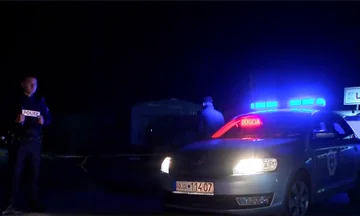
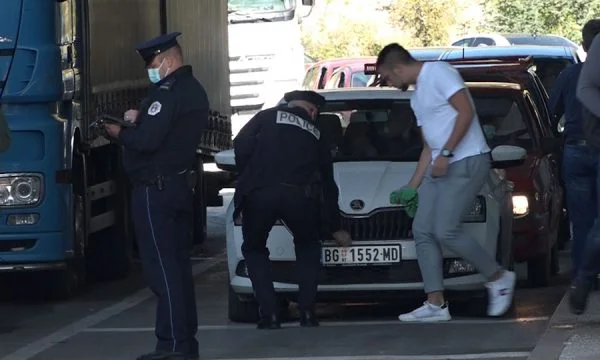
That kind of car is still running Miodragu from North Mitrovica. He says Kosovo police do not cause problems when they circulate to four municipalities in the north (North Mitrovica, Zvecan, Leposaviq and Zubin Potok).
That citizens in the north with KM license plates are not pronounced fines, even Veton Elshani of Kosovo Police confirms. It explains that the issue of the license plates has become <x0political” and recalls that the reregistering process at the RKS has been suspended and that for this reason KM license plates, including those with renovated registration after November last year, still “tolerated”.
Why did Serbs refuse to receive RKS plates?
One of the reasons that members of the Serb community in northern Kosovo did not respond to reregistering is also because of “the vehicle's license plates with RKS”
This confirms for REL and Miodragu from North Mitrovica.
“The locations stored in the RKS have been burned. I didn't want this to happen to me and why I didn't reregister. Nothing has changed, but I have no choice and now I will be re-registered”, he says.
Shortly before the deadline for reregistering on April 1st, two cars with RKS plates were burned in the Leposaviqi municipality in northern Kosovo. A Belgrade license vehicle was also burned at the time.
Prior to that, three cars with Serb-owned RKS license plates were burned in northern Mitrovica and Zvecan on 31 March and two cars in Zubin Potok on 30 March.
Similarly, a campaign against reregistering RKS plates has been held in northern Kosovo with the slogan “No surrender, KM remains”. Representatives of the Serbian List, the largest Serb party in Kosovo, which has Belgrade's support, have used this slogan in their statements.
Serbian President Aleksandar Vuciq himself did the same.
My answer is no surrender, I repeat, not surrender. Want another one? There is no surrender, KM remains”, he told reporters at a conference on October 27th last year.
Is Reregistering the Final Solution?
Igor Markoviq from the nongovernmental organisation active by Northern Mitrovica is not surprised by information that hundreds of Serbs have asked Kosovo police to postpone the deadline for reregistering at the RKS license plates.
He expresses confidence that this process will be developed “pa was observed”, and that there will be no new agreements on this issue within the dialogue between Kosovo and Serbia.
Kosovo's Ministry of Internal Affairs will think this process is inevitable and should be carried out in line with the administrative guidelines previously provided regarding reregistering”, he believes.
REL is addressing the EU on the license issue, whether the parties will renegotiate the issue or not, but has not received answers. The EU has previously asked Kosovo and Serbia to respect the agreement from November last year until the arrival of the final “resolution”.
Igor Markovic points out that the exit of Serbs from Kosovo institutions because of the license plates led to a series of events that contributed to increasing tensions in northern Kosovo and that the international community is currently focused on “the deployment of the situation” and not on the license plate.
Crisis in northern Kosovo due to KM license plates
In September 2021, Kosovo Prime Minister Albin Kurti raised the issue of removing KM plates in northern Kosovo.
Just then, so-called test plates were issued during entry into Kosovo's territory for all Serbian-registered vehicles. It was a “reciprocal size” because issuing test plates has been past practice in Serbia for RKS billboards.
To challenge that decision, Serbs in northern Kosovo set up barricades, but with the help of the European Union an agreement was reached on placing white stickers on state symbols both for Serbia's plates and for those of Kosovo. This is still in effect, including KM license plates.
Later, at the end of June 2022, the Kosovo government made a decision to reregister all cars with license plates issued by Serbia with acronations for Kosovo cities, such as KM (Kosovo's Mitrovica), PR (Pristina), GL (Gylan), UR (Ferizaj) and so on.
With this decision, it was also envisioned for persons with Serbian IDs to issue the entry/dale document, which was also a reciprocal measure to Serbia.
On the eve of starting to implement these decisions on July 31st, Serbs again erected barricades, which, however, were removed a day later because Kosovo agreed to postpone their implementation for 30 days.
Meanwhile, at the end of August, Pristina and Belgrade reached an agreement on documents within the dialogue on normalisation of relations, which develops with EU mediation.
Serbia has agreed to drop additional entry/result documents for ID holders from Kosovo, while Kosovo has agreed not to use them for ID holders from Serbia.
Because of this, in early November, Serbs left Kosovo institutions in the north, and after Police Director for the Northern Region Nenad Djurovic, who refused to implement the Kosovo Government's decision to reregister at the license plate RKS has been suspended. Djuric was then given “The Order of the First Scale Protection and Security” by Serbia's President Aleksandar Vuciq.
With efforts by the European Union and the US, on November 23rd 2022, Pristina and Belgrade again reached an agreement within the dialogue, which envisions Serbia stopping issuing new license plates with the appointments of Kosovo's cities, while Kosovo's reregistering process.
However, the two sides later interpreted the agreement differently.
On December 6th 2022, Serbia's government adopted a decree under which KM license vehicles are allowed to move without registration labels, or they have to show officials only a security police and a technical check certificate.
Official Pristina interpreted this step of Belgrade as a renovation of the census with the reasoning that it conflicts with the Brussels agreement. Thus, Kosovo authorities are currently using “tolerating” the movement of vehicles with KM license plates through municipalities in the north, which are registered in the Serbian system after reaching the agreement in November 2022.
However, these plates cannot pass the border crossing and it remains to be seen if another deadline for reregistering them on the RKS license plates will be allowed.
In the south of Ibri, Serbia's plates were removed ten years ago under the agreement within the dialogue on normalisation of relations.