 13 minutes ago
Knaus: Attack in the north, Serbia's bid to change borders by force
Periskopi(3 years ago)
(3 years ago)European Initiative for Stability Chairman Gerald Knaus sees the September 24th attack on the northern part of Kosovo by an armed Serb group as Serbia's attempt to change borders by force and as part of a preparation, conveyed with promotional rhetoric and arming, for an armed confrontation. He says [...]
He says in an interview for Voice of America that developments in the Western Balkans should be alarm bells for the European Union to reconsider policy towards the region, including the process of dialogue between Kosovo and Serbia, which, according to him, has become a problem and not a solution. The colleague Garentina Kraja spoke to Knaus.
How do you see developments related to the attack of the Serb armed group in northern Kosovo on 24 September and the events that followed it?
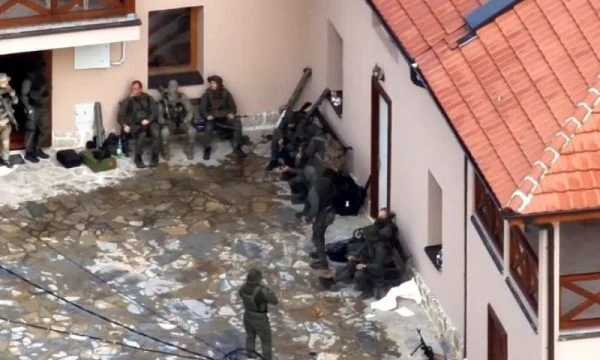
Gerald Knaus: These were certainly the most serious incidents we have seen after a long time and we should be very concerned about what comes after them. My colleagues and I wrote a report at the end of July and warned, following the 1969 scenario of Belfast's paramilitary for a real threat. We think threats should be seriously addressed, what Serbian ministers in Belgrade say would be forced to protect Serbs from positions, terror, as the newspapers (Serbian) have written now for more than a year, for corruption and terror in Kosovo that does not exist, and that makes this a disturbing situation, when leaders begin to invent crimes like Putin did in 2014 and 2022, and how it was done in the early 1990s in the Balkans. We saw this site as a cause for military intervention, saw the Serb ministers' warnings, and took them seriously. When a large group of paramilitaries entered the northern part of Kosovo, as if warned, with heavy weapons, to promote serious violence. I don't think we should be surprised and we should be surprised if that happens again unless international politics changes access.
What was the role of official Belgrade, according to you?
Gerald Knaus: What we know is that the main, most influential, elected politician representing the interests of Serbia's president in Kosovo, Radoicic led this attack. He looked at the camera and said through his lawyer he was involved. Charges have been brought against him, though he was immediately released, in Serbia. So we know it's not about a group of desperate citizens, but it's about leadership of the main party, which is essentially the branch of President Vucic's party in Kosovo. We also know that their equipment is not equipment you can buy at the store. These are military equipment. Then we have statements made by the Kosovo Police on evidence they found were held during long periods of time at military exercise centres in Serbia. That statement cannot confirm, but the view that comes out is extremely clear: we have a government in Serbia that says we have to intervene, President Vucic spoke for 14 days of the international community's deadline to disarm Kosovo Police and Kosovo Special Forces in the north. So warnings, then increased the defence budget over the years in Serbia and the rhetoric of people like Radoicic, which has a history of threats not only to Albanians, but also the opposition among Kosovo Serbs. All these things together make it clear that this was a serious intervention of a neighboring state that tries to change borders by force.
What was the ultimate purpose of this operation, this attack, in your opinion?
Gerald Knaus: We know, and Serbian leaders are telling us, that they do not accept Kosovo's independence, that they are unwilling to support or sign an agreement that de facto recognises its independence, which in fact is the agreement that Germany, then France and later the European Union, brought to the table, in Ohrid, which Kosovars said would accept and sign. Serbia said it would not sign and Serbian leaders said they would not accept the de facto recognition. Add to that the claims of population, terror, ethnic cleansing, that are not true. The reality is very different. So ask the question, why do they slander making peace? And of course, this is the old scenario we've seen in Croatia in 1991, in Bosnia in 1992, and we've seen in Ukraine many times in the last decade. What was the purpose? To change borders with the use of force, to exclude Kosovo Police from the north, perhaps to push KFOR away from there, which would enable the carrying of weapons, as had happened for months, through smuggling routes that Kosovo police have tried to close, with more guns in the north, the collapse of institutions of co-operation last winter, with the lies and nationalist hatred that are feeding the media, which are close to President Vucic's regime, all preparations are being made for an armed confrontation, which Serbia hopes to win.
Do you think Russia was behind this crisis?
Gerald Knaus: I don't think we need a connection with Russia to explain what happened. What we know is that Russia has supported Serbian leaders, rhetoric and its actions in Kosovo.
The European Union should see the situation as an alarm leg, exploiting next year for its approach, understanding what has not worked, that the dialogue it has mediated has completely failed. Dialogue has become a problem, not a solution, and you cannot expect something positive to come out of that process. Instead, the European Union must engage directly and separately with Kosovo and Serbia.
You've called European policy in the Balkans, <x0 disaster in the creation of”. EU member states leaders met in Tirana under the Berlin Process with Balkan leaders. How do you see the progress of this process?
Gerald Knaus: I'm pretty skeptical right now. There is much effort, and some people are realizing how serious this situation is. To analyze in the historical context: we had a decade of ethnic conflict, one after another in the Western Balkans in the 1990s, then more than two decades of peace that was related to the European perspective, with this possibility that with the integration of these states into the largest common market, the largest democratic union of states, war would become unimaginable. In recent years this vision has faded. No state is progressing, neither Montenegro nor Northern Macedonia, Bosnia and Kosovo are even close to starting accession negotiations, and Serbia is stuck. Therefore, the European Union must very seriously reevaluate its position and make it clear that there is a reliable goal, that within five years, each state in the Western Balkans, that meets the conditions, enjoy at least four freedoms for the circulation of people, goods, capital and services, and that the full approach to the European Union market would create an economic miracle that we have seen in Poland, Slovakia, in the state of Baltic, Romania, which is possible even in the Western Balkans.
This promise must be made as soon as possible, it must be a concrete promise. It's a big step forward, but at a time when we have to keep peace, you can't make small, technical changes that no one believes can change their lives. It's not enough. / VOA












