18 minutes ago
First additional British soldiers arrive in Kosovo under KFOR
Periskopi(3 years ago)
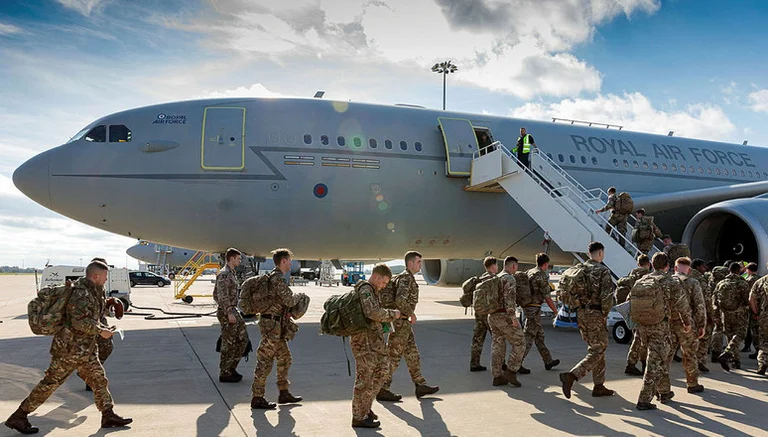
(3 years ago)NATO has announced that already the first 200-strong contingent of Great Britain has arrived in Kosovo to reinforce KFOR as a peacekeeping mission within NATO. The first container of 200 British soldiers in Kosovo has arrived in Kosovo. Out of the total 400 just to come for [...]
The first container of 200 British soldiers in Kosovo has arrived in Kosovo -- from 400 totals -- to thus reinforce NATO's peacekeeping mission in Kosovo, KFOR, this following the terrorist attack on Kosovo Police in Zvecan Bay.
The news has been made known by NATO, but by the British government itself.
In the NATO-made announcement, these arrangements are said to be an important step to ensure that KFOR has the forces it needs to meet its UN mandate to maintain a safe and secure environment and freedom of movement for all people in Kosovo.
This dislocation is based on a request by NATO Allied Supreme Commander for Europe and was approved by Allieds in the North Atlantic Council.
While, the British executive reports that the peacekeeping force will include not only troops, “but also hundreds of vehicles arriving with naval goods”.
“Under NATO command, forces will be available to conduct operations in line with KFOR's mandate to maintain a safe and secure environment and ensure freedom of movement for all people in Kosovo”, it says.
The British Ministry of Internal Affairs underlined that they are working closely with international partners to promote Kosovo and Serbia in de-progressing tensions and turning into dialogue.
On the other hand, they announced that during the talks that Great Britain's Prime Minister, Rishi Sunak, had with Kosovo President Vjosa Osmani, and Serbian President Aleksandar Vucic, has encouraged “to” them for de-terration.
“Minister for Europe Leo Docherty will today meet with the foreign ministers of Serbia and Kosovo in the Albanian capital [Tiran] during a meeting of the Berlin Process”, it says.
British soldiers who are being deployed in Kosovo are from the First Battalion of the Royal Regiment of Princess Wales.
Following the terrorist attack on Zvecan Bay, Western countries have given attention to this area of Europe, thus trying to prevent another conflict on the old continent.
Besides Britain, Germany will also send about 150 soldiers to Kosovo under the NATO mission KFOR in April next year.
Likewise, Romania's Defence Ministry is preparing to send additional military to Kosovo under the NATO Mission KFOR.
In a communiqué released to the media by the Ministry of Defence it becomes known that Romania, in the near future, will send a small unit to the company level within KFOR.
“Romania, as an ally NATO and the EU member country has taken on the commitment to contributing force and military equipment to the effort to preserve a stable security environment in the Western Balkan region of”, said among other things in this media communiqué.
What happened?
An armed group on Sunday 24 September attacked the Kosovo Police in Bay in Zvecan, leaving Sergeant Africa Bulnjak dead.
Kosovo authorities directly accused Serbia of standing behind this terrorist attack, while chief criminal Milan Radojicic ) -- a trusted man of Serbian President Aleksandar Vucic -- has claimed responsibility for the attack.
Radojicic was arrested Tuesday by Serbian authorities to be released the following day.
Western countries, including the United States and the European Union, have condemned this attack until they have demanded that those responsible be brought to justice.
On the other hand, Serbia has not distanced from this attack, rather it has proclaimed national days of mourning, to honour thereby the murdered terrorists.
In addition, official Belgrade, following the terrorist attack, deployed a large number of military troops along the border with Kosovo.
Serbia's move prompted the international community's response, which demanded that immediately reduce the number of military troops.
Following these clear international calls, Belgrade announced it has begun reducing military troops along the border with Kosovo.