16 minutes ago
War threats against Kosovo, US colonel shows how West to behave with Serbia
Periskopi(3 years ago)
(3 years ago)Jeffrey H. Fischer, a retired U.S. Air Force colonel with three decades of experience in military aviation in Iraq, Afghanistan and the Balkans, in the text for The Defence Post.com, says sanctions and strong diplomatic statements should no longer be the main actions when responding to Serbia's escalation rhetoric. “Vucciq often uses Kosovo [...]
He says that “, even though it currently appears Serbia has begun to de-trade tensions in the Balkans, in recent weeks some of the most intense in the region in more than a decade”.
Serbia transferred heavy military equipment to its southern border with Kosovo, and President Aleksandar Vuciq visited troops located at the same limit”, Fischer notes.
He further writes that his <x0 actions forced hundreds (if not more) experts to seek an answer to the question: what can be done to decelerate the situation and prevent the new Balkan bloodshed?
Unfortunately, he says, most of the answers are made through a defensive prism. “If those experts think to view the situation through an opportunist prism, they may find that President Vuciq has given the West a wonderful gift that should not be ignored”, writes Fischer
Facing Serbia
Fischer says the first <x0th thing most people learn about Serbia and Vucinj is that there is the greatest possibility of de-progress when faced with force, because he almost always enjoys weakness”.
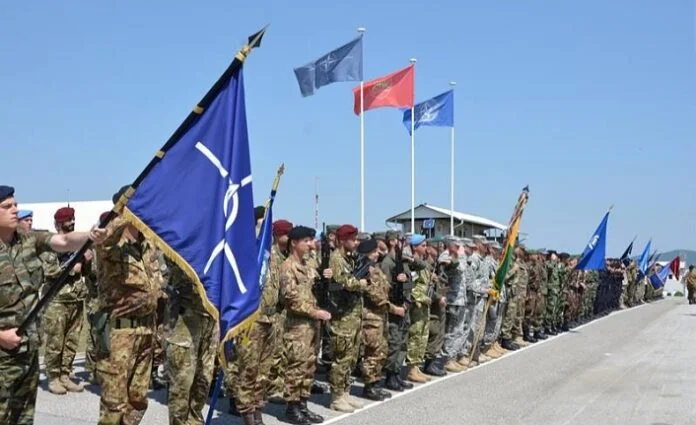
“While the situation escalated, NATO and the West argued at the point of adding NATO forces to Kosovo, rapid improvement of their heavy weapons, accelerating the progress of Kosovo security forces towards a full army, or lobby of other nations to recognise Kosovo”.
He says “Belgrade (with Moscow authorization) was probably already waiting for these moves and happy to eat popcorn and observe Brussels”.
“If NATO is seeking options that would attract Vuciqi's attention, perhaps they would like to make a stronger diplomatic effort in Brussels, reach a consensus and communicate Belgrade as follows:
1. No more administrative lines
NATO countries will no longer use the term “ABL” (Administrative Border Administrator ) From now on, ABL will be named “limit”.
Since UN Resolution 1999, partition between Serbia and Kosovo has been called ABL, in part to secure Belgrade's agreement on ending the war. In all NATO correspondence, as well as any commitment with Serbia, this term is mandatory.
ABL was created more than two decades ago as a negotiation tool to ensure peace. The term served its purpose, but it is no longer relevant.
2. No more so-called Kosovo
NATO countries will not answer, nor will they address journalists, governments or subjects referring to Kosovo as a “so-called region”.
Like the ABL, this is how they named Kosovo Serbia, Russia and others not only in diplomatic engagements but also in the press and public statements.
This has continued for two decades since the 1999 war in Kosovo. This phrase is a second-hand diplomatic trick that has long been consumed.
3. Kosovo institutions no longer have the term
NATO countries will no longer use the term “institutions in Kosovo” (IK) when referring to Kosovo government structures.
It has long been a self-imponsed term used in NATO to calm Serbia.
4. Against the Threat
In the end, NATO clearly says that if Serbia wants to wield swords like an island on the NATO Sea, let it wield.
Reaching the Understanding
Understandably, for professional diplomats reported with tensions between Serbia and Kosovo, reaching a consensus on these four points is “impossible”.
Four NATO members Greece, Slovakia, Spain and Romania have yet to recognise Kosovo. The reasons are domestic problems and no fear or efficiency towards Serbia and its allies.
It will take a considerable amount of diplomatic conviction to win support from countries that have not yet recognised Kosovo and the will of their officials to spend a dose of political capital.
Fortunately, Vuciki's recent actions may have offered new arguments that would help convince those countries.
Option
The establishment of high combat readiness by Vuciq recently prompted clear discussions in NATO headquarters halls and in capitals. Although none of NATO members (including four who did not recognise Kosovo) want an additional conflict in Eurasia, especially given the war in Ukraine, Vuciq threatened just that.
That fact should serve as the basis of debate in efforts to move the four states that have not recognised Kosovo. In addition to many other diplomatic policies, credit and staff, there is a possibility that these four countries reach a consensus in the declaration, which is a much easier step than a national warning for full recognition of Kosovo.
While the probability of victory may be small, Vuciqi's recent conduct has provided an opportunity. A diplomatic discurs that would respond strongly to Serbia, while advancing to Kosovo, is worth trying, especially with existing regional security challenges in Ukraine.
However, the West will not calm its nervous and childish behaviour. The further escalation of Serbia will only lead to the acceleration of Kosovo's NATO membership together with Finland and Sweden.
Even if diplomatic efforts fail, Belgrade will be sent a message, which Vuciq can understand.
For most NATO countries, sanctions and strong diplomatic statements will no longer be the main way of action in response to Serbia's escalatorics.
Efforts to advance Kosovo's legitimacy will be the answer, and this is something that will be “godas” The brother personally, professionally and politically”, concludes Fischer. /Telegraph