6 minutes ago
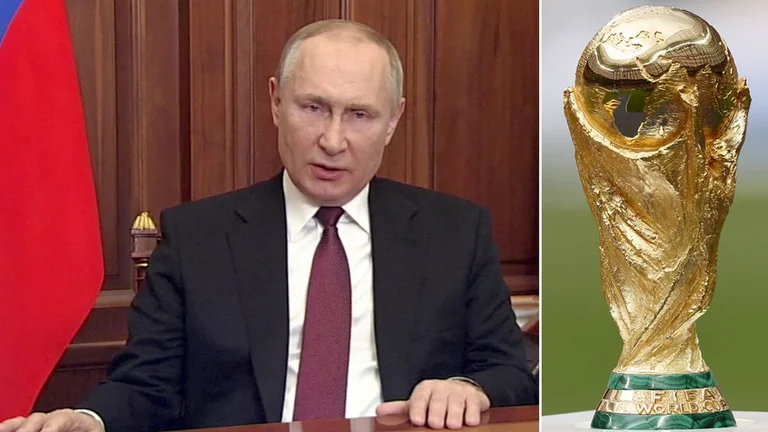
From the Russian invasion of Ukraine to Qatar World- Ten main developments in 2022
Periskopi(3 years ago)
(3 years ago)The year 2022 began with signs of optimism after two difficult years of coronary pandemic. With most of the world's countries facilitating the measures, public and sports events took top attention as tourism marked growth, with humanity deciding to leave the hard time behind. This year, however, did not pass without [...]
The year 2022 began with the deployment of the Russian Army near the Ukrainian border. Western intelligence estimates that the Russian invasion of Ukraine “will begin from moment to moment” echoed on four sides of the world, making this conflict the main development in the global arena.
However, the year, which was marked by Russia's bloody war in Ukraine, ended with a major sporting event- The World Cup- that was organised by Qatar. For many, this race served as an event that caused mankind to lose their attention for at least a month.
- Putin invades Ukraine
On February 24, Vladimir Putin invaded Ukraine, plunging the world into an unprecedented crisis since the end of the Cold War. Against NATO member states that declare their support for Ukraine, Russian President Vladimir Putin is threatening to use a nuclear weapon, saying he is ready to use “all instruments” in his arsenal.
The war has caused the biggest influx of refugees to Europe since the end of World War II and is costing thousands of lives to soldiers and civilians.
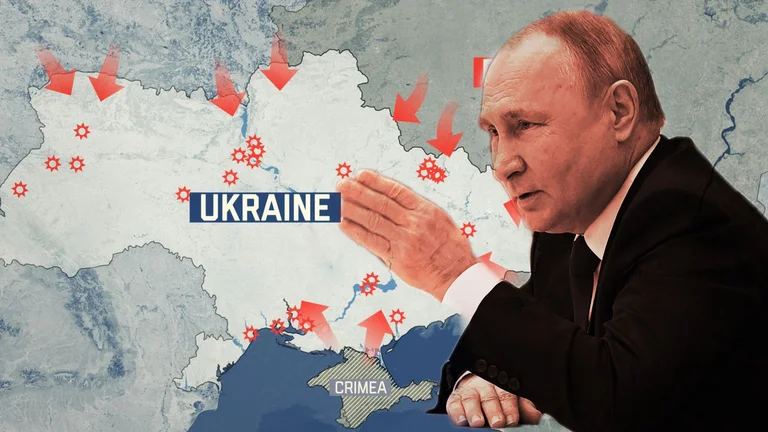
Putin who says he wants to “to replace” Ukraine is very diplomaticly isolated. The West has imposed economic sanctions on Russia, which are becoming increasingly serious over time, while at the same time sending weapons to Ukraine, which has also received candidate status for membership in the European Union.
The war also caused a global food crisis due to Russia's Black Sea naval blockade. An agreement, reached in July, allowed Ukraine to gradually resume exporting its wheat.
In the south, Russian forces seized most of Ukraine's coastline in the Black Sea, including Marioupolis, which was destroyed after the quarterly siege.
In April, Russian forces were charged with massacres against civilians in the Buka region, near Kiev.
In September, Putin called some 300,000 militias and announced the annexation of four regions occupied by Russian forces following the maintenance of “referencing” as the Russian army undergoes losses on the ground.
After abandoning the Kharkivi region (first major invasion), Moscow ordered the withdrawal of its forces from Kherson (South) in early November.
In December, Ukrainian President Volodyyr Zelensky visited Washington, marking his first trip abroad since the beginning of the war.
Russia has now launched hundreds of attacks on Ukraine's energy networks, sinking millions of Ukrainians into the dark as winter approaches.
As for human losses, Ukraine has confirmed that it has so far killed over 100,000 Russian soldiers.
- Inflation as a result of the energy crisis
The price hike, which began in 2021 due to supply chains cut, combined with strong demand for goods and essential services, as economies resumed recovery after Covid, accelerated in 2022, reaching unprecedented levels since 1970 and 1980.
Inflation reached 10.1 % in November at the Eurozone. It is expected to reach 8% in the fourth quarter of the G20 countries, affecting global growth by increasing business production costs.

Inflation feeds on war in Ukraine, which is sinking Europe into a deep energy crisis. Russia, under the influence of Western sanctions, is doubling its retaliation until it strikes the EU's sensitive point: its dependence on Russian gas. Russian gas exports, mainly via Germany and highly dependent Italy, are on the decline, writes abcnews.al.
Global economy has been experiencing the biggest energy crisis since the 1970s,” highlights O ECD. War also causes increase in grain prices and resulting forts.
Due to continued health restrictions associated with Coved-19, electronic chips shortages, mainly produced in Taiwan, are also slowing down many sectors. To ease inflation, the U.S. central bank (Fed) has aggressively raised interest rates since March, making borrowing increasingly expensive, with the European Central Bank following suit.
- U.S.
In June, the Supreme Court of the United States granted every state freedom to prevent abortion in its territory by overturning the historic ruling of 1973. After this overthrow, some 20 states completely banned or restricted the right to voluntary pregnancy suspension, and the issue dominated the mid-term election campaign.
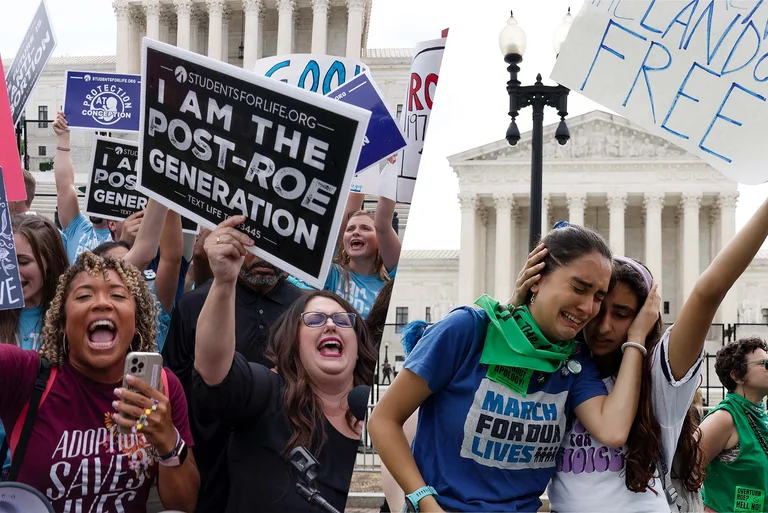
In November, the medium-term elections did not result in a <x0val <x1 conservative red>, as former President Donald Trump's supporters had hoped. The Democrats maintained control of the Senate and Republicans secured a small majority in the House of Representatives.
Donald Trump, however, announced his candidacy for the 2024 presidential elections.
The former president's candidacy could be threatened by possible investigations, after a special prosecutor was appointed in November for two of the numerous investigations targeting him.
- Political instability in Britain
Following a series of scandals and a series of resignations by members of his government, conservative Prime Minister Boris Johnson resigned in July. Liz Truss was officially appointed as his successor at Downing Street by Queen Elizabeth II, two days before the Queen's death on October 8th after 70 years on the throne. On September 10, Charles III was declared king.
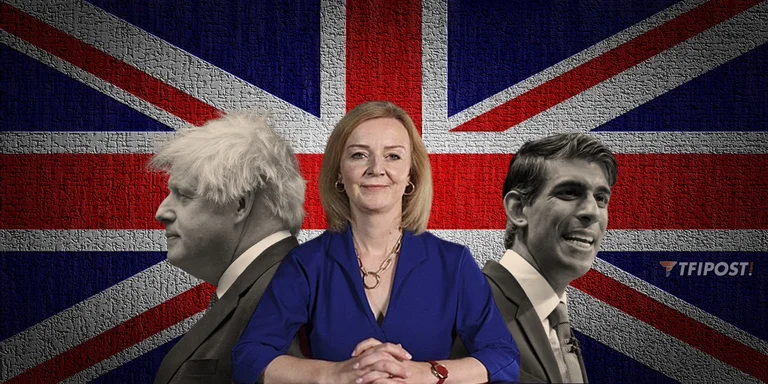
The short-lived prime minister in the country's modern history, Liz Trus, lasted only 44 days in office before he resigned, already causing a political and economic crisis with her economic programme. Rishi Sunak came to power in late October, in a period of unprecedented uncertainty about Britain. He is the fifth prime minister in Britain after the 2016 Brex referendum. Major challenges await the former banker and finance minister.
- Extreme Weather Conditions
In 2022, global warming-related disasters have multiplied. Summer is the hottest ever recorded in Europe, record temperatures and heat waves caused droughts and forest fires (at least 6,600,000 hectares of forests turned into ash from January to mid-August in the European Union). Alpine glaciers marked record loss of ice mass.
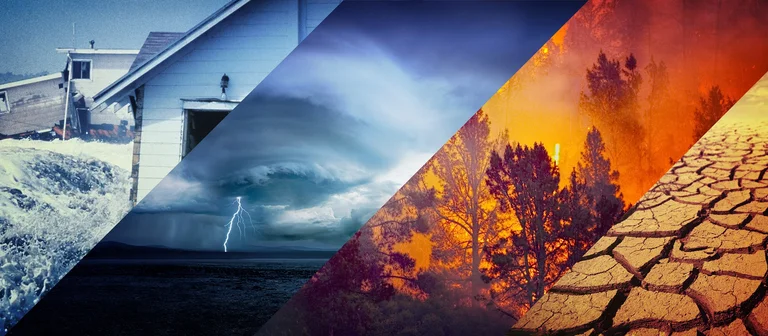
At least 15,000 deaths are directly related to the heat at Geria Epir, according to the World Health Organization. China also broke heat records in August, and drought threatened Africa with hunger. Fires and deforestation break new records in the Brazilian Amazon.
In Pakistan, numerous floods claimed the lives of 1,700 people and moved another eight million, leaving one third of the country underwater. If this year's forecasts are confirmed, 2015-22 will be the warmest recorded, warns the World Meteorological Organisation.
After difficult negotiations, the UN climate conference (COP27) ended on November 20th in Sharm el-Sheikh (Egypt) with a compromise to help poor countries affected by climate change.
In mid-December, more than 190 countries approved a historic agreement in Montreal in a bid to prevent the destruction of its biodiversity and natural resources. The agreement envisions a guide with the main goal of protecting 30% of the planet by 2030.
- Iran's Amen murder, the oppression of mass protests
On September 16th, Mahsha Amin, a 22-year-old Iranian of Kurdish origin, died in hospital, three days after being arrested by moral police who accused him of violating the strict code of wearing the Islamic Republic for women.
Her death sparked a wave of protests throughout Iran that had not been seen since the Islamic Revolution in 1979.
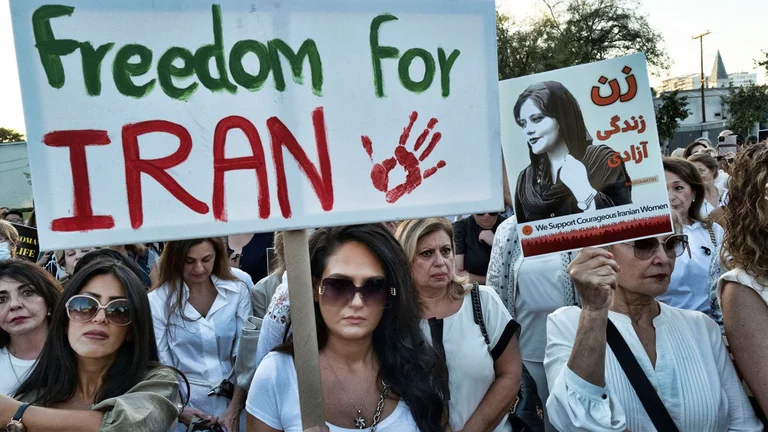
The young women were at the forefront of the protest movement, with some removing and burning their headscarves in opposition to the authorities.
Demonstrations on women's freedom are gradually becoming a broader move against the Islamic regime, flooding roads, universities, and even schools despite oppression. Authorities say at least 300 deaths were recorded (as of September 12th), with a Norway-based NGO listing at least 469.
In early December, authorities made a gesture for protesters, announcing the dissolution of moral police.
- China: Xi wins third term and challenges policy “zero-Covid”
Chinese President Xi Jinping was re-elected to head the Chinese Communist Party (CCP) at the 20th CCP Congress in October, surrounded by loyal allies to become the most powerful leader in modern China.
During its ten years at the top of the country, Xi Jinping has demonstrated a desire for control, interfering with almost all of the country's mechanisms and drawing international criticism for human rights data in the country. China also maintains a worsening rivalry with the United States.

Tensions in Taiwan's Strait reached their highest level in years after US House of Representatives Speaker Nancy Pelosi visited the self-deserved island in early August.
China retaliated against this visit by conducting land and sea exercises of an unprecedented size since the mid-1990s. Later US President Joe Biden declared that American troops would protect Taiwan if the island was conquered by China.
The country's “zero-Covid” strategy, which leads to the closure of entire regions or cities when explosions surfaced, prompted in late November the largest protests in decades. Authorities responded with a crackdown, and then, in December, a general relief of health regulations was approved to calm popular anger and support the shocked economy. At the end of December, China finally announced that on January 8th it would end the mandatory quarantine when someone arrives in the country, the last measure of strict health policy “zero Covid”.
Following this relief, the cases with Ovidius are experiencing an explosion in the country, resulting in severe pressure on hospitals, while drugs affect the lack of anti-fever medicine and flu.
- Victorys and Loss for the Extreme Right
After four years in power, Brazil's extreme right president, Jair Bolsonaro, was defeated with close results by leftist Luiz Inacio Lula da Silva in the October 30th presidential election following a tough campaign.
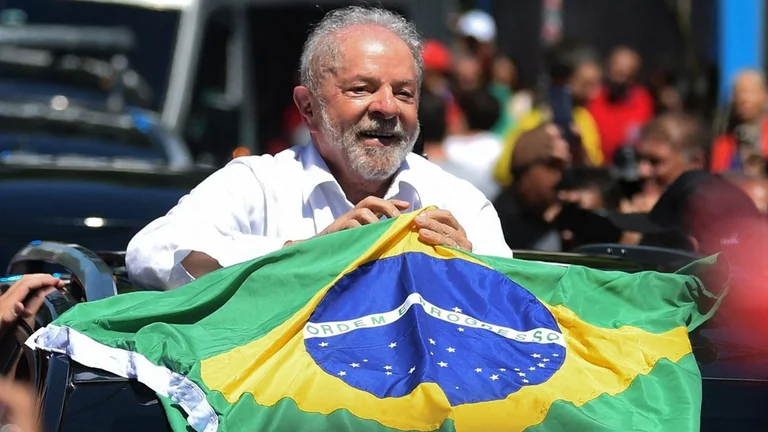
Lula, who was imprisoned for corruption (2018-2019) before falling, will be officially returned as head of Brazil's state on January 1, 2023. His success seems to mark the return of the left to Latin America.
In Europe, instead, ultra-conservators marked victories in parliamentary elections in several countries, beginning in April with the fourth consecutive victory of Hungarian nationalist party leader Viktor Orbán.
In France, the Marine Le Pen Party (Betha Extreme) registered a historic victory in June, becoming the first opposition party at the National Assembly, where head of state Emmanuel Macron lost an absolute majority.
The Swedish Democratic Party <x0 nationalist and anti-imigrational) is the major winner in the September elections, becoming the country's second largest political force.
In Italy, Georgia Melon scored a historic victory in September with Italy's post-fascist party, Adelphia, and was appointed prime minister in October.
- The Death of Queen Elizabeth
After being on the throne for 70 years, on September 8th Queen Elizabeth II passed away, the longest - lived monarch in history of the United Kingdom. She had come to the throne in 1952 following the death of her father, King Georg, and led to important times. During its rule, 15 prime ministers have passed, starting with Winston Churchill in 1874 and finishing with Lizz Truss, born 101 years later, in 1975.
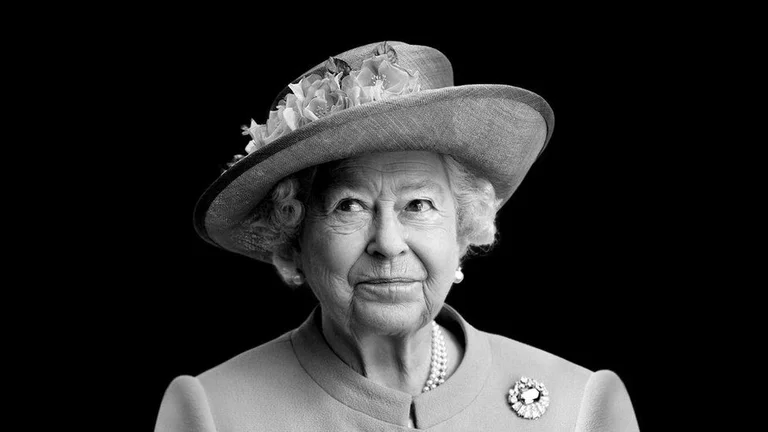
The queen came to the throne in 1952 and witnessed major social changes as her oldest son, former Prince of Wales, Charles, took her place.
The queen passed away at Balmoral Castle in Scotland.
- Qatari, controversial World Cup football host
The 2022 World Cup reception from Qatar, from November 20th to December 18th, prompted a round of criticism for the small Gulf state.
The first Arab country to host the World Cup in football was criticised for treating foreign workers, persons LGBTI+ and women, or even for using air conditioning at its stadiums amid climate change.
The treatment of immigrant workers, essential in a country where local residents account for only 10% of a population of three million, is particularly critical. Some media have reported thousands of deaths at construction sites, claims denied by Doha.

On December 18th, after a 36-year wait, 120 minutes of play, and after executing the penalty, Argentina won the World Cup for the third time in its history by defeating the champion in power, France.
For many football fans it put the seal on Lionel Mess as the best player in football history.
/ AFP, Periscopi/