5 minutes ago
Retirees “existing” Kosovar
Periskopi(3 years ago)
(3 years ago)For all Kosovars employed, even for those who have salaries of five out of the pensions of major Kosovo pensioners, money and ways to give them, except for pensioners. Even this month, the current government remembered most employees, dedicating them either to wage increases through the Law [...]
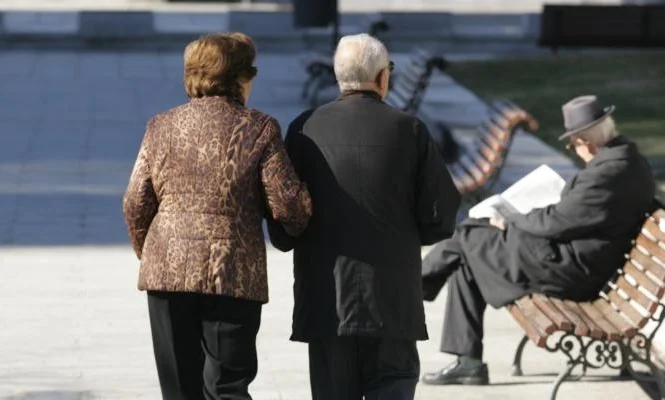
In Kosovo, despite extreme poverty and the obvious lack of money as a result of economic impasse, for all levels of society continue to be <x0pec” anything (again pay raise, a month's gift, and more monthly, cash from the state), besides pensioners. Kosovo pensioners, practically, are existing even now, in the time of the current government, of this power, to which Kosovo's most neglected and incompatible social standing had high expectations. They had hope among the current rulers, for years, not only in times of electrolymic campaigns, earnestly promised <x2 quarters of flowers” for them, a return of attention to pensioners, who never had it since the war ended.
Always, so Kosovo pensioners from 2000 onward have been completely bypassed, despised and over-insulated, primarily by authorities and institutions. Hich on two three occasions, when no government of the Republic was dedicated to pensioners or any other institution did nothing for pensioners, never happened to have a care, either symbolic or financial and symbolic dedication, no minimum pension increase for these people who did so much for Kosovo on good days and bad days. So the pensioners believed in the current power of the VV government, which turns out to be cleverly using them with false and false promises, even turning their backs on them as if they did not exist at all.
For all employed Kosovars, even for those who have salaries the equivalent of five out of retirement pensions for Kosovo's absolute majority, money and ways to give them, except for pensioners, who continue to have 100 euros (aging pensions) and 200-260 euros (contributing pensions, soshs of Kosovo pensioners who, by 40 to 45 and 50 years, worked on Kosovo construction).
Even this month, the current government was reminded of most employees, dedicating the wage increase to either through the Law of Pays, the high-wage cofficit, who will soon be empowered, or whether with any additional dedication to money for certain categories of employees. But, again, not for pensioners, no way.
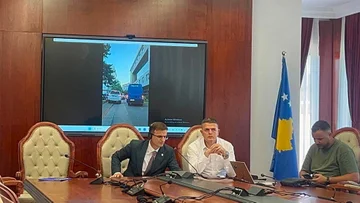
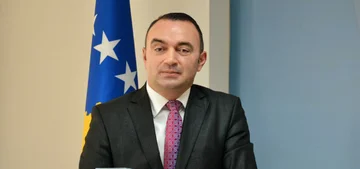
To be more concrete, the Kosovo government has earmarked additional 50 euros for January for all public sector workers. Finance Minister Iron Murati, at the Government's meeting held on 24 January, said it has been the Government's promise to pay this addition until the introduction to the Law of Salaries in February. Murati suggested that the government has decided to continue sharing the 60-euro extensions for even health workers this month.
The “is meant to continue addition to health workers, taking into account that the Law of Salaries is expected to take effect next year, while the addition has been in place by the end of the fiscal year”, he said.
And, again, not a word about pensioners. No single voice was heard in this case either by representatives of the people in the Assembly, or by the opposition and its leaders, nor by the heads of the country's unionists, who, at least for a moral commitment, would have to raise their voices for all this neglect and total disregard for the sorrows of Kosovo pensioners. But these all the above - mentioned, both the people's representatives and the leaders of the opposition and the leaders of unionists left no chance, even hinted at their aggression, in direct, unmatched insistences to determine the wage coefy in the Law.
Jusuf Azemi, chairman of the Private Sector Union in Kosovo, with the favour expressed in the media, these days, praising the Law for Pays, said that “to make a kind of division of these workers, where it makes up the most of them paying taxes and are the biggest stimuluser of the state ark, and when it is known that public sector workers are two to triple with larger salaries, it doesn't really want comment”
According to him, injustice is continuing to be done against private workers.
Let's not stimulate a worker who gets a 170-euro salary, and the one who gets 1,700 euros, this is the fourth time this injustice is done. This government is not of private workers”, he added.
And as long as we're the production sector, and that's the consumer public, that's where we figure the curve has been introduced to private sector workers. This government is not for private sector workers”, Azem concluded.
And well, Azem came to the defense of private sector workers, in this case. Because, the government's public sector favour at the time when the level of average salaries (neto) in the public sector is 542 euros, compared to the private sector that still has the level of average net 376 euros, is beyond injustice. It's the unprecedented contempt of private workers. But, Yusuf Azem, once again, did not say a single word about all the republic's pensioners who retire 100 euros. They did not say a word about pensioners on this occasion, at the 121st meeting of the Government of Kosovo, when the dedication of additional money to public sector workers and officials was debated and considered.
Nor did the minister of finance, Iron Murati, even think of saying at least for courtesy, a single word for the miserable social situation of Kosovo pensioners. But neither the opposition nor its representatives in the country's institutions were responsible for pensioners. The chief of the Democratic Party of Kosovo Parliamentary Group, Abelard Tahiri, has been content to accuse Prime Minister Albin Kurti of authoritarianism even during the debate on the co-efficy's appointment of future salaries that will determine the wage law.
“E we have a government that goes towards authoritarianism that gives Prime Minister Kurti a kind of pleasure that says his word, and on the basis of that word, every citizen paid from the Kosovo budget will receive a salary. This does not go into a democratic system. Several different acts would have to be collected here”, Tahiri added.
According to him, the cofficient under 130 euros “will fail to secure wages, which will give a dignified” life. But Tahiri and the other PDK deputies, even on this occasion, did not remember the pensioners at all. They hope, as they did not few times in these years, only for their wages. Very loud about the potential salary cofficiator for civil servants under the Law of Pays was former Prime Minister and current MP from LDK ranks Avdullah Hoti. According to him, if the cofficiency is 125 euros, then there is no salary increase.
Hoti has even said that the value of the salary cofficiency (it is for civil servants) should at least be 137.5 euros, due to it, the consequences of inflation and the decline of purchasing power. But even Hoti, again on this occasion, except for the great commitment to raising the public sector wage cofficiency, which falls even on personal wages, was not heard to say a single word about the impact of inflation and the declining purchasing power of Kosovo pensioners, most of them at 100 euros' pension. These are the facts. Until Kosovo pensioners are overlooked and despised at this level, it remains to be seen. In all countries of the region, even in those with little contrast to Kosovo's poverty, rising pensions and providing additional aid along with other workers have not listed. /Economic Bulletin/