17 minutes ago
New UN report, ozone layer being renewed
Periskopi(3 years ago)
(3 years ago)DENVER (AP) The ozone's protective layer is slowly recovering, but evidently at a pace that would fill the hole above Antarctica in almost 43 years, says a new United Nations report. The scientific assessment once in four years revealed that the ozone layer is in the process of renewal, most [...]
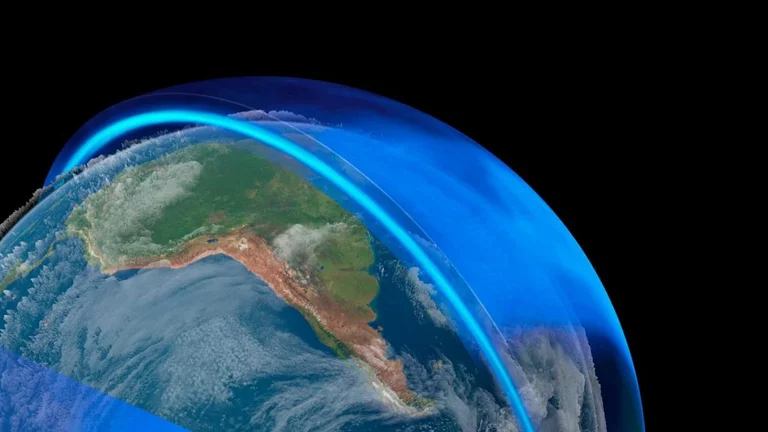
DENVER (AP) The ozone's protective layer is slowly recovering, but evidently at a pace that would fill the hole above Antarctica in almost 43 years, says a new United Nations report.
The scientific assessment, once in four years, revealed that the ozone layer is under way, more than 35 years after every country in the world agreed to stop producing chemicals that damaged it in the Earth's atmosphere that protects the planet from harmful radiation associated with skin cancer and crop damage.
“In the upper stratosphere and in the ozone hole we see things improving,” said Paul Newman, coauthor of the scientific assessment.
Progress is slow, according to the report presented at the American Meteorological Association convention in Denver on Monday. The average global amount of ozone of 30 miles [30 km] high in the atmosphere will not return to the pre-species levels between 1980 and 2040, the report says. And it won't return to normality in the Arctic by 2045.
Antarctica, where the layer is so thin that it has a giant hole, will not be fully adjusted until 2066, says the report.
Scientists and conservationists around the world have long welcomed efforts to repair the ozone hole that resulted from a 1987 deal called the Montreal Protocol that banned a group of chemicals often used in refrigerators as one of mankind's greatest ecological victories. .
The action to protect the ozone sets a precedent for the actions we should take in climate. Our success in gradually removing chemicals that damage the ozone tells us what we can and should do, to get away from fossil fuels, to reduce greenhouse gases and limit temperature growth,” World Meteorological Organisation General Secretary-General Prof said in a statement. Petter Tallas.
The signs of improvement were reported four years ago, but were small and more preliminary. The recovery patterns are now highly reinforced,” said Mr. Newman.
The two main chemicals damaging the ozone are at the lowest levels in the atmosphere, said Mr. Newman, the leading scientist at NASA's Goddard Space Flight Centre. Chlorine levels have dropped by 11.5% since they peaked in 1993 and those of brom, which is most efficient to damage the ozone, but is at lower levels in the air, dropped 14.5% since its peak in 1999, the report said.
“There has been a huge change in the way our society deals with substances that destroy the ozone,” said science panel codirector David W. Fahey, director of the U.S. National Oceanic and Atmospheric Administration's chemical science lab.
Natural weather patterns in Antarctica also affect the levels of ozone holes, which peak in autumn. And the last two years, the holes have been a little bigger because of the weather, but the general trend is recovery, said Mr. Newman.
This is “saving 2 million people every year from skin cancer”, United Nations Environment Programme Director Inger Andersen said of the Associated Press Agency.
The report also warned that attempts to artificially cool the planet by placing aerosol in the atmosphere to reflect sunlight would weaken the ozone layer by 20% in Antarctica. /Vosa