18 minutes ago
Why is there recognition of Kosovo, and what are the consequences?
Periskopi(3 years ago)
(3 years ago)Over the 15 years since Kosovo's declaration of independence, the Government in Belgrade claims 27 countries have drawn recognition of that independence. Recognitions are the disorderly international “x1>, which have multiple consequences for Kosovo, says international law expert Gezim Visoka. On January 16, Togo's chief diplomat, Robert Dussey, made [...]
Recognitions are the disorderly international “x1>, which have multiple consequences for Kosovo, says international law expert Gezim Visoka.
On January 16th, Togo's top diplomat, Robert Dussey, announced the withdrawal of Kosovo's recognition, during a meeting with Serbia's Foreign Affairs Minister Ivica Dacic.
According to official Belgrade claims, Togoja state in West Africa does not stand alone in this respect.
Earlier this month, Serbia's president, Aleksandar Vuciq, mentioned nine other states, which he said have drawn recognition of Kosovo.
Serbia has launched the campaign for recognising Kosovo's independence since 2017. By early 2023, Belgrade claims 27 countries have attracted recognition of Kosovo's independence.
Free Europe Radio contacted the Ministry of Foreign Affairs and Diaspora in Kosovo on this issue, but, until the publication of this article, no response was received.
In what cases might there be any recognition?
Gezim Visoka, professor of Peace and Conflict Studies at the University of Dublin in Ireland, describes the recognitions of independence as undisgulated international “acts, which, as it says, are not well regulated in international law, “so leaving room for doubts, misunderstandings, but also manipulation”.
According to him, attracting the recognition of one country's independence makes sense only when circumstances have changed since recognition of independence - for example, when one country joins another or loses its territory.
But, in Togo's case, Visoka says that the reasons mentioned in the recognition declaration "as the 2010 International Court of Justice's 2010 conclusion that Kosovo's declaration of independence does not conflict with international law ʹ have not changed.
For this reason, he believes such recognitions are the result of the Serbian side's campaign.
“In essence, the recognition does not come as the will of the unrecognizable country, but comes as the product of pressure from the former mother state or base, which uses non-recognition as an instrument to blackmail, underestimate and damage the new state or the state that faces recognition of”, says Visoka.
Togo has recognised Kosovo's independence in 2014, during how long Kosovo Foreign Affairs Minister Enver Hoxhaj was from the ranks of the Democratic Party of Kosovo.
Togo's current top diplomat, Robert Dussey, has offered support for Hoxhaj's candidacy in the 2021 elections for Kosovo prime minister.
Hoxhaj says there was no contact with Dussey after 2021, while blaming the Government of Kosovo for, as he says, the withdrawals of recognitions.
“In the last two years, Kosovo is not developing any diplomatic communication at all, nor bilateral visits, at a time when Serbia is conducting a dirty campaign against Kosovo. Therefore, even the withdrawal of recognitions is happening”, Hoxhaj says.
Kosovo Foreign Affairs and Diaspore Minister Donika Grovalla said on Monday that Kosovo's recognition from Togo “occurred in 2019”, while Kosovo diplomats have intensified meetings with their counterparts coming from states that Serbia claims have drawn recognition of Kosovo.
Serbia has been engaged in the campaign for years to convince the states that have recognised Kosovo to withdraw it.
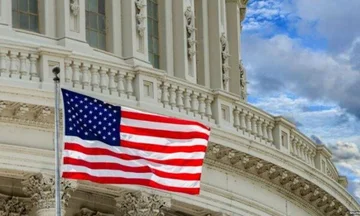
A year-long mortorium on this campaign has been part of an agreement Kosovo and Serbia signed in Washington in September 2020.
Earlier, Serbian Foreign Minister Dacic has said that Belgrade's goal is for the number of countries recognising Kosovo to fall below half of UN members, below 193 respectively.
Kosovo's MPJD has a list of 117 states published on its website, which says they have recognised Kosovo in their midst, also finds Togoja.
Visoka says that countries with developed democracy and tradition in diplomacy do not use the practice of credulity, and cites the approach of Western states in relation to Iran, which has not attracted recognition despite disagreements.
“In most cases, recognitions occur from about 15-20 states that are mainly post-colonial countries, which are not long diplomatic traditions and are known for changing foreign policies, which they switch depending on financial, economic, even military aid, which they receive from regional or international powers”, says Visoka.
According to him, this is precisely why Egypt has not formalised its recognition of Kosovo, but only “has frozen it”. However, even freezing relationships can have consequences, according to Visoca.
The increase of recognition is like the act of sending signals, there are deals then, because the process can turn or deviate away from”, he says, adding that these recognitions, then, are used to blackmail the Kosovo side to compromise the dialogue on normalising relations with Serbia, mediated by the European Union.
The result?
International law expert Visoka believes Serbia launched its recognition campaign in 2017 to pressure Kosovo at a time when the implementation of the Agreement to form the Association of Major Serb municipalities in Kosovo was rejected.
It has been, in some form, diplomatic aggression and pressure from Serbia, which is turning it back as a diplomatic tool to show Kosovo that if it makes no concessions or compromise, we are able to attract recognition, reduce international space and make it impossible to exist as an independent state”, Visoka says.
Kosovo rejects Vuciqi's claims of attracting recognitions.
MP from PDK ranks Enver Hoxhaj says Kosovo risks membership in international organisations, as, as it says, recognitions translate into pro-member Kosovo votes.
“This is a major blow to Kosovo's sovereignty, is a vicious campaign by Serbia, which is taking place at different levels, and it is the last time the Government [of Prime Minister Albin] Kurti will gather himself, draft an action plan, a strategy, and move wherever Serbia claims there may be new recognitions and prevent these new recognitions”, Hoxhaj says.
Visoka says that recognition can also have the effect of mass.
“The more recognition that happens, the more they will come. That's what's bad, they have some effect on the snowball when this process starts, it can also deviate into undesirable”, Visoka concludes.
Kosovo independence
Kosovo has declared independence on February 17th 2008, nearly a decade after the end of the war and the withdrawal of Serbian forces.
The International Court of Justice has concluded in 2010 that Kosovo's independence “does not conflict with international law”.
Nearly half of the over 100 states that have recognised Kosovo have made that decision in the year of its declaration of independence in 2008.
Of the Western Balkan countries, Kosovo still does not recognise Serbia, which with the Constitution continues to consider it part of itself, nor does Bosnia and Herzegovina.
European Union countries do not have the recognition of Greece, Romania, Spain, Slovakia and Cyprus.
The latest recognition Kosovo has received was from the state of Israel in February 2021.
That recognition has been part of an agreement with Serbia on normalising economic relations signed in Washington on 4 September, 2020, in the presence of then-US President Donald Trump.
Kosovo, since 2011, has been engaged in a dialogue on normalising relations with Serbia, which is mediated by the European Union and supported by the United States.
Authorities in Kosovo say the process should end with mutual recognition, while Serbia, for the time being, opposes. /rel/