10 minutes ago
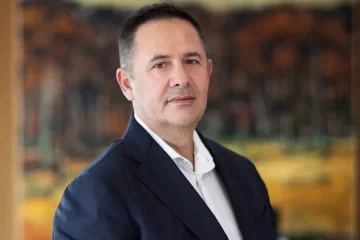
Rassic confirms participation in US Association discussions
Periskopi(3 years ago)
(3 years ago)Minister for Communities and Return to the Government of Kosovo Nenad Rassic confirmed that he has received an invitation from the United States to participate in a discussion on January 31st about the formation of the Association of Major Serb municipalities in Kosovo. “expects to be a good meeting”, Rassic told Radio Free Europe. [...]
“expects to be a good meeting”, Rassic told Radio Free Europe.
He was appointed to the position of government minister led by Albin Kurti last December, when Goran Rakiq, from the ranks of the Serbian List, resigned, in sign of opposition to the official Pristina decision to reregister vehicles with illegal Serb license plates in northern Kosovo.
Rassic said his position is that agreements cannot be ignored. In this context, he added, the recommendations of the Constitutional Court of Kosovo should also be analysed in 2015 for harmonising association with the Constitution and the laws of Kosovo.
For the establishment of this association, it was agreed in 2013, under the dialogue on normalising relations between Kosovo and Serbia, which is held in Brussels.
The association of Serb majority municipalities is designed to gather about ten municipalities in Kosovo inhabited by Serb majority: Northern Mitrovica, Klokot, Partesh, Ranilug, Gracanica, Zvecan, Zubin Potok, Novoberda, Leposaviq and Shrpca.
Under the agreements, the Association aims to represent the collective interests of these municipalities, separately in the field of education, health, urban and rural planning, as well as the economy.
The 2013 agreement on Association emphasises that it will be created by its statutes and structures, on the basis of the Kosovo municipalities' Association statute.
It also says that the association will exercise additional responsibilities, depending on how they are delegated by the central authorities and that there will be a role of representation in central authorities.
Under the 2015 agreement on principles to create association, the main objectives of association are: exercise a full look at the development of the local economy; exercise a thorough look at the principles of education; exercise a full look at the improvement of local primary and secondary health and social care; exercise a full look at the co-ordination of urban and rural planning; adopts measures for improving the local living conditions for returnees in Kosovo; develops, co-ordinates, facilitates research and development activities; promotes, distributes, and accons of common interest to its members; and the central authorities include them; and other local co-operation, local municipalities; and others.
Two years later, in 2015 respectively, the parties have agreed to the principles of Association, but the Constitutional Court of Kosovo has agreed afterwards that some of them are not in line with Kosovo's laws, although it has said they can be harmonised.
The issue has become an obstacle to further normalising relations between Kosovo and Serbia. While Serbia insists on forming association, Kosovo refuses, with the argument that it cannot create one-ethnic associations that would conflict with the Kosovo Constitution.
The United States and the European Union have repeatedly demanded that Kosovo respect the Association Agreement.