10 minutes ago
Interview E KSLUSIVE/Forenzica Leader in Recak: I paid huge price for mission in Kosovo, BiH
Periskopi(3 years ago)
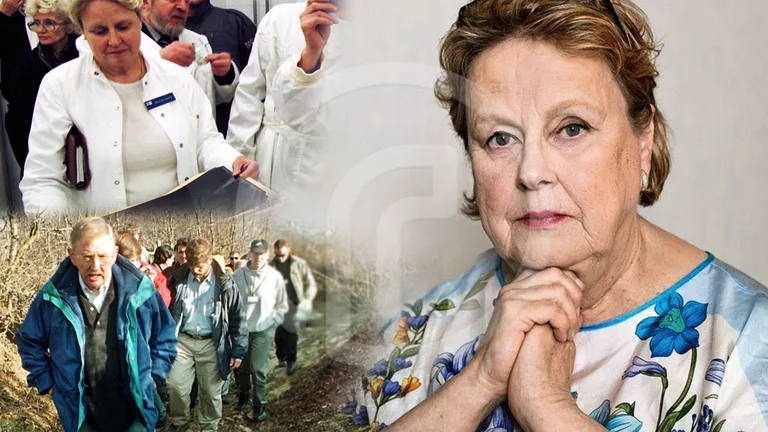
(3 years ago)Its mission was great at the time of the war in Kosovo. Its forensic report found the truth of the Recak massacre, which continues to be denied further by Serbian politics. Finnish forensic expert Helena Ranta in an exclusive interview for Periscope and the first of 24 years for Albanian media has [...]
Lady Ranta, who was also part of the Massacre of Upper Abria (described as unsuccessful), and in several other locations in Kosovo today after 24 years of war, details have been revealed earlier about her role.
Ranta in a piece of the interview, with very firm answers, stresses that she has had to pay a huge price for the mission she had in Kosovo and Bosnia and Herzegovina.
Total interview:
Periscope: You are the key person who had led the autopsy of bodies killed in the Recak massacre, and several other locations. How Helen Ranta came to Kosovo for such a difficult mission. From whom did you receive the invitation?
Ranta: At first I was contacted by Manfred Nowak (the Austrian human rights lawyers) in August 1998. After lengthy negotiations, in autumn 1998 The European Union had sent our team to Kosovo, and I was issued visas for six months. Our team came to Kosovo in November and, after the unsuccessful mission at the Upper Abria, we returned home at Christmas. Then in January 1999, OSCE had invited us to investigate Recak. After our pathologists had completed the autopsy, we returned to Finland to complete our report.
Periscope: Can you describe your work situation in January 1999. Under what circumstances have you performed the autopsy, and can you share details of what condition did you see lifeless bodies, including children?
Ranta: The situation in Pristina was complicated in the fact that Serbian pathologists had only begun autopsys before our arrival. Our reports were later handed over to Germany (European Union presidency), and they had decided that they would surrender to the ICTY. ( International Tribunal for War Crimes in Yugoslavia). These reports are available there.
Periscope: The facts gathered by your team of expertise have since confirmed that the people killed in Recak were civilian and involved in the massacre. How do you feel today after 24 years when Serbian politicians still deny this and propaganda around the world that those killed were soldiers rather than civilians?
Ranta: I'd like to reconsider that we're not judges. The main goal was to see if there were civilians at the time of their death. We have no information about their past. My doctorate student -- a lawyer -- is completing his topic on our mission. It makes me sad to see false information going around the media.
Periscope: Have you and your team ever had pressure from Serbia or anyone else, both in 1999 and after the war to alter your expertise?
Ranta: No.
Periscope: What was your cooperation at the time with Ambassador William Walker. Can you share any important moment regarding the difficult situation then?
Ranta: Ambassador Walker was not happy because I had refused to confirm his immediate comments on Recak. Walker expected me to confirm the public statements he gave after verifying the victims in Recak. Of course, I couldn't do it.
Periscope: You are a scientist who has contributed to the whiteening of crimes committed against civilians, not only in Kosovo, but in many countries of the boa. How does this make you feel humanly when we realize that we owe the truth to the victims?
Ranta: I've been working for many years as leader of the Finnish Expert Team of Forenzice. The truth is the first victim in conflict. Relatives of missing persons have the right to know what happened to their loved ones. Victims have the right to be buried in the tomb bearing their name, according to their religious and social customs.
Periscope: After your mission during the war in Kosovo, you have visited our country several times, even working on a certain period here. What are your impressions of Kosovo's development after the horror you have personally seen pass?
Ranta: I have seen positive progress as well as negative.
Periscope: Why did Helena Ranta stay away from media and interviews when it came to Recak's Massacre. We have a chance for Mr. Waller, who often comes to Kosovo, is honoured by institutions and so on. And we've seen you very rarely while you had a huge role back then?
Ranta: In Finland, we forensic experts are not used to public appearances. Internationally, the situation is different. Someone must be in front of a mission. In the case of Bosnia and Kosovo, I was in front of the mission and I paid a huge price for it. I have been criticized for my public presentations, especially by some Finnish experts.
Periscope: Have you had any contact or meeting with Kosovo institutions after the war?
Ranta: No, not in the role of Team Leader.
Periscope: Last year a documentary film for your event, entitled “Fradments of Humanity”, has been published. When will we be able to see the public from Kosovo?
Ranta: I hope the film company will make the broadcast of the film in Kosovo as soon as possible. I have received many positive comments about the film.
Interviewed: Misinin Horses/ ♪ Sokol Berisha