a minute ago
How do German tanks get reexported?
Periskopi(3 years ago)
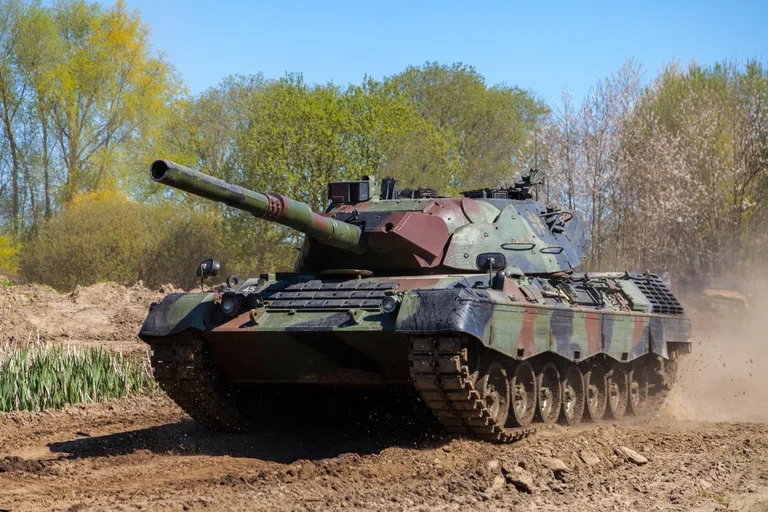
(3 years ago)Reuters Poland and several other countries have said they want to supply Ukraine with German-made Leopard 2 tanks to protect against Russia. But, German Chancellor Olaf Scholz, has so far refused to send such tanks and has not allowed other NATO nations to do so. Tanks [...]
Poland and several other countries have said they want to supply Ukraine with German-made Leopard 2 tanks to protect against Russia. But, German Chancellor Olaf Scholz, has so far refused to send such tanks and has not allowed other NATO nations to do so.
Tanks Leopard, which are used by several NATO countries and require Berlin's approval of reexport, defence experts see them as the most suitable for Ukraine.
Poland will ask Germany for permission to re-export Leopard 2 tanks to Ukraine, but even without it, Warsaw could send them as part of a coalition of states, Polish Prime Minister Matthews Morawicki said on Monday.
Germany's Foreign Minister, Annalena Baerbock, said Sunday that her government would not block Poland if it would send Leopard 2 Ukraine tanks.
How should governments report German tanks?
All weapons of war produced in Germany come with a certificate of use, meaning that their new owner needs Berlin's approval if he wants to pass those weapons to another country.
Reexport requests usually take the green light if weapons go to other members of the North Atlantic Treaty Organisation (NATO) or Allied countries.
With German law, approval is not given “if there is reason to assume it would conflict with Germany's ambition to have good relations with other countries”.
The same is true in cases where weapons can be used to wage a war of aggression, or when adoption of the reexport can violate Germany's obligations under international law.
How are diplomatic clashes avoided?
Since defence exports are a sensitive issue in Germany, foreign countries usually do not directly submit official requests to German authorities for reexport.
They make a so-called <x0 preliminary investigation”, enabling Germany to signal whether it is ready to supply the required weapons or not.
If not, the foreign state refrains from submitting the official request for reexport and does no diplomatic damage.
This mechanism means that Poland can force Scholzin to show whether he is willing to allow Poland to send its Leopards to Ukraine or not.
In the past, however, the German government has taken its time, failing to respond to export demands in sensitive cases for a long time.
Poland's official request, however, would increase the pressure on Scholz to make a decision.
What are the consequences of sending tanks without approval?
If tanks were sent without Berlin's consent, a possible consequence could be Germany's refusal to offer parts for them, says defence analyst Konrad Muzyka.
This is why it's so important from Warsaw's point of view that it doesn't get out of line”, he says.
Tanks are weapons that require great maintenance. They are made of steel, but they are very sensitive and quickly breaks up without maintenance.
Poland with a large fleet of nearly 250 Leopard tanks can rely on its stock of spare parts, experts say. But in the long term, Varshava or Kiev will have to address Germany for more such parts.
Germany's obstacles to defence exports
Germany has one of the world's worst defence export regimes mostly because of its bloody past before 1945.
There have been attempts to ease the rules, facilitate co-operation in defence projects with other countries, such as France or Britain, but so far nothing has been implemented in part due to the Greens' opposition.
What's the case with Switzerland?
Switzerland has blocked the Swiss arms report in Ukraine, calling into the long tradition of neutrality, but the government of this country is under increased pressure to change its stance.
Germany was rejected last year, when it asked the Swiss government for permission to send ammunition to the Geppard anti-aircraft tanks, which Berlin sent to Ukraine.
The demand to allow more ammunition to be delivered has also been rejected.
Switzerland has also blocked a request by Denmark to allow the transfer of armoured vehicles, Piranha III, of Swiss production.
The government is considering a request from Spain to allow the transfer of two antiaircraft weapons, but warned that approval “is probably not possible”.
Exporting weapons or ammunition to Ukraine is blocked by the so-called Foreign Declaration, which Swiss arms buyers must sign, as well as by a specific embargo on selling weapons to Ukraine and Russia.
However, the leader of the Free Liberal Party has filed a motion to abolish the declaration of countries with values similar to Switzerland, a movement that is supported by other politicians.
France
French defence companies should submit a request to the Ministry of Armed Forces if they intend to export weapons to countries outside the European Union, such as Ukraine.
There are several types of export licenses and transfers and they must meet certain conditions.
In most cases, the manufacturer must take vows from the client for the final destination and non-report of submitted materials, which could be transferred to a third party only after the preliminary agreement with French authorities.
United States
The United States has strict control over the transfer of American weapons from allies to third parties.
The so-called “transferations to third parties” should have permission of the US government.
Outside transfers to third parties, there are two ways in which foreign governments buy weapons from American companies: direct commercial sales, negotiated between a government and a company, and foreign military sales, when a foreign government usually contacts a Department of Defence official at the US Embassy in its capital. Both cases require approval of the American government. / REL/