6 minutes ago
Flood - dead animals risk spreading disease
Periskopi(3 years ago)
(3 years ago)The plant for the annihilation and recycling of dead animals in Kosovo does not function and the risk of spreading any possible disease is potential, say the Oda of Kosovo veterinarians. Thousands of birds and animals are reported to have died in recent days as a result of floods involving some areas of Kosovo. Only in [...]
The plant for the annihilation and recycling of dead animals in Kosovo does not function and the risk of spreading any possible disease is potential, say the Oda of Kosovo veterinarians.
Thousands of birds and animals are reported to have died in recent days as a result of floods involving some areas of Kosovo.
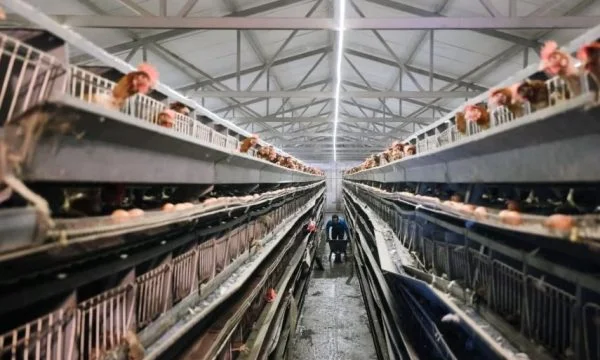
Only on a farm in the Skokyright municipality on January 19th have more than 12,000 chickens died.
Its owner, Liridon Geci, tells Radio Free Europe that they will be buried on January 25th.
According to him, their early burial has been impossible because of the high level of water and mud inside the farm.
Geci says that their extraction from the farm and then the burial will take place in co-operation with municipal officials, who have assigned an appropriate <x0-location” for burial.
Valon Haliti, head of the Municipal Inspectorate Directorate in Skenderaj, confirms for REL that the municipality has decided that burying these chickens will take place in the village of Kotor.
Kotor is located in the Pee-Mitrovica magistrate, about eight kilometers northwest of Scytheright.
“This village is hillino-malal and there are no nearby water fields and wells”, Haliti explains.
In addition to Skyeraj, other areas hit hard by the floods have been North Mitrovica, Istog and Kline.
Despite REL's interest in the number of dead birds and animals in these municipalities, their officials did not respond.
Kosovo's Ministry of Environment, Space Planning and Infrastructure announced that during the 19-20 January floods, there was serious damage between birds and dead animals, but did not provide any exact figure.
REL asked the Ministry of Agriculture, Forestry and Rural Development for losses in birds and animals, but was not answered.
The ministry's statement says only that municipalities decide on the location of the burial of these remains.
“As the plant for the annihilation and recycling of dead animals and animal remains is not in place, respective municipalities assign location for burying [dead] animals”, the statement said.
Also highlighted is the importance of the annihilation of dead birds and animals under the supervision of veterinarian inspectors so as to ensure a safe annihilation, protection of veterinary and public health.
The head of the Kosovo Veterans' House, Xhevdet Krasniqi, says competent authorities must safely handle animal waste, because, on the contrary, there is potential risk of spreading diseases to humans and animals.
After the recent floods, the risk is great for spreading any disease. Kosovo should have the plant for the annihilation of animal waste”, he tells Free Europe Radio.
The factory has, but it doesn't work.
The plant in Drenas has been built for the treatment of animal waste since 2019, but it has not been operational.
A report by the National Audition Office, published in 2021, has said that the facility still lacks some equipment, including electricity and tank for natural gas storage.
This project was implemented by the Kosovo Food and Veterinary Agency (AUV), co-finance with the European Commission Office, and has reached the value of 7.7m euros. When it is set, it is not clear.
How should animal remains be treated?
The operation of this factory is necessary, not only in cases of natural disasters when animals may die but also in everydayity, says Skender Muji, higyna's legalist and Animal Management at the Faculty of Agriculture at Pristina University.
In the absence of this factory, he says animal waste should be buried in suitable locations, not affecting soil, water and air pollution.
“The most ecological way is to bury them. We call them pits, which open at a depth of up to three meters high in stone regions, where ground waters are far away... All the corpses in this pit must be covered with large amounts of soil so that there is no way of getting dogs or other carnivorouss out of it”, Mui explains Radio Free Europe.
However, treatment and management of waste remains a challenge in general, as in many Kosovo municipalities there are no categories and rankings.
“In the absence of special division, animal remains are dumped along with others, without being classified according to the risk of contagioning land and water”, was said in the report of the National Audition Office of 2021.