4 minutes ago
Does Europe risk losing its importance in this century?
Periskopi(3 years ago)
(3 years ago)The EU is far from strategic autonomy, though in a world of crises and with US support down, it will be more independent. But it seems easier to talk about autonomy in the EU than to become reality. A sigh of relief was heard in Berlin and Brussels when in November it was [...]
In Berlin and Brussels a sigh of relief was heard, when the result of the intermediate US elections was announced in November. The transition of power to the Republicans to the American Congress did not turn out as expected. and former American President Donald Trump is weaker after these elections. Under Donald Trump Transatlantic Relations cooled. But Europeans should not rejoice quickly, says Thorsten Benner, director of the “Institute. Global Public Policy” in Berlin. In a comment to Deutsche Welle, Benner wrote that “Joe Biden will probably go into history as the last transatlantic.” The era of generous support in security policy is over, regardless of who is elected president in the future at the White House, because in the future the US will focus much more on China.
Strategic Autonomia Part of Berlin Government Programme
A US that slowly secedes from Europe, a China as the increasingly aggressive world power, a Russia of Putin attacking an independent state for no reason, this is the geopolitical situation in which Europeans are found. The war in Ukraine came unexpectedly to nearly everyone, but other developments did not. In the EU and other European capitals, the conclusions have already been drawn up: the response to these developments is summed up in the <x0-automatic” > which means that the EU should act independently of other world powers in a political, military, and economic way.
 Josep Borrell
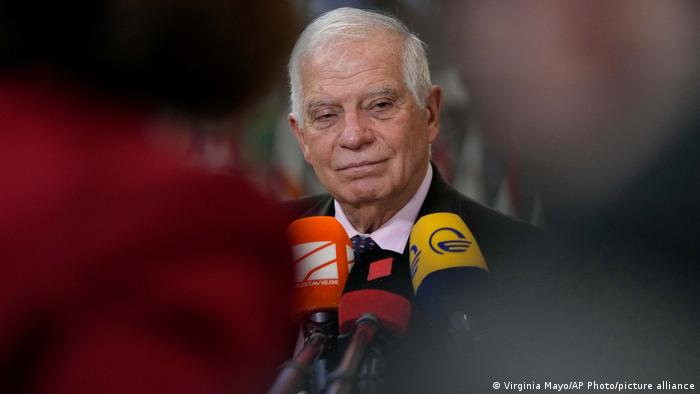
Josep Borrell, in charge of EU Foreign Policy, has written in an analysis for Europe, that Europe threatens to lose “importance”. He argues with the decline in Europe's political weight in the world. A quarter of the world's prosperity was on our continent 30 years ago. After 20 years our share in world economic capacity will involve 11% at most. Strategic autonomy is “the question of survival” for the EU.
Even in the 2021 German government coalition agreement, it points out that “we want to enhance Europe's strategic sovereignty (...) our goal is a sovereign EU as an important actress in a world defined by the uncertainty and competition of systems. ”
Critical of German Consciousness
But at what stage are the EU and Germany on this road? European Council on Foreign Reviews, (ECFR) publishes the index of European sovereignty that measures sovereignty in the field of defence, economy, health, migration, technique and climate provides a great deal of sovereignty in terms of economy and health, provides satisfactory assessment in terms of defence, climate and migration. Problem is the field of technology. At this point the EU is very dependent. In June 2022 each European country was measured and what contributes to Europe's sovereignty. Germany has fared better in this ECFR research, because it is powerful in many sectors and invests in the Union's <x1-> operational capacity” and publicly requires European sovereignty.
But there is a big negative in Germany: Despite economic power, this country ranks fifth in terms of contribution to European sovereignty. Research says this partially reflects German complacency in terms of dependence on Russia and China”. The authors of the study agree that Germany must still learn from past mistakes.
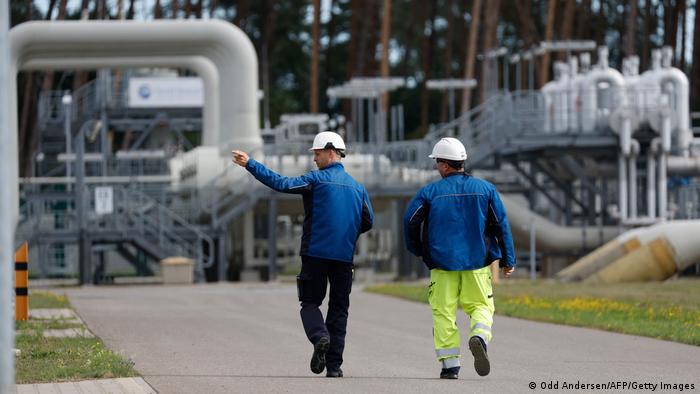 Germany allowed heavy dependence on Russian gas
Not everyone in Europe with the same goal
Europe is still far from achieving strategic autonomy, is the opinion of Henning Hoffman by the German Association for Foreign Policy. “In defence and security policy, this has shown the Russian attack on Ukraine, Europeans are dependent on Americans.” This applies to both nuclear threat and conventional armed forces. “No doubt: If Ukraine were dependent on Europe, today this country would no longer exist. ”
French President Emmanuel Macron requires European independence in military matters. France is the only country in the EU with atomic weapons following Great Britain's departure from the EU. Secretary - General NATO, Jens Stoltenberg in early December at the Berlin Security Conference, has warned from a European independence in defence policy. I don't believe in Europe alone and not in” America just '”, he said. Darken Only NATO can guarantee security. He recalled that EU countries provide only 20% of NATO defence expenditures; 80% come from the US, Great Britain, Canada or Turkey.
Europeans are also divided when it comes to military autonomy: should the Baltic countries and Poland be asked, the US and NATO should play a powerful role in Europe. Mihai Chihaia from the Brussels Institute, European Policy Center believes, that different interests are compatible. “A more capable EU would contribute to transatlantic security and complete NATO.”
China's Interests in Portals
In terms of strategic autonomy, it is not just about security and protection. Trade and industry policy, finance and investment are also important. Europeans have held up multilatheralism and free trade, even against Trump. But in the meantime Josep Borrell acknowledges, that the “economic impact will be very conflicting on the political side”: at the time of the pandemic supply networks were cut off; China consciously creates addiction; Russia can stop when it wants the gas tap.
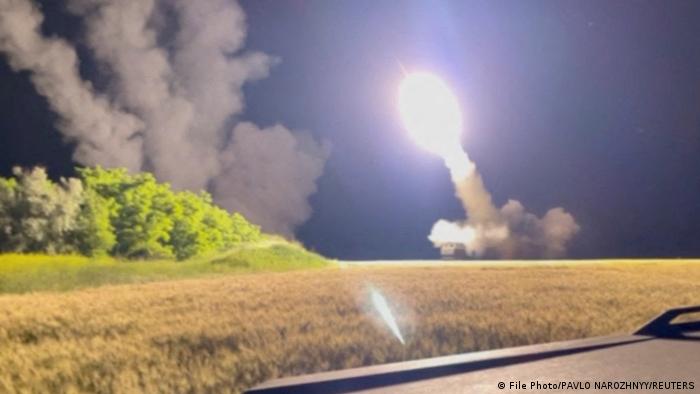 If Ukraine were dependent on Europe, today this country would no longer exist, according to expert Henning Hoff. American Himars rocket in Ukraine
Energy supply is part of the sectors to be protected, especially in the German coalition agreement. How dependent Germany is at this point the Ukrainian war is. What about today? Did Germany learn? Critics accuse Chancellor Scholz that he unnecessarily allowed the partial acquisition of the Hamburg port terminal by a Chinese firm, Cosco, becoming dependent. “Precisely here a European response was needed better, such as a European <x1 port initiative, which would ensure that Chinese firms did not oppose each other. The ports, or pressure”, says researcher Henning Hoffman. The German government then rejected two Chinese investors who wanted to buy German electronics.
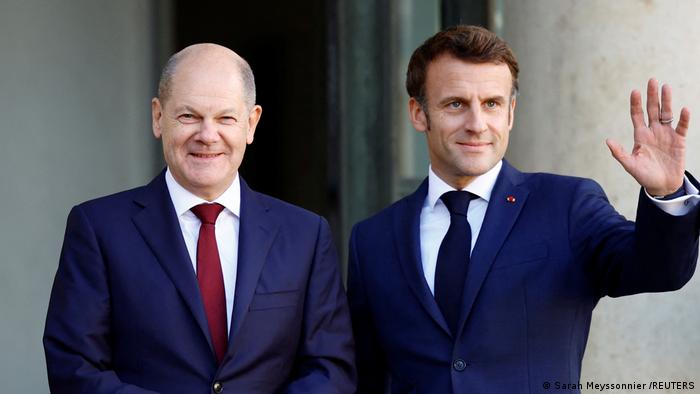 Emmanuel Macro and Olaf Scholz
German-French disagreeance
Traditionally Germany and France feel like close partners, even in terms of strategic autonomy. Both Germany and France see themselves “as the promotion of European strategic autonomy”, especially in terms of defence. But that's where there's trouble. In the joint aircraft project, The FCAS both sides move very slowly forward. There are also disappointments in other projects. Hoff criticises, since the German government does not take long into account that “that is thought to be a national self-conception has always European implications, and should always be co-ordinated with France”. According to him, Scholz has not found his role on the European stage. If disagreements in the German-French relationship are not resolved, then achieving European autonomy will be much harder. ”
The entire EU has a long road ahead in this direction, says Mihai Chihaia from the European Policy Centre in Brussels. The target is realistic, and I believe, if we are going to face current security problems, you have nothing left but to have this objective.” / DW