8 minutes ago
Escobar: We seek the establishment of the Association ʹ Kurti can't avoid an international obligation
Periskopi(3 years ago)
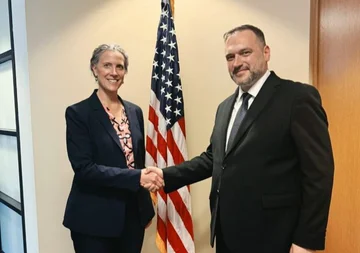
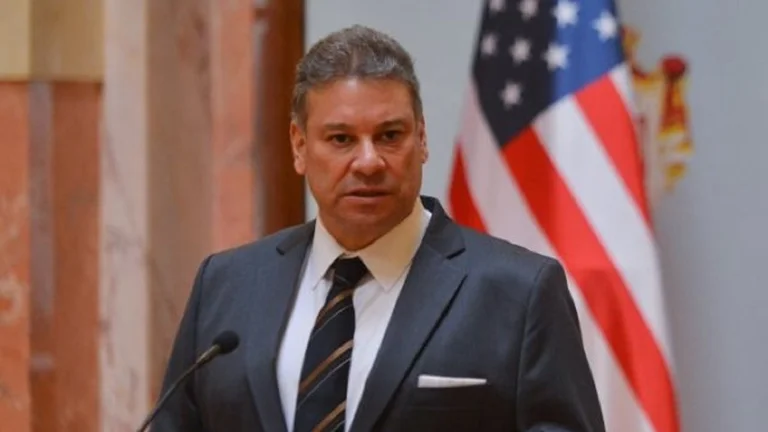
(3 years ago)The US special envoy for the Western Balkans, Gabriel Escobar, said Friday that the Franco-German proposal for normalising Kosovo relations -- Serbia -- is the best way to advance relations between the two countries towards a lasting peace. Escobar argued that the international community requires Kosovo to meet the legal obligation for [...]
The US special envoy for the Western Balkans, Gabriel Escobar, said Friday that the Franco-German proposal for normalising Kosovo relations -- Serbia -- is the best way to advance relations between the two countries towards a lasting peace.
Escobar argued that the international community requires Kosovo to meet the legal obligation to establish the Association of Serb-run municipalities.
He said that this issue and the Franco-German proposal “are not fully connected” to each other.
Escobar said the fact that Serbia has not imposed sanctions on Moscow for its aggression in Ukraine harms its image.
Voice of America: You just met the leaders in Kosovo and Serbia, can you tell us if the talks will resume soon?
Gabriel Escobar: For one thing, talks have never been interrupted. The challenge was that dialogue became an instrument of crisis management. We want to put it to strategic level and we think the Franco-German proposal is good. The United States fully supports that proposal, and our position is that we want to make it work for both countries. In other words, we want it to function in a way that opens up the European future for both countries, opens up opportunities for broader co-operation not only with Europe but with the region and the United States in general.
Voice of America: President (Alexander Vucic) said he has been made clear the consequences and challenges he will face if he refuses to accept the Franco-German proposal. Can you tell us what those consequences are and if he said yes to the proposal?
Gabriel Escobar: I don't want to prejudge discussions that develop within dialogue. But I can say that we discussed in detail what the consequences for the region are if it doesn't move forward, for the region to have an open wound, to have a frozen conflict, which is not actually frozen, for the community that has to live under pressure like in Kosovo's north, with blockades, pressures and people under stress. That's what we're talking about. That's what we want to solve under the dialogue. I think we had a very good conversation, I think we all understand the challenge of continuing the current situation.
Voice of America: He (Vukic) said earlier that the proposal is unacceptable. Do you feel that after the meeting or maybe he's moving on?
Gabriel Escobar: I think we've made a lot of progress today in the first place. The conversation was very constructive. So I think we have a basis for moving forward.
Voice of America: Construction in the sense that you will resume dialogue based on the Franco-German proposal?
Gabriel Escobar: Actually, this is the proposal on the table. Now, how are we going to negotiate the annex on implementation, is another confession. In this Serbia has 50 per cent of ownership of the process and there is nothing to fear. The proposal presents many possibilities.
Voice of America: You were very determined when you talked about having Mr. Albin. Kurti to implement the agreement on the Serb majority municipalities' Association. But he too is determined not to do so. How do you think this will work?
Gabriel Escobar: Look, one person and one side cannot avoid an international legal obligation. That's a fact. We will do this and I will do this by finding partners and having many partners, there are many people who want to see better relations of Serbs in the north and the rest of the country. We're going to start this month talking to people who have very good ideas and we're actually talking about class size in schools, garbage collection, or medical aid services, nothing frightening. We talk about how to make Kosovo's north more functional and more connected to the government in Pristina. We're gonna do this. The question is, at what point Kosovo will understand that the international community expects it to do so, requires that it do so.
Voice of America: Did I really understand if Mr. Kurt didn't do it, would you?
Gabriel Escobar: We will begin country-scale negotiations on what this obligation means for Kosovo citizens.
Voice of America: If Mr. Kurt agrees finally to fulfill this obligation...
Gabriel Escobar: Allow me, Kurt doesn't have to reconcile, Kosovo has agreed...
Voice of America: Kurt is prime minister...
Gabriel Escobar: Yes, but as I said, a person, a party cannot avoid it. This is an existing obligation. Kosovo has already been hired as a government. The point is how it will be implemented.
Voice of America: If Mr. Kurti establishes Association, is that the way to encourage Serbia to accept the Franco-German proposal?
Gabriel Escobar: Let me say these two issues are not completely related. Association is an existing obligation that must be implemented. The Franco-German proposal is too good to advance relations between the two countries towards a lasting peace. We'll work at the same time because we love them both.
Voice of America: President Vucic recently said he is grateful for Russia's support, but that Serbia does not support aggression against Ukraine and considers Donbas and Crime as part of Ukraine. However, Belgrade has not imposed sanctions on Russia. Much is said about the political consequences, and we heard the message of the European Parliament. Are there possible consequences to foreign investments from the West, would companies want to invest in Serbia if it remains on this side of history?
Gabriel Escobar: I think there'll be consequences. I think Serbia's image as a Western state is being violated. Is it true that companies ask us whether Serbia is under secondary sanctions, if Serbia is a solid partner, someone on whom to rely on the long term plan? My advice is to join the West in implementing all measures and sanctions so that Serbia is not an exception in the region.
Voice of America: According to your information, have people from Russia participated in tensions in Kosovo and the barricades?
Gabriel Escobar: I don't have any concrete information. I just heard rumors. But barricades and tensions in Kosovo do not need Russia to exacerbate them, they are already bad.