39 minutes ago
Doctor leave, major Kosovo problem calling for emergency response
Periskopi(3 years ago)
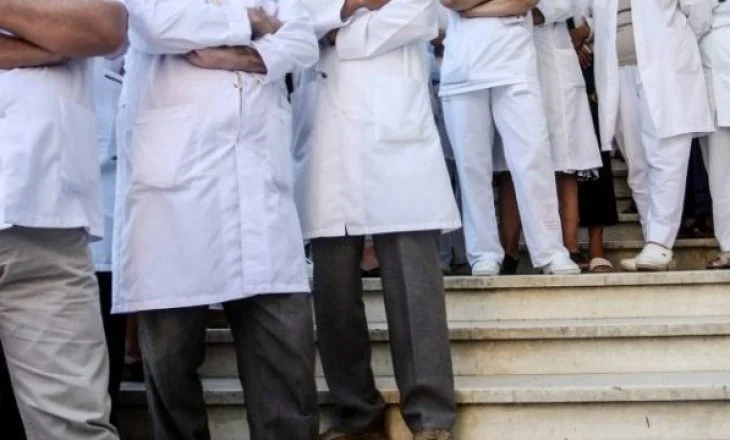
(3 years ago)In the year we just left behind, the public health system in the country received the biggest blow from the evacuation of health professionals who this year, along with hospitals in European countries, chose private hospitals in Kosovo to continue exercising their profession. I've seen this disturbing phenomenon affecting [...]
It has led to this disturbing phenomenon that affected reduced services, but the creation of long waiting lists for operations is required to be urgently reacted on the part of responsible institutions.
In 2022 alone, 205 young doctors fled Kosovo, until about 60 health specialists left the Kosovo University Clinical Hospital Service (SHSKUK) to continue working in private hospitals instead of offering them much better salaries.
Worse still is the situation for the nursing staff, where during 2022 from Kosovo they decided to go to European states to work over 630 nurses.
While low wages and poor working conditions continue to be the main causers of this phenomenon that is jeopardising Kosovo public health.
The chairman of the Kosovo Medical Oda (OMK), Plerat Sejdiu, said that for 35%, Kosovo's brain drain trend has increased.
According to him, the largest number of doctors expelled from SSKUK are anesthesiologists later followed by pediatric specialists.
“This year has been the largest number in young doctors who have left Kosovo is 205, last year it was 159, which means 30-35% has increased that number. And with doctors who have left the public sector, according to official information it's 59, but we think it's over 59 about 60, and last year we have information is about 1012 that released... Anesthesiology is the one with the largest number left, it's surgicals, beginning with gynaecology and other subjects, and how much information we have in the pediatrics is 3-4 that have been removed and the most complicated is anesthesiology because all surgical fluids are related to the function of that clinic, actually with the number of anesthesiologists, so it has reflected in reducing the work in these clinics, the increase in the list of expectations”, Sejdiu explains.
The head of OPC in Kosovo considers that with this trend of leaving doctors, public health systems are risking that in the next five years, there will be no doctors left.
Plerata Sejdiu considers the departure of specialists towards the country's private sector even more disturbing.
This year except the number that has increased has changed the sequence of reasons... So far it has been the working conditions I speak to those who have left Kosovo in the first place, then quality of specialisations and finally wages. This year, however, we have a change in unemployment because there are many unemployed young doctors about 350, and then wages come and finally work conditions come. As for experts who leave in the public sector, however, there are working conditions, work pressure, and wages... If so, we've seen that within five years we're going to have a major medical crisis, if they leave for the next five thousand years, and over these five years there are 700 who will retire and we have no idea how far out of the private sector, because it depends on how much it will be invested in public then I think 2028 will be a year of crisis”, the chairman of the OMK points out.
The exchange for the departure of health workers has affected the nurses' staff even more.
The chairman of the Kosovo Nurses' House (OIK), Naser Rrustemi, says low wages and poor working conditions are continuing to influence nurses not to be willing to serve in the public health system.
Rrustem considers the departure of experienced working nurses to be a disturbing fact.
This year I believe that it's 80% bigger, the reasons are different and we have nurses who, even though the competition is open, he doesn't want to continue his job because of a dignified wage, whether working conditions or even night shifts. You don't even run from now on to pay another thousand euros. Until this moment we're talking is about 633 just this year that we've calculated that this amount is the correct figure... We run out of nurses who probably work for 20 years, 15 and here is the biggest problem because we have certain profiles, whether nurses working in emergency, then in Intensive Care, and they don't get ready in two years, it takes at least 5 years of work experience and have a case of” training, he stressed.
The OIC leader calls on Kosovo institutions to react in time to prevent this phenomenon of running out of nurses, as health services are being jeopardised according to him.
“I cannot offer good services to any institution unless there are sufficient staff for different reasons whether the budget or various replacements are done over time because we have been in several clinics that have gone to retirement and nurses” have not been replaced, OIC chairman says.
And from the Association for Patients' Rights in Kosovo (PRAK) considers that with the approach of medical professionals, the welfare of patients is threatened.
The chairman of this association, Besim Kodra, points out that as a result of the departure of doctors and nurses throughout 2022, the waiting list for patients has increased, but the uncertainty of services has also increased.
The staff's “is a concern because a health system like us devalates even the health worker and the patient gives him less access to quality and safe services. As doctors leave, waiting lists will be extended, people's uncertainty of receiving services will increase because when there's not enough quantity, quality decreases... Of course, it has to suffer (the patient) because at first the treatment is delayed, the uncertainty increases, the quality of the health service declines, it's not a question of discussion or will, of course, impact, how big neither I nor anyone can know, because with doctors, citizens, citizens, citizens, and our doctor are meeting together in Germany” says Kodra.
The release of the public health system on the part of doctors and nurses is being assessed to serve as alarm bells for responsible institutions, according to the Balkan Group.
Arjeta Dragusha of the Group for the Balkans claims that 37% more doctors have left Kosovo compared to students finishing the Faculty of Medicine.
Such a large escape of health professionals affects the quality of health institutions, especially public. Considering age we have a very high percentage of age that in 10 years this takes another alarm for institutions to point out that there are 37% more distant doctors than students who have completed the medical faculty... The numbers as such are an alarm camera for institutions I believe many that institutions are only informed of the situation and the departure of health workers... In order to have the impact, institutions urgently need to increase the salaries of health workers more important than raising salaries for health workers is the overall increase in health budget and the creation of conditions in public hospitals”, Dragusha claims.
Kosova Preress has attempted to receive an answer from the Ministry of Health for the actions they have taken to stop <x0-cypherics of the brain” from Kosovo public hospitals, but that by the day the story is published has not received an answer.
But we remember that with the goal of brain returns to Kosovo during 2022 The Kosovo government had made the decision to free doctors from exile from the obligation of short-term equipment to work in Kosovo at the request of health institutions in Kosovo.
And the phenomenon of leaving health professionals from Kosovo's public health system has been presented for several years, where doctors and nurses had their main destination to practice their profession. /kp/