4 minutes ago
“Dill visited Recak”, William Walker's speech that forced Westerners to open their eyes
Periskopi(3 years ago)
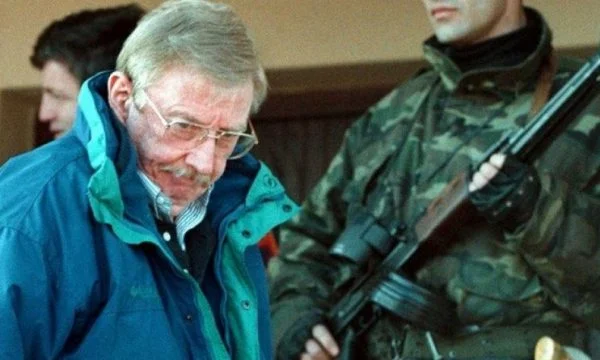
(3 years ago)On January 15, 1999, “The devil has visited Recak”, said then Chief of the Organisation for Security and Co-operation in Europe (OSBE), William Walker, when he had seen the massacre in this village by Serb forces. Serbian police and military units entered every house separately, divided the men of [...]
Serbian police and military units entered every house separately, separated the village men from their families and killed and massacred 45 ethnic Albanians, 22 of whom were found together in a ditch, among them elders and a child.
“This is a crime against humanity”, Ambassador Walker declared on the morning of January 16th before the cadavered grave filled with mass graves that had not been closed and his word was heard in the wake, that the Albanian people in Kosovo were being exterminated.
From what I saw, I am not reluctant to describe the incident as massacre and crime against humanity. This is the saddest event in my life”, he said, which in a few minutes was the top news of all the world's media.
In the afternoon of January 15th, Washington of the United States, President Bill Clinton's top foreign policy advisers had crashed into the “Situations scope” about the intervention of the US and NATO in Kosovo.
State Department Secretary Madeleine Albright, although not yet aware of the terrible event that had taken place in Recak, argued that the US and NATO should bomb “that son of a bitch”, referring to the fascist leaders of Serbia, Slobodan Milosevic.
Albright's view of Milosevic had said its closest aid, was largely prompted by events that characterised 20th century Europe. It was a very personal mission because she too had experienced the same fate when she left Czechoslovakia after the Nazi occupation.
“Albright, more than anyone else in this administration, is guided by its biography. She deeply believed that Hitler and other tyrants could have stopped if we faced them earlier, and that view was followed by a senior American diplomat in Yugoslavia”.
Four days later, the commander NATO, General Wesley Clark, flew to Belgrade to meet with Milosevic and took pictures with him witnessing the Recak massacre, which he put on the table.
Clark was also accompanied by German General Klaus Naumann, chairman of the NATO Military Committee, and delivered what Clark called a very open “warning” that the alliance is prepared to attack.
Milosevic did not like to be threatened, and that is why Clark repeatedly threatened him. Milosevic was furious. He claimed Racan had been insisted by the Kosovo Liberation Army and even called Clark a <x0 criminal war”.
However, the Finnish team of the Council of Europe's report by legal medicine later confirmed that none of the victims proved to be anything other than the defenseless and unarmed <x0civili” to be followed by the Security Council statement saying Serbia was responsible for the atrocity.
The Security Council also voiced concern about the escape of 5 thousand and 500 civilians from Recak and rejected Belgrade's decision to declare the person non grata because he had clearly declared the horror he had seen.
After Ambassador Walker's departure from Recak, residents gathered the bodies and placed them in the village mosque, where the burial ceremony was expected, but Serbian forces did not allow the burial of troops.
After nearly a month, on February 11th in Recak, the burial ceremony of 45 civilian troops killed was organised, while the return of their troops lasted several days after the Yugoslav administration at the time did not immediately hand over the bodies of those killed.
Recak's massacre also marked the turning point of Kosovo's war, because Western countries, following failed diplomatic efforts to find an agreement with Serbia, on March 24th began shelling through US-led NATO forces.
Europeans were in favour of a pause following the bombings so that Milosevic could be allowed time to end the war. Most Europeans wanted the bombing campaign to come progressively toward decline before NATO destroyed everything.
But the United States and General Clark opposed. General Clark stated that: “In American military opinion, when we start using force, we ask to be as determined as possible”.
Europeans wanted the bombings to focus on Serb forces engaged in ethnic cleansing in Kosovo, but General Clark again objected, saying: “Many Americans believe the best and fastest way to change Milosovic's views is to hit him and his regime as hard as possible”.
During the 78-day campaign, NATO staged 38 thousand and 4 attacks, out of which 10,000 and 484 were offensive missions.
However, NATO attacks had intensified Serbian operations, which were no longer concentrated against KLA. It was the civilian population that had become the target of a broad campaign of violent shift and terror.
Recak was another episode in the long series of mass killings, a shocking and terrifying event, the cruelty of which can be measured by the piercing of ashes and the remains of wounds.