17 minutes ago
Where differences between Association and Ahtisaari Plan stand
Periskopi(3 years ago)
(3 years ago)We provide better and greater guarantees and rights for all minorities or non-communal communities in Kosovo”. So Kosovo Prime Minister Albin Kurti responded on January 12th to the request of the United States of America that Kosovo give proposals about forming the Association of Serb majority municipalities for [...]
We provide better and greater guarantees and rights for all minorities or non-communal communities in Kosovo”.
Thus did Kosovo Prime Minister Albin Kurti, on January 12th, respond to the request of the United States of America that Kosovo give proposals about forming the Association of Serb majority municipalities, for which Kosovo and Serbia have reached agreement, within dialogue.
He stressed that Kosovo's Constitution does not allow one-ethnic associations, and added that the Serb community in Kosovo enjoys numerous privileges under the Ahtisaari Plan, on whose basis Kosovo declared its independence in 2008.
What is the Ahtisaari Plan?
In 2007, former Finnish President Martti Ahtisaari, who was the mediator of the United Nations Organisation in the Kosovo status talks, compiled a document known most in public as the Ahtisaari Plan, which gave strong guarantees to the Serb community.
This plan regulates a range of issues -- from culture, language, religion, tradition, but also education, health, economy and property -- to the formation of Serb majority municipalities through the decentralisation process.
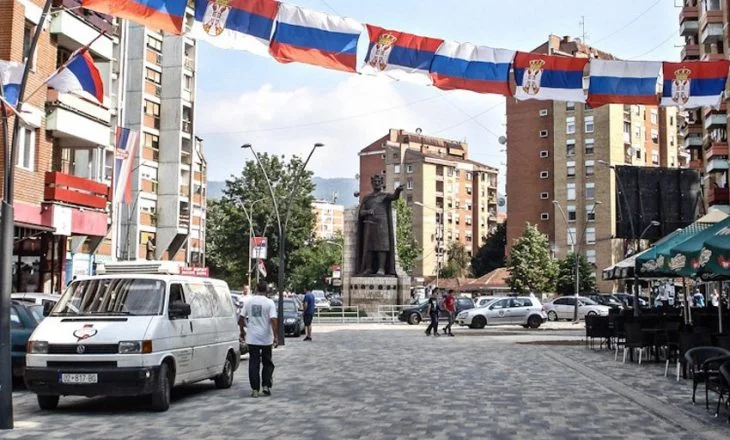
Today, there are a total of ten municipalities in Kosovo that are inhabited by Serb majority. Six of them are located south of the river Iber Gracanica, Novoberda, Shtrpca, Ranillug, Kllokoti and Parteshi once four others, connecting the territory, are located north of him in northern Mitrovica, Leposaviqi, Zvecani and Zubin Potoku.
This document has served as the basis for drafting the Kosovo Constitution, in which minority communities “are positively discriminated against”.
For example, in the Kosovo Assembly, ten parliamentary seats are reserved for the Serb community, while ten others for other communities living in Kosovo. Serbs, too, have a guaranteed place in the Government of Kosovo.
Ahtisaari's plan protects the Serbian Orthodox Church in Kosovo, as well as its properties, while in 2008, based on that document, the Law for Special Protection Areas was passed. This law ensures the protection of Orthodox monasteries and churches, as well as other religious sites in Kosovo, and protects other cultural and historical sites, which are of particular importance to the Serb community in Kosovo.
There is also the Law for Use of Languages, which envisions that the Serbian language, which is officially used in Kosovo, should be promoted and preserved.
Serbs in the south of Ibri have accepted the Ahtisaari Plan, which opened the way for their integration within Kosovo institutions and society, while those in the north of the river rejected it until 2013, when the first Brussels Agreement was reached, which envisions the formation of the Association of Serb majority municipalities.
Two years later, in 2015, Kosovo and Serbia signed an agreement on the Association of Serb majority municipalities, which defined general principles and key elements of it.
What is the Association of Serb majority municipalities?
Under Brussels' first agreement, the Association of Serb majority municipalities must be founded on the basis of a statute, while its distribution can only be made on the basis of a decision by participating municipalities.
The agreement also envisions the right of participating municipalities for co-operation in collective implementation of competencies through Association, which will have full supervision over areas of economic development, education, health, urban planning and rural development.
European Models That Can Be Used for Association
The 2015 agreement consists of 22 provisions specifying the legal framework, objectives, organisational structure, relations with central authorities, budget and support.
Some of the objectives include strengthening local democracy; conducting full supervision for the development of the local economy, education, health and social welfare, urban and rural planning, and providing services to its members in line with Kosovo laws.
The association should have a Parliament, a head who represents association before the central and outside Kosovo authorities, a deputy chairman, a Council, a Committee, an administration, an Office for complaints, while its headquarters must be determined by the statute.
A version of the statute was created in 2018 by the Managing Team, with advice from the European Union based on the 2015 agreement, but it has never been introduced to the public.
Among other things, the 2015 agreement stresses that the Association will support the interests of the Serb community before the central authorities and that it has the right to propose, in line with Kosovo's laws, amendments to other laws and regulations, which are important to achieve its goals.
What is disputed about association?
The key problem in terms of establishing the Association of Serb majority municipalities is the matter of competencies.
In December 2015, the Constitutional Court of Kosovo estimated that the principles of Association are not fully compatible with the spirit of the Constitution, with Article 3 over “in the pre-law” and with key “rights and freedoms” and “respectively, the rights of communities and their members”.
However, Kosovo's Constitutional Court has not said in its conclusions that association should not be formed, but has said its competencies could be harmonised with the Constitution through the statute.
Ahtisaari's plan does not have the emptiness for including a design for the formation of another” association.
Constitutional Law Professor Mazbul Baraliu estimates that the eventual harmonisation of the Association statute with the Constitution of Kosovo will be exclusively political for nature, not professional or scientific.
He believes that legally establishing association cannot be regulated or harmonised through the statute because, he says, a third level of government is established.
Kosovo has two levels of governance, local and central. This would be something other than the Constitution. And, Ahtisaari's plan does not have the emptiness for including a disposition to the formation of another association”, Baraliu says.
Does Association enable greater guarantees, compared to the Ahtisaari Plan?
Miodrag Milliq, director of the nongovernmental organisation Active in Northern Mitrovica, emphasises that there has been debate for the Association of Serb majority municipalities without a statute, and adds that because of this, it is not possible to know whether it will guarantee Serbs in Kosovo greater rights than the Ahtisaari Plan.
The “needs to be discussed for the draft state, on whose basis the Association of Serb majority municipalities will be formed. He's been missing for years. It is futile to compare what Ahtisaari's Plan lacks with what the Association offers. The focus is on the fact that the agreement has been negotiated and harmonised at the level of Belgrade and Pristina, and as such, it remains due”, Milliq says.
He believes that forming the Association of Serb majority municipalities requires only political will, which, according to him, has not been found so far.
Milliqevic says forming the Association of Serb majority municipalities is the first step towards normalising relations between Kosovo and Serbia.
Alternative partners for establishment of Association
The United States and the European Union have repeatedly urged Kosovo to respect the agreement on forming the Association of Serb majority municipalities.
The US, even, has warned that it will seek “alternative partners” for forming association, if the Government of Kosovo does not find a way to establish it.
Citizens in the main square in North Mitrovica. November 9, 2021.
This is repeated on January 11th by US special envoy for the Western Balkans Gabriel Escobar, with clarification that “alternative partners” can be civil society, multiethnic groups or institutes, which can provide ideas on the basis of which the Association can be founded without contradicting the Kosovo Constitution. /RadioEurope Free