4 minutes ago
Denmark still awaiting Kosovo cell borrowing
Periskopi(3 years ago)
(3 years ago)Kosovo has not yet ratified the Treaty for the shelter of hundreds of prisoners from Denmark, even though the document for this purpose envisions that their transfer take place in the first three months of this year. The two countries have signed the letter of approval for sending 300 prisoners from Denmark to Kosovo in December of year [...]
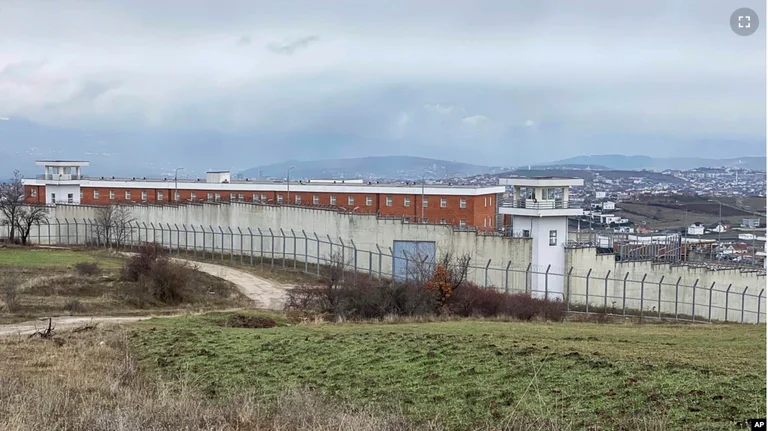
Kosovo has not yet ratified the Treaty for the shelter of hundreds of prisoners from Denmark, even though the document for this purpose envisions that their transfer take place in the first three months of this year.
The two countries have signed the letter of approval for sending 300 prisoners from Denmark to Kosovo in December 2021, while in April last year, the document has been transformed into Tracta.
The treaty, which has a ten-year period, envisions Denmark taking over single and common cells to the Gjilan prison, while Kosovo, in exchange, will benefit over 200m euros.
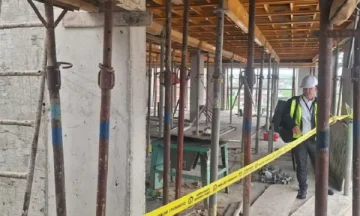
Nazlie Bala, political adviser to the Ministry of Justice in Kosovo, tells Radio Free Europe that investments for adapting the Gjilan prison to Denmark's demands have not begun yet, but that all investment plans have been prepared.
These plans, according to her, are made ready by technical teams from Denmark and the Kosovo Correcting Service. But, the works cannot begin without ratification of the Treaty in the Kosovo Assembly.
The “Treaty, which is signed by the Kosovo Ministry of Justice and Denmark has part of the Green Energy Agreement as well, and without signing this agreement by the two responsible ministries [v.j. The ministries of finance of both states, we cannot proceed further to the Treaty, in Government and Parliament, for ratification”, Bala says.
Kosovo's Finance Ministry has not responded to Radio Europe's free interest in when the Green Energy Agreement is expected to be signed.
The Danish Parliament, on the other hand, has ratified the Treaty in question last year.
Bala expresses confidence that it is expected to be finalised earlier in February, since, she says, investments in prison will also be able to begin.
The prison facility at Gjilan City in eastern Kosovo was built in 2015.
Bala says he, primarily, meets international needs and standards and that granting him to use his cells for Denmark will not take long.
“I believe this process will be with the dynamic planned by technical teams from Denmark and the Kosovo Correcting Service”, Bala says.
REL also contacted the Danish Government, whose officials said they expect to send prisoners to Gjilan's Kosovo Organising Institute as soon as possible.
Rasmussen Meldgaard, media adviser and communications at the Danish Ministry of Justice, said the Treaty expects Denmark to begin exploiting prison capacity in Gjilan from the first quarter of 2023.
For launching prison exploitation in Gjilan, we are currently awaiting ratification of the Treaty [from Kosovo] and implementation of necessary construction measures to ensure that the facility is able to function in line with Danish criteria and Denmark's” international obligations, Meldgared said.
What do you foresee the Treaty between Denmark and Kosovo?
Kosovo's host state will make the necessary adjustments to prison facilities to ensure that it meets the demands of the sending state, Denmark.
Prison capacity should be suitable for 300 prisoners. The capacity should be in the form of single cells or joint cells. The only cell must have no less than 20 square feet [6 sq m] of surface, while the common cells have no fewer than 8 square feet [8 sq m].
Denmark will not send prisoners convicted of terrorist acts, prisoners convicted of war crimes and prisoners diagnosed with serious mental disorders who need medical attention outside the prison.
The state of Denmark will use the cells for five years from the Treaty's entry into force and can continue for another five years.
Leaders and guards at the Gjilan prison will be from the state of Denmark and the Kosovo Correcting Service.
What does Kosovo get?
From the implementation of this treaty, Kosovo will benefit 210m euros, 30m euros will go towards renewable energy and the rest for investments in the Kosovo Correcting Service.
With its entry into force, the forward state of Denmark will hand over Kosovo an initial fivem-euro fee.
During the first 12 months of prison exploitation, however, the payment will be made at three - month rates, in accordance with the number of prisoners the object can accommodate.
The amount for the first 12 months of prison use should not exceed 8, 750,000 euros.
Security experts in Kosovo have earlier told REL that there is no room to worry about the security situation from the arrival of prisoners from Denmark. But representatives of some nongovernmental organisations have said this transfer could affect the standard of local prisoners.
Authorities in Denmark have said their prison capacity has been 100% filled, as the number of prisoners has increased by nearly 20% by 2015.