5 minutes ago
Austrian Professor: I'm skeptical an agreement will be reached, pressure must be charged to Serbia
Periskopi(3 years ago)
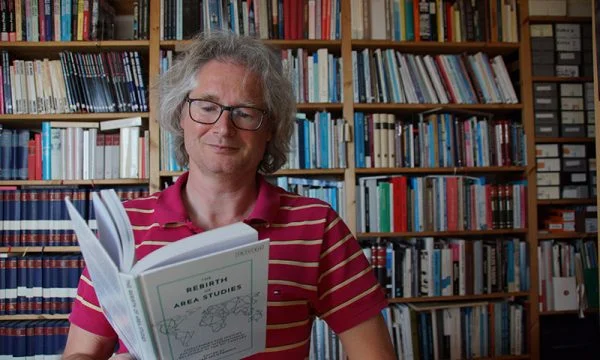
(3 years ago)Wolf Brunnbauer, professor of history at Regensburg University and director of the Leibnis Institute for Eastern and Southeast European Studies, though the European Union's proposal for normalisation of relations between Kosovo and Serbia considered an option applicable in principle, said the parties are still far from a eventual agreement. He in an interview [...]
He in an interview for Albanian Post said Europeans should put more pressure on the Serbian side, “making it clear that membership negotiations with Serbia will be suspended, unless they compromise” and as an additional step “further financial support depends on normalisation and ideally on Kosovo's acceptance of independence”.
Brunnbauer stressed that the EU and the United States of America should also support other political formations in both countries, which may be willing to compromise if the current leadership does not show readiness.
“It also needs to provide more support to those groups and individuals from both sides who have ideas for a sustainable compromise and who want to overcome this stalemate that keeps the two countries behind and which only benefits nationalists from both sides”, he said.
Meanwhile, Europeans and Americans, Brunnbauer says, due to the war in Ukraine, following the neglect shown to the cycle of problems in the region, want to have as soon as they have resolved open problems between Kosovo and Serbia, and, in this new geopolitical context, the Kosovo side has never been protected by the West now because of Serbia's pro-rus course.
“Vukic and Serbia in general have lost their reputation due to their wavering position towards Russia and also pro-Russian feelings among Serbs in northern Kosovo will not improve their” image, he noted.
In this interview, history and anthropology researcher extends his views even on the issue of the Association of Serb-run municipalities, the idea of exchange of territories, as well as the challenges of nationalism in the Western Balkans region.