5 minutes ago
107 years after the murder of Isa Boletin
Periskopi(3 years ago)
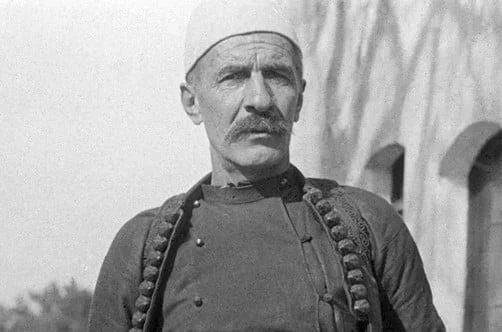
(3 years ago)Isa Boletini, led the rebel forces for liberation from the invasion of Osman in 1912, happened alongside Ismail Kemal in Albania's Declaration of Independence, which broke up at the London Conference in 1913. Isa Boletini was born in the village of Boletin, Mitrovica, in a family of patriotic traditions. At 17, he participated as a warrior [...]
Isa Boletini, led the rebel forces for liberation from the invasion of Osman in 1912, happened alongside Ismail Kemal in Albania's Declaration of Independence, which broke up at the London Conference in 1913.
Isa Boletini was born in the village of Boletin, Mitrovica, in a family of patriotic traditions. At the age of 17, he participated as a fighter of the Albanian League of Prizren, in the Sliva (April 22,81) battle against Ottoman forces. Supported by Haxhi Zeka and other natives at the founding of the Albanian Pec League (1899-1900) and in its resistance to the Ottoman rulers of neighbouring shovinist circles.
In 1901-1902, the popular resistance in Kosovo was led against the interventions of Serbia, Montenegro, Russia and Austria-Hungary in Albania. He led fighters in the battles held with the Turkish Army in the Zeka-Caralev areas in 1910, supported the 1911 anti-Serb uprising, led the rebel forces in the Drenica area, Mitrovica, Podujevo and Pristina in 1912.
During the Balkan War in October 1912, it was placed at the top of the armed voluntary keys for protecting Albanian lands against Serb invaders. On Independence Day, at the helm of Kosovo representatives, it happened alongside Ismail Kemal in Vlora and took an active part in organising the armed forces for the protection of the Vlora Interim Government.
In 1913, as a member of the Albanian delegation, Ismail Kemal along with him went to London, where he strongly protested the Great Powers' decision to fragment Albania. Later, Isa Boletin passed back to Kosovo, where he organised popular resistance against young Serbian-Montenegrin invaders.
By spending his life in war and effort and wisdom, he gained great authority as a popular leader. Isa Boletini linked his and his family's life to the fate of the homeland, whose love and loyalty he expressed to in the words “I'm good when he's okay with the stress”.
Isa Boletin had also become known for what had happened to him in London, even after the guards had checked him when he entered to meet with Foreign Minister Edward Gray, he had managed to get a revolver in. Gray was kidding Boletin saying that the “ate that the Ottoman army didn't do, I made”.
On January 23rd 1916, Montenegrin chauvinists in Podgorica, along with his sons Halili and Zahid, grandchildren Jonuzi and Halit, as well as three other fighters.
In July 2011, the mortar remains of Isa Boletin and his fellow fighters were handed over to the Mitrovica municipality. They were handed over to the imam of this municipality, Mulla Aslan Murati, who 13 years after the reconstruction from Podgorica preserved them in a hiding place. / KP