18 minutes ago
Former Serbian police officer: Even God mourns the crimes Serbia committed in Kosovo
Periskopi(4 years ago)
(4 years ago)“Even God laments the crimes Serbia's police have committed in Kosovo”, says Vladimir Markovic. He has not been able to endure one day going to the grave, and with him the truth of the crimes committed against the Albanians for which he was a witness. This is Valdomir Markovic, former member [...]
“Even God laments the crimes Serbia's police have committed in Kosovo”, says Vladimir Markovic.
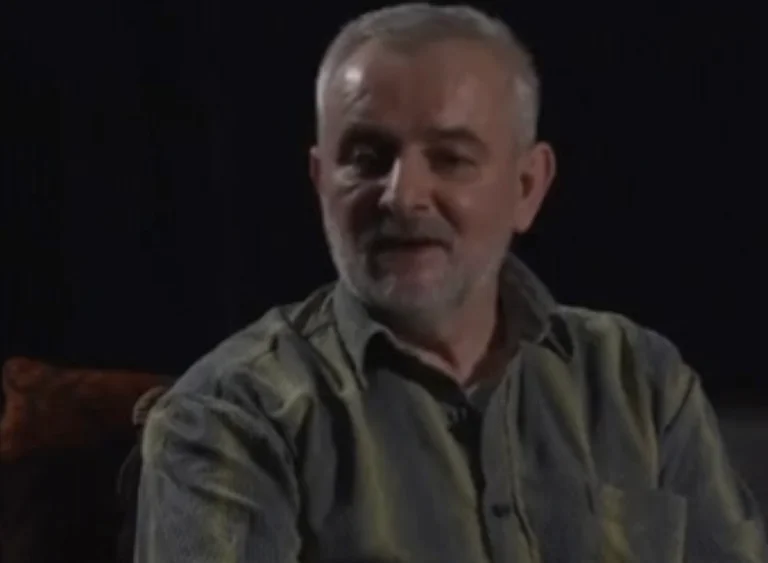
He has not been able to endure one day going to the grave, and with him the truth of the crimes committed against the Albanians for which he was a witness. This is Vldomir Markovic, a former member of Serbia's police who, during the war in Kosovo, witnessed crimes committed by his state against Albanians.
In the exclusive interview for the “show in RTK, he relates everything he saw. In this interview conducted a year and a half ago, this witness also tells of other mass graves with Albanian troops in Serbia. “Even God laments the crimes Serbia's police have committed in Kosovo”, says Vladimir Markovic.
Shortly after this interview, he has given his testimony to the State Prosecutor in Kosovo, but even in Serbia, he has just returned, has been questioned by his state.
Mr. Markovitch, can you tell us first who you are?
Markovik: I'm Vladimir Markovic of the retired Varvarina (Serbia) police officer and I worked at the police station in Varvarina.
Where were you during the war?
Markovik: During wartime in 1998-99 I was in the Suhareka suburb and in Suhareka.
What position did you have there?
Markovik: I've had the position of the regular police who came to their aid and worked on the insurance for passenger guidance, but in principle this has been part of the work and I've been in places as a guard at the House of Goods in Suhareka, at “Balkans” in Suhareka at the place called Birac, at the entrance of Suhareka in the direction of Duhla.
At what time have you served, and in what countries in Kosovo?
Markovik: In Kosovo I was 1999, then we came as aid to various jobs. In Kosovo I have been 3-6 months, and mostly have stayed in Pristina, Peja, Kline, Djurdakovc and Lipjan.
Is it required of you to join the units that have fought in the region where you have served?
Markovik: I wasn't a member of the Special Police Unit. I've been a member of the police since 1987, as I say, I've been a regular cop and I haven't been in special units, nor have I participated in any armed action or anything.
Have you seen anything else since you were there?
Markovik: I've seen a lot of stealings happen and being stolen by local cops. I was once with my commander Dragan Tartarviq from Varvarina, and he wanted to conduct a raid and took us some and we waited on a street across from SUP in a neighborhood, but I don't know what that neighborhood is called. He saw several local police cars there, and they went to the neighborhood where Albanians had abandoned their homes for fear of Serb police. We've been to a mechanic's workshop, so I remember it was a mechanic's workshop and it was Commander Tartarviq Dragan and some police officer. The Commander stopped some people there even though I told him not to do it because we didn't benefit anything, but he didn't listen to me and stopped them there. First, they stopped a pitzgauver and they said what you want, and the commander asked what they were driving and where they were? They've said “move and go to the Samma wheel and get off the road”. In that car as far as I could see, there were various technical goods, there were TVs, refrigerators, and other things, there were 5-6 inside the pitzgauver. So they just did what they wanted, had no control of anyone, I think their senior officials were involved in this because they didn't stop them and did nothing about it.
What specifically did you hear about Bosanac?
Markovik: About Bosanac, I heard the murders were committed in the Suhareka district of the district.
Don't you know what happened to that “-boshnjak” then has he returned to Serbia or you know his name?
Markovik: I don't know. I don't know his name. They've all known him as the Bosnian “ ” what happened in the future with him. I don't know. Some of us have been sent back to Duhle. In Duhle we were placed in an Albanian home, and there I stayed a month until the signing of the peace agreement, I think this was June 10th. By June 10th (1999), we have been ordered to go to the crossroads in Duhle.
The war is over and you have to return to Serbia. Have you heard of any mass cemetery in Kosovo or even Serbia?
Markovik: Yeah, I heard, it was 1999 in early May, I came by order of the Krushevci Suphet in Suharek and when I came to Suhareka, we were sent back to Dahle, and when we returned to Dahle, I was with some of my colleagues stationed in an Albanian house in which we stayed a month until June 10th. By June 10th, we were ordered to go to the crossroads in Suhareka, Duhla, in Lipjan, where we spent the night, there was an ambulance, a room or two, and that's where we slept. The second day has come orders that we cut the bus by afternoon with the other policemen from Suhareka and return home to Serbia. In the early hours of the morning, which is June 12th morning, it is planned by several policemen or soldiers that the KLA has taken down Suhareka and has also taken the bus we had to return to Serbia, and that bus has remained with different documents, different IDs, documents and uniforms, perhaps other things we had been stealing from. We were panicking that the senior officers normally got into jeeps while we were left to the mercy of fate. There were 12 young soldiers who were also with us and we were 20 police officers. At the same moment on radio lines we've only heard KLA fighters because our radio connection hasn't worked. They have entered our relationship because Suhareka has been invaded, and we are panicking about how we will return to Serbia. I've noticed some trucks and I've seen a van locked up like a white truck. I tried to open the back door and there were some people in uniform. I don't remember whether they were soldiers or policemen, but I know how many of them were in uniform, and when I asked them to get in that van so we could get out and go to Serbia, they were arrogantly refusing us and told us to get out of that truck. We have left in despair on how to get to Serbia. A soldier saw us afraid and offered us and said we couldn't get into that truck because there are civilian Albanian troops and we have nowhere to go, but we have to find out how to know. I don't know which one of the reserve has been running an Albanian truck whose owner has been a driver of gravel. We're kind of riding where there was a gravel and that reserve started the truck and we're listed in the column. I also forgot to mention that, meanwhile, two days the German KFOR forces have gone towards Suhareka, and in that column there have been civilian Albanians who have been refugees and who were returning to their homes. That truck I followed and it was a long way from our truck, maybe 5050 meters, and when we crossed the divide, it just started to get dark. At Krushevc we arrived at the firehouse in the evening hours, I don't know exactly at 10:00 or 11:00 I don't remember, then they came from SUP to Varvarini and we went home. I've been on vacation for days, and at the Krushevc firehouse was the Undersecretary of Internal Affairs-Suhareka. I went to that firehouse in 20 days or a month and I wanted to get the mail and something from the Suhareka Secretariat, because there were files for all the people in the Suhareka municipality. At that moment I noticed that truck white-coloured where with the words of that soldier or the police, there were civilian Albanian troops. I found this out for myself, and it's still there. By the date of August 1, 2000, I remember very well because with that date of my birthday, I've made a decision to go to Bujanovac, the chosen place, the firehouse in Krushevc, and when I arrived at the firehouse, there were about 20 unknown policemen in masks and uniforms and I assumed they were Special Unit cops and for me it was strange what I wanted when we were not from the same entity, and that I didn't have the place there. The same day as we waited to get into the van, I heard the conversation from those policemen because I saw that they were looking toward that white-coloured truck, where, according to the statement of that uniformed person, there were the bodies of the Albanian killed, that they talked and I heard they were buried at the post “Naumpe<1x> in the military range. By that moment I have not known that at the location “Naupare” there are military polygons, a shooting site, 25km near Kruschevci. I am back from Bujanovac on August 1, 2000, because I have seen that I am not a member of that unit and that those jobs are not clean so I've carried out my duty and at that moment I've been given a decision in Varvarin, to expel and break the relationship of work. I was expelled from service from August 1st 2000 to 2002 because I refused to go to Bujanovac to protect the area, that's when they called it, I don't know what they call it now. So since November 2002, I've been stationed in SUP in Kurshevc where I've stayed until 2004 where I've retired. By that time 2002-2004 I worked in the custody service at SUP-Crushevc, and I spent most of my time with my colleague Rajica, I don't know his last name, but his name was Rajica. With that I had conversations of war and Kosovo, and the police, because there have been a lot of Kosovo police officers who have come to SUP in Krushevc who have come to work and behaved arrogantly as they have in Kosovo, arrogantly even in Serbia. Considering that I trusted him we talked about that truck-fugon that was at the fire department building and which, in my opinion, that truck has brought about 20 civilian Albanians from the Suhareka and Rahoveci suburb, I hear. I've heard this from a couple of cops on August 1, 2000, that they're from the Suhareka and Rahovec district because I haven't said that before. Then Rajica told me that “h more Vlade you don't know a lot of things about” and he confirmed to me that he knows about those people of Albanian, civilian nationals and he knows that they're buried somewhere in “Napare” in the military polygon.
Did he tell you anything else after that?
Markovik: He didn't tell me anything else. He just said you don't know any more. I haven't met him since 2004, and what he wanted me to mean is that I don't know, I haven't managed to talk to him, because it hasn't occurred to me that he might come up to this day and need details, but I suppose he knew more details than I did, because he worked more in SUP and had access to information than I did.
I just wanted to ask you about the van you showed me, do you know if it was a refrigerator van or a simple van?
Markovik: Yeah. At the first moment I didn't see if it was a refrigerator because I didn't have the chance to see if it was a refrigerator, in SUP-Crushevc when I looked at it, I saw it had the fridge and of course it was the van I saw, except there was the fridge in front of it. I remember when we wanted to get into Duhle was connected to a thin cable and the same cable reminded me of when we went to the firehouse, of course it was about the same refrigerator.
And you don't know how many lifeless bodies were there?
Markovik: I heard there were about 20 lifeless bodies. But I don't know what they were either women or men or what, I just heard they're 20 lifeless bodies and they're from the Suhareka and Rahovec district.
Now it's been 21 years after the war and you've decided to talk about what you've seen and what you've heard, do you tell me why now, why have you waited so long?
Markovik: Why have I waited so long? I just haven't known how to come in the last two years and planned to confess because what I've been telling everybody knows. It's not a secret, it just depends as much as they want to say, and what I've seen is maybe 100 other cops, I haven't seen them alone. If I tell him, I'll feel a lot easier and my soul will be relieved because I've seen them. Kosovo police still behave in Serbia presumptuously, as they have in Kosovo with Albanians and how they have been persecuted. They do the same in Serbia, and they simply ease my soul as a man, to tell the truth about what I have seen and what I have heard.
Are you free to talk to your friends or someone else in Serbia about what is likely?
Markovik: With my former colleagues, no, I'm not free. For them I'm going to be a fool, of course I'm not just talking after the war, but for years. Even in 1999, when I was in Kosovo, I spoke. Even my friends know what I think, when I talk about what torture Albanians are experiencing from senior officers and Serbia's police. I can't get everyone involved, but it's still just a small percentage that didn't do anything.
Do you feel safe after giving this testimony to return to Serbia?
Markovik: I'm not afraid because I told the truth. What the government of Serbia will do can do whatever they want. As for me, I have only told the truth, and I have a calm soul, and I have nothing to fear. And to me it's important that my family believes me, and what I said today, they believe me, and that's my greatest pleasure. I don't care what the rest of the gang thinks.
Have you ever heard of any of your colleagues who wanted to talk but were threatened not to talk?
Markovik: I know some of my colleagues know everything, but they can't tell. I know some still work in police service and cannot tell because they will be suspended, or arrested, condemned or whatever. I've risked nothing, I've just told the truth and I've experienced this myself, I've seen and heard. No one told me, and I personally saw these and I was sick of what I saw. And tomorrow will be very easy for me and my kids, who have told you all this and how much this will help you, I don't know.
Do you think there will be others after your statement who would like to tell about what they know?
Markovik: I hope someone else will be notified to prove this even more. I hope more for my colleagues who are no longer in the police service, because those who are still in service can be feared because they are close to retirement and cannot tell the truth. In a normal society they will have to go out and tell about their crimes, no matter what nationality they have been, Albanian, Serb, Bosnian, Roma, whatever they have been, what they have done has to answer for. I have not been in other wars in the former Yugoslavia, but what I have seen in Kosovo, as I mentioned in 1999 with 3-4 or 6 months since I was, God laments what Serbia's police officers and senior officers did to Albanian civilians and ordinary people.
Even something you mentioned earlier, not to forget to mention, can you tell us the same way that various shares are organised by Serbia's military and police and then in Serbia on TV on the news, you've heard anything else compared to what happened?
Markovik: In 1999 it happened in the July-August period, I don't remember exactly where the Hotel “Balkan” was a luxurious neighbourhood with Albanians, and there in one afternoon came a special unit, I don't know where they came from or were active policemen or militias, and one morning they started burning that neighborhood of Albanians that was near the “Balkan”. This has been as far back as I can remember a luxurious neighborhood with beautiful Albanian homes. The next day, the Albanians at 6:00 a.m., they're at a school near the hotel, about 100 yards, and around 7 to 7:30, we've heard the screams and we've seen them burn down that neighborhood where they burned all that they could, and there they started with a shooting hail. Now, if someone died or was killed, I can't know exactly, I can't remember if there were civilian victims. But what I remember very well that night when I was at the “Balkan” hotel, there was TV in the corridor, and when I watched the news there were “Dnevnik” of Radio Television Serbia, where the speaker said that in Suhareka today during the day, The KLA has wanted to hit the Hotel “Balkan” and during the mine launcher strike, they have accidentally hit. Instead of hitting the Hotel “Balkan”, they hit homes in the Albanian neighbourhood. Who dared to make a sound, when we saw them and were surprised at how they gave the news, when we saw the cops burning them until 11-12 o'clock, they all burned them and normally robbed them all and then burned them. But news on “Dnevnik” RTS 1, have reported that Albanians have been hit with mine launchers, attacking the “Balkan” hotel, where Serbia's police have been deployed. We had settled on it, and no one had touched it. But they said KLA members attacked the hotel, but they couldn't hit it and hit houses in the neighborhood and the whole neighborhood was burned.
I'm looking at some more photos here, can you tell us who's in the picture?
Markovik: This is a colleague from Varvarin where we met in Suhareka, the picture is from 1998 where we were photographed in a coffee shop where the owner was the Bosnian father-in-law, I don't know his name. These are the photos we've been in for a month in a house of an Albanian in 1999 in Duhle, these two are my colleagues from Varvarini. This is the picture we've been photographed in that house, we've been there for a month, we haven't been wearing uniforms, we've stayed in the sun because there's no one there who attacked us or attacked anyone, and we haven't seen anyone there from the KLA or anyone else. This picture is from the '90s when I was at the Pec police station, and this is the next photo from the '90s by the Monastery Patriarchate in Pec, I'm in the photo. This is in the suburb, the way to Pec to the castle upstairs we were photographed in 1990, when I was in Pec. This is my picture when I worked at regular police service in Varvarin, this is also near Patriarchy in Pec in 1999. This is also in the Patriarchate and Monastery of Pec in 1999, and this is also in the district of Pec. This picture is also in Duhle in 1999 in that same Albanian home where my colleagues and I have stayed about a month. This photo in 1974-75 from high school at the Ministry of Internal Affairs in Sremica when I went to police school. This is also from Kamenica in high school in 1974 or 1985.