a minute ago
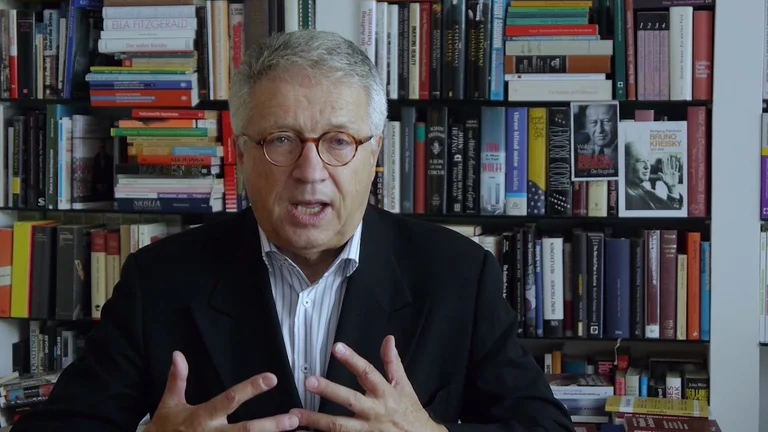
Petritsch thinks a certain degree of autonomy is necessary for Serbs in Kosovo
Periskopi(4 years ago)
(4 years ago)Former European mediator for Kosovo and former EU chief in the negotiations in Rambouille, Wolfgang Petritsch has described the appointment of two dialogue advisers on the part of France and Germany as a positive signal. Petritsch said this development is a sign that the situation is being seen with seriousness and the degree of fear for a conflict in the heart [...]
Petrisch said this development is a sign that the situation is being seen with seriousness and with the degree of fear for a conflict in the heart of Europe.
“In my opinion, access should not be dogmatic, as in the past, but aim to normalise relations for a better life of citizens”, Petritsch says in an interview for Kosovo Online, in the case of the appointment of special advisers by French President Emmanuel Macron and German Chancellor Olaf Scholz, who visit Pristina and Belgrade today with Lajcak, Report Express.
“I have to say that the envoy's arrival is a signal that Serbia is an important and key country in the Western Balkans, without which no solution cannot be reached”, he said.
The Austrian diplomat said he believes that a certain degree of autonomy is necessary for Serbs in Kosovo.
“The Association of Serb-run municipalities is certainly one of the most important things to be resolved to reach a permanent solution. There are several reasons for this, practical and symbolic. On the practical side, it is very reasonable and understandable that in the historical context of the situation, Serbs in Kosovo want to have autonomy and self-government. It is also understandable that the Serb side in the dialogue insists on implementing this long-standing international agreement before making other concessions. In addition, the fact that this has not been resolved for a long time has raised the issue to a symbolic significance, which Serbia can point out by showing that Pristina is not ready for compromise. On the part of Pristina, there is an understandable concern that full implementation of the Association could lead to stagnation and administrative dysfunction, Bosnia and Herzegovina often cited as an example. I personally believe that a certain degree of autonomy is necessary and important and is shown to function. Bosnia and Herzegovina should not be an example we can see South Tirol as an example where autonomy in a post-conflict environment functioned as a way towards peaceful interethnic relations. So I am convinced that the Brussels Agreement must be implemented to approach a permanent solution, but that when the parties arrive it is difficult to predict”, he said.