11 minutes ago
NYT: Faj, hate and license in a divided Kosovo town
Periskopi(4 years ago)
(4 years ago)In a analysis dedicated to recent events in Kosovo, the renowned American newspaper The New York Times describes these tensions as a testimony to toxic policy. Tensions between ethnic Albanians and ethnic Serbs have flared up in recent months, sparked by a bureaucratic dispute over automotive labels, a evidence of toxic policy [...]
Tensions between ethnic Albanians and ethnic Serbs have flared up in recent months, sparked by a bureaucratic dispute over automotive labels a testimony to the toxic policy of the region's identity.
Hoping that it will ease the bad blood flowing on both sides of the river dividing their town in northern Kosovo, Serbian and ethnic Albanian artists joined forces to paint cheerful murals on abusive x-rays painted on the concrete pillars of the main bridge, NYT writes.
Prudent insults against Albanians on the northern Serbian side of the river and anti-Serb curses on the southern, mainly Albanian side, disappeared under brightly colored flowers and works of art.
Happy restoration survived just a few weeks. The bridge, preserved all the time by police officials from Italy, is now again plagued with ethnic insults on both banks of the Iber River, evidence of toxic policies of identity that plague Kosovo and have become increasingly violent in recent months, writes The New York Times.
On a visit to the Mitrovica Bridge last week, Milan Dobric, an ethnic Serb activist who helped organise the wall project, watched the destruction of his works with despair.
Serbian and Albanian artists “met each other and befriended the other side of the” River. But, he said, “n we haven't changed anything in the big view”. Many people in Mitrovica, whether Serb on the northern bank of the river or Albanian south, “will always hate and blame each other,” added Dobric.
Kosovo, released from Serbian control by a 1999 NATO shelling campaign, has been in relative peace for more than two decades. The violent ethnic hostility that led hundreds of thousands of ethnic Albanians to flee to save their lives when Serbia dominated Kosovo, and which then left many Serbs subject to revenge attacks following NATO bombings in 1999, has largely softened, broadcast Democracy.com.
Ethnic Albanians can walk past the bridge to northern Mitrovica and ethnic Serbs can cross the other side without being beaten, though few do. Ordinary people, when interacting across ethnic lines, mostly go well. But fundamental tensions, rooted in disagreements over Kosovo's status, which declared itself an independent state in 2008, but that Serbia insists is still part of its territory, are emerging to the surface, especially in the north.
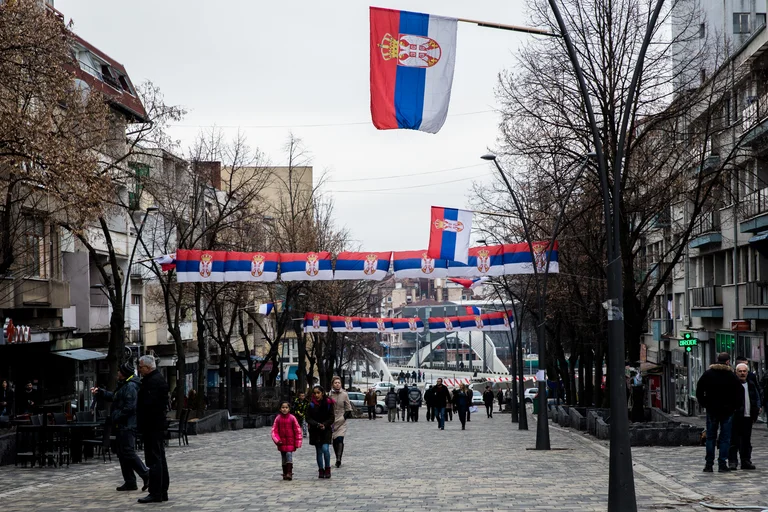
Next, The New York Times writes that in northern Mitrovica, a grim enclave controlled by Serbs burned by power cuts, organised crime and deep outlook for the future, naked Serbian flags hang from pillars of lights and murals calling against Kosovo's right to exist as a separate state. “No surrender!
Hospitals, schools and many drugs in the city are financed and controlled by the Government in Belgrade, the capital of Serbia. All shops get Serbian dinars, while the rest of Kosovo uses the euro. Northern Mitrovica receives electricity from Kosovo, but has not paid the bills for years.
Kosovo is running police forces and city courts, even on the north side, although secret self-defence groups funded by Serbia still play a threatening role, though largely hidden. The raids around the northern part of the city are inscribed with a message from one of these groups, Northern Brigade: “Don't worry. We're here and waiting for”, broadcasting Democracy.com.
“They want a state within the state,” complained Albin Kurti, Kosovo's prime minister, whom many in the north despise as an Albanian nationalist determined to expel his country's Serb minority. “Their support is shrinking, but it is radicalising”, Kurti added in an interview, citing an increase in tensions that in late July led to protests and shootings.
The immediate cause was a secret car license dispute, which began when the Kurti Government in Pristina, capital of a country that most Serbs say does not exist, ordered that all vehicles have license plates of the Republic of Kosovo and remove those issued by Serbia.
The rules were initially meant to go into effect on August 1st, but were postponed for a month after ethnic Serbs -- some of them armed -- set up barricades, issued air strike sirens and started shooting warning shots along Kosovo's northern border with Serbia.
To avoid repeating this situation on September 1st, the new starting date for the order, authorities in Pristina gave residents with Serbian license plates two months to reregister their cars before police start confiscating vehicles that do not adhere to this rule.
Milan Radojevic, the ethnic Serb chairman of North Mitrovica, who has his own administration financed by the Serbian government in Belgrade, regardless of whether it is part of Kosovo and heads separate from the rest of the city on the other side of the river, said: “We want to avoid trouble, but we have to protect our lifestyle and identity”, writes NYT, broadcast Democracy.com.
Releasing the license plates issued by Serbia, he added, would imply abandoning this, and none of the Serbs would ever accept Kosovo as an independent country”. His car, which has Kosovo license plates, he added, has come with his work, so it does not imply any willingness to give up on Serbia.
A 2013 agreement between Kosovo and Serbia promised Serb majority municipalities a measure of self-government through the creation of a defined ruling body covering northern Mitrovica and nine other cities, mainly Serbs.
But, allowing that, Kurti said, “would destroy our country” by copying the example of Bosnia, where an ethnic Serb self-government enclave, Republika Srpska, has crippled the central government. “They want to turn us into a failed state,” he said.
The armed clash at the border in late July, although not long ago, destroyed years of work to promote peaceful co-existence.
The “was really, really serious,” said Miodrag Milikevic, executive director of “Strux3>, an organisation of Mitrovica that encourages ethnic Serbs to engage with Kosovo. “People had just begun living a normal life or pretending to live a normal” life.
Kurti dismissed the whole fuss about license plates as a meaningless issue raised by politicians in Belgrade and Serb enclaves in Kosovo to rally support from their nationalist base. The vast majority of ethnic Serbs in Kosovo, he added, already had ID cards issued by his government, so why all this fuss about car plates! ?
At a recent meeting with Aleksandar Vucinqi, Serbia's president, Kurti told him: “This is crazy. We are leaders. We need to discuss big issues, not license plates. ”
The two leaders, under pressure from the European Union and the United States to contain tensions, resolved a long dispute over identity documents last month, but made no progress on car plates.
Making that seemingly insignificant issue so difficult, according to Milos Milovanovovic, a programme director for the New Social Initiative, a research group in Mitrovica, is the remaining and unresolved “identity problem since NATO broke Serbia's control in Kosovo in 1999. “Conflict is still fresh, because the conflict never ended”, he added.
Igor Simay, deputy chairman of the Republika Srpska-dominated political force list in the north, who receives orders from Belgrade, accused Kurti of playing with fire by trying to force ethnic Serbs to embrace his country and by sending heavy armed police units to face ethnic Serbs suspected of involvement in organised crime.
We live here and we will not give up. We are not Kosovo Serbs, but we are Serbs. We are who we are and don't want to be anything else. It's simple. I'm not ready to change my identity,” said Singh in an interview.
Even moderate ethnic Serbs criticising Simic's Belgrade-controlled party express outrage at what they see as a mean maneuver by Pristina to force them to identify as Kosovars and essentially recognise Kosovo as a state by placing new license plates on their cars.
Marko Jakek, a former city adviser in northern Mitrovica who gave up politics after the murder of the main opposition leader of the Serb community, works south of the city, has a letter of identification of Kosovo and said he is doing well with his ethnic Albanian colleagues. But, he still has resentment forced to publicly declare his loyalty to Kosovo as a state.
No one can see your ID in your pocket, but everyone sees what's in your car. The last link we have with Serbia is our car license plate”, he said. The goal, he added, is to force us to flee”, just as Serbia forced ethnic Albanians to flee in the 1990s.
But, unlike since Serbia had the monopoly of violence permitted through its control of the Kosovo police and military forces, no community today has full control of weapons, the most powerful of which are in the hands of soldiers from the United States and NATO countries involved in an international peacekeeping force known as KFOR.
On the road from Mitrovica to the border, where clashes broke out at the end of July, a small group of American soldiers stood guard this week near two “Humve” armoured) -- a reminder to all where the ultimate power lies.
Tatjana Lazarevic, director of KoSSev, an independent news media that has often clashed with the Belgrade-controlled political elite of Mitrovica, said tensions aroused unpleasant memories of the 1990s. “Barricades, rhetoric, anger. I've seen it all for 30 years. Nothing really changes here”, she said.