28 minutes ago
Kosovo Ombudsman seeks explanation for Gashiqi case
Periskopi(4 years ago)
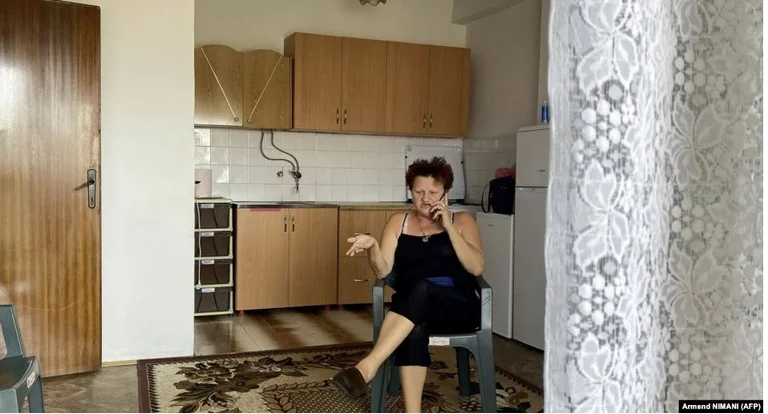
(4 years ago)“I have been here a year, now it has become the same to me”, says Dragica Gashiq, the first member of the Serb community returned to Gjakova, a town about 80km west of Pristina. She has returned to her homeland two decades after her shift from there, but her return to the environment where they were killed more [...]
She has returned to her homeland two decades after the shift from there, but her return to the environment, where more than a thousand of her Albanian fellow citizens were killed during the war, was a cause for resistance and protests.
A year later, Gashi says she believes the citizens of Gjakova have accepted her return and that there are no more problems.
I survived this “in the worst time, so I will survive this”, Gashiq says.
Radio Free Europe spoke with him after Kosovo's ombudsman asked local authorities to respond to what they have undertaken regarding Dragica Gashiqi's request to allow him to renew his residence.
At the base of the rain stream, the roof needs repair and is then painted and limeed. The entire residence, in general, should be renovated”, Gashiq says, adding that he will patiently cut off permission from the municipality.
What did the ombudsman ask for?
The Gjakova municipality has a 30-day deadline to respond to the ombudsman's Office of what steps it has taken to implement their recommendation, for returners Dragica Gashiq to be allowed “free and unhindered exploitation of the” residence and for it to be allowed to renew it.
Free Europe Radio Free Marija Radulovic, deputy ombudsman in Kosovo, has confirmed this.
However, it stresses that the ombudsman's recommendations are not binding, however, have no executive function.
The “Every national institution for human rights protection, in the concrete case, provides recommendations. But when a report is issued in which human rights violations are found, the designated institution is obliged to inform within 30 days of concrete measures it has taken. This is the next step”, Radulovic says.
Dragica Gashic returned to her residence in early June 2021, after she was released from the Kosovo Agency for Comparison and Verification of Property. Since then, Gashi has tried to get permission for renovation, but without success.
What is the position of local institutions?
Despite efforts, Radio Free Europe failed to receive an answer from local authorities in Gjakova over whether to allow Gashi to renew her residence, as the ombudsman's Office has requested.
Similarly, last year the Gjakova municipality had sought from the Constitutional Court of this city that Gashik “cancels the apartment's lease agreement, with the demand for temporary mass”.
However, the court rejected this request by local authorities, arguing it was the groundless and unnecessary “” and Dragica Gashiqi was allowed to stay in her apartment.
Radio Free Europe has been addressed to the Constitutional Court in Gjakova with the question of how far the procedure has been achieved in the case of Dragica Gashiqi and her property rights, but until the publication of this text by this institution has not returned.
Gjakova Mayor Ardian Gjini, in earlier statements to local media in Kosovo, has said Gashi had registered the apartment as her property in 1997, during Slobodan Milosevic's regime and that they were cross-opposed “times”.
Why was the return disputed?
At the beginning of June last year, 11 nongovernmental organisations from the Gjakova municipality territory expressed their disappointment at the return of Dragica Gashiqi, a member of the Serb community.
During the 1998 and 1999 war, more than 1,000 Albanian civilians were killed in Gjakova, mainly men. Some of them are still considered extinct because their fate has not yet been enlightened.
However, the Fund for Humanitarian Law in Kosovo and the Youth Initiative for Human Rights have expressed concern over Dragica Gashiqi's rights to return to Gjakova. They claim that the spirit of the Kosovo Constitution is not being respected, namely Article 156, which says Kosovo will re-enlist “compromise and facilitate the dignified and secure return of displaced persons and internally displaced persons, and that it will help them regain their property and personal things”.
Also, the ombudsman's Office, in its annual report for 2021, stated that a number of non-US communities cannot freely access their real estate.
It is a fact that in recent years there has been progress in resolving property-juridic issues. However, authorities must ensure that all persons possess their property in full compliance with the law and enjoy their rights, guaranteeing them judicial and institutional protection”, the report said.
Two Decades of Return Process
The process of returning Serbs to Kosovo has been going on for more than 20 years, but mostly in rural areas and not in cities. Similarly, Kosovo has not yet managed to resolve the issue of the full return of Albanians displaced from the country's north, where the Serb majority lives.
Under the legislation, all displaced persons have the right to return to Kosovo, and for that help competent institutions, the Ministry for Communities and Kthim, municipal management for communities and returns, as well as various organisations.
In 2018, until Ramush Haradinaj was prime minister, the Kosovo government adopted the decree “for the return of displaced persons and permanent solutions”, which refers to creating the necessary conditions for achieving permanent solutions for displaced persons within Kosovo and the region who have been displaced as a consequence of the conflict in the period from February 28th 1998 to March 31st 2004.
The main actors for the return process are the Ministry for Communities and Kthim, municipal offices for communities and returns, as well as other relief partners supporting the return and reintegration process.