11 minutes ago
DW: European Union wants quick success on Kosovo issue
Periskopi(4 years ago)
(4 years ago)The Kosovo issue is being followed by busy Western diplomatic activity. Belgrade once again welcomed Miroslav Lajcak, the special representative of the European Union (BE) for dialogue between Belgrade and Pristina. Belgraden media also attached great importance to the fact that Lajcak came with, as they describe the media,” Special Forces” from France and Germany, [...]
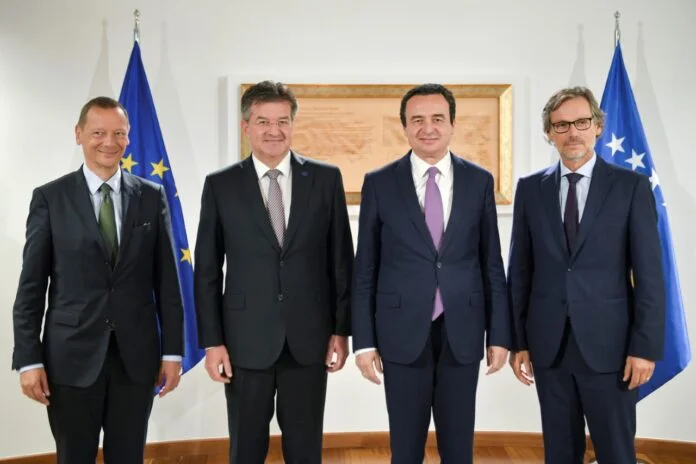
Belgraden media also attached great importance to the fact that Lajcak came with, as they name the media,” special forces” from France and Germany, Emmanuel Bono and Jens Pletner.
The introduction of “Special Forces” in the game also relates to the letter sent to Serbian President Aleksandar Vuciq by French President Macron and German Chancellor Scholz, in which he is invited by “to make difficult decisions for Kosovo”. This is also seen as a new phase in dialogue between the Serbian and Albanian sides, writes DW in the Serbian language.
Vuciq: No recognition of Kosovo
On the eve of Lajcak's visit, Serbia's president commented on Pristina's statements about the “governance of that territory” and stressed that the “cautioned” representatives of the international community and negotiators asking them that “what you're going to come to Belgrade, “because we will not tolerate it in”.
Serbia's president has even announced to his account at the Institute before meeting with international representatives “there will be no recognition of Kosovo. Always ready for compromise solutions, in line with Serbia's Constitution and UN Security Council Resolution 1244. We don't give up! Hail Serbia”, Vuciq has said.
The statement after the meeting did not, but Miroslav Lajcak wrote on Twitter after meeting with Vuciqi.
He said that “has had detailed important discussions with Kosovo Prime Minister Albin Kurti and Serbia's president, Aleksandar Vuciq, with the goal of finding options for progress in the dialogue. The process will continue in the following days”, Lajcak wrote.
Quick foreign policy success
For Dejan Bursac, from the Institute for Political Studies, increased frequency of visits to Belgrade and Pristina recently means that the EU wants to achieve some successes in foreign policy soon:
This is happening in a situation where European power is in question and when because of the Ukraine crisis, Europe is a kind of collateral damage to that conflict and there is strong belief that it does not make many decisions. In that sense, Europe would benefit from some success in negotiations between Belgrade and Pristina”, Bursaq told DW.
We are aware that Serbia has pressure to harmonise its foreign policy with the EU, it follows for the DW in the Serbian language, and adds that “this would imply imposing certain types of sanctions against Russia”.
Lajcak, except Belgrade yesterday, also stayed in Pristina, where he and two European diplomats met with Kosovo Prime Minister Albin Kurti, this meeting, which did not give them much details.