28 minutes ago
Get the diapers, get the wood: Government measures to ease the crisis with the much delayed current, according to BFG
Periskopi(4 years ago)
(4 years ago)The measures undertaken by the government to ease the situation with the energy crisis are delayed and offer no solutions. So said Balkan Green Foundation (BFG) researcher Besart Kosova during the publication of research “Energy crisis in the Western Balkans: Measures taken at the time of rising energy prices”. Researcher Kosovo, in this case there is [...]
The measures undertaken by the government to ease the situation with the energy crisis are delayed and offer no solutions.
So said Balkan Green Foundation (BFG) researcher Besart Kosova during the publication of research “Energy crisis in the Western Balkans: Measures taken at the time of rising energy prices”.
Researcher Kosovo, in this case, has said that allowing coal to be used is a bad and medieval form of heating.
The government's “Massat for easing the situation with the energy crisis has been delayed. Unfortunately, this is a part of our social and not pro-active activity, because we always react when the situation is just too late. These measures, of course, help the situation but do not solve it because it had to be preceded. We have called many times to make investments in renewable energy, especially in wind energy, he said.
According to Kosovo, it regrets that there is no form that allows for easing the energy crisis. He said the price for a cubic meter of wood has reached up to 100 euros.
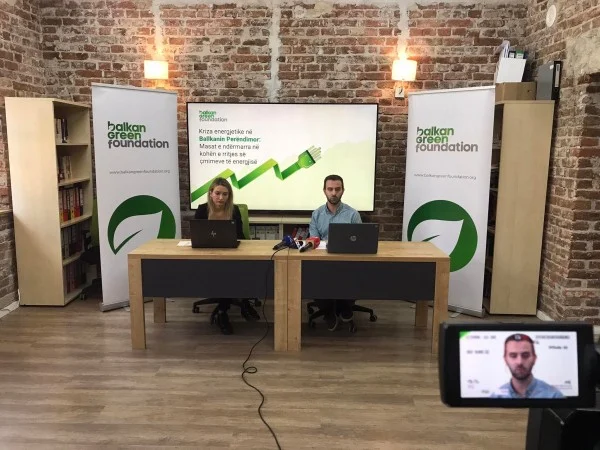
Unfortunately, there is no form that allows for reducing the energy crisis for citizens, especially for providing energy heating forms both by wood and by diapers, while prices are only flying. Today we saw that the price for a cubic metre of wood has reached as much as 100 euros, while the coated at 450 euros, while unfortunately the actions are clumsy”, Kosovo stressed.
While, according to BFG research, Kosovo and Northern Macedonia have resulted in being among the most energy-affected states.
Some of the recommendations coming out of this report include: advancing social nature schemes to support poor energy consumers and prevent damage to the economy for businesses and certain industries; strengthening regional co-operation among the six Western Balkan countries regarding the energy crisis and creating a better interoperability system.