27 minutes ago
Bosch: Strange how it went with the Special Court, Europeans pay big money for it
Periskopi(4 years ago)
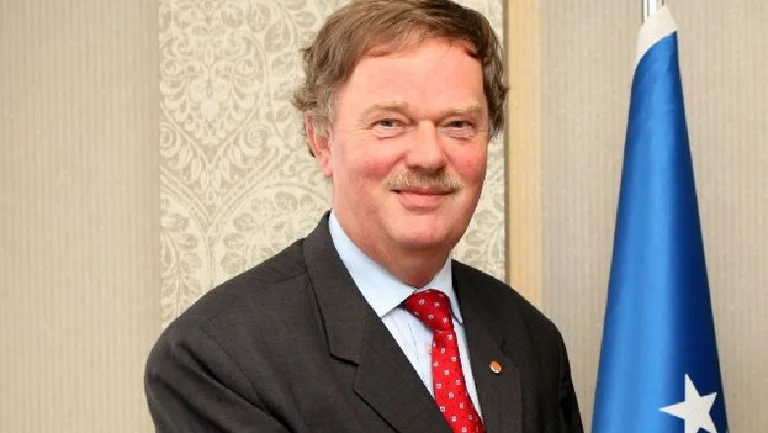
(4 years ago)Former ambassador of the Netherlands to Kosovo Robert Bosch has always declared that he has opposed the establishment of the Special Court and that it is strange how he is continuing with this very expensive court when the main reason for organ trafficking does not exist. Bosch stresses that this court should be an example and not [...]
Bosch emphasises that this court should be an example and not keep people in custody for such a long time without any charges.
He also speaks of the initiative against this court of Albanian Prime Minister Edi Rama in the Council of Europe, but fears he will fail.
The Special Court is created based on Dick Marty's report and organ trafficking claims. However, in the indictment against KLA leaders, these charges do not exist at all. How do you evaluate this?
Robert Bosch: Special Court, although I could not say it then, since I represented the Dutch government, I have always opposed it. Of course, this Special Court was created based on organ trafficking, which in this case would be terrible, as if this were the case, but Williamson's report says this was not the case. It is therefore strange how you proceed with this court, since Europeans are paying big money for it. And, perhaps, crime has even happened, but crimes happen around the world where there is conflict, yet there is no Special Court for each country. The worst we've ever seen was I. SIS. Is there any Special Court for I SIS? The crimes committed there have been the worst crimes I can imagine. Therefore, I do not know why this court- this very expensive court is still necessary when the main reason for organ trafficking does not exist.
What is the international community's assessment of this court's prosperity?
Robert Bosch: I don't know that now that I'm retired I'm not so involved and I can't say that, but I'm aware of Rama's initiative to present these issues to the Council of Europe once more. I believe this is a good initiative, but I'm afraid it's not failing, since the Council of Europe hardly says it was wrong. Perhaps it would be better if a new resolution was presented instead of critical of the old report.
What can Kosovo and Albanian institutions do to create supervisory mechanisms for this court?
Robert Bosch: I don't know if it's coordinated, but at least it's happening: Albania and Kosovo are actively co-operating to do something about this court. I hope there's a co-ordination in this case, I don't know. But since we know that the reports between the two leaders of the two countries are not a hundred percent good... and that's a sin. I think the maximum is two years that one can be held in custody and when there is no charge, then it must be stopped. Especially when dealing with an international organ like this, then this should be an example of how honest these courts become. This court should be such an example and not keep people in custody for so long and we still have no charges. / KP