16 minutes ago
About 300 thousand students started learning: What is the price they will pay
Periskopi(4 years ago)
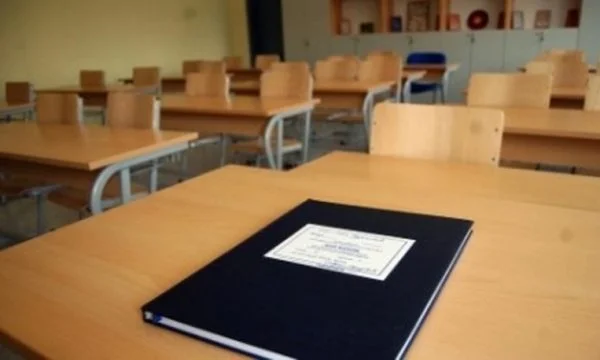
(4 years ago)Psychologists, sociologists and parents in Kosovo express concern about the psychological and social state of children who have not yet started the school year. Educators of all public institutions are on strike, with the requirement for financial support of 100 euros a month. Disfellowshipping is just a few individual teachers who have started to hold clocks. [...]
Educators of all public institutions are on strike, with the requirement for financial support of 100 euros a month. Disfellowshipping is just a few individual teachers who have started to hold clocks.
The strike, otherwise, has left nearly 300,000 students out of school. And there is no possible date for learning.
Arlinda Bajra is a mother of two who, on September 1st, would have to attend classes at an elementary school in Pristina one in the sixth and the other at ninth.
She says that she is concerned that her children spend their day without educational activities except in some private courses she has taken in.
They're summer vacation schedules. They keep staying until late hours of the evening, on the phone, on the TV... and they wake up very late in their sleep. While on vacation, they read a novel. Now they tell me: we don't read that we're not in school”, says Bajra for Radio Free Europe.
The child who was supposed to start sixth grade, she says, does not yet know the nurse and does not know how education is conducted, since so far there was a teacher.
Prokshi: Strike breaks will for learning
Dafina Prokshi, a psychologist, says that situations like this and similar have a negative effect on students, whether in their psycho-social state or academic performance.
The children, in September, prepare themselves emotionally to get acquainted with another phase of their life, which is their social identity. It is built by interactions with teachers”, says Prokshi, specialising in the field of social-organistic psychology and advice-psycorapy.
This situation, Prokshi says, can break the students' will for education.
And if the strikes last, there is danger that they “would agree to a non-educated routine”, she says.
According to her, this would affect the children of smaller age groups -- pre-school and lower middle-level respectively.
There have been strikes by teachers in Kosovo even earlier.
The last one was in 2019 when the second half anniversary of the lesson started late for three weeks because of the discontent of teachers with the Law for Pay.
Lost hours have never been compensated in spite of the Ministry of Education, Science and Technology's demand.
Krasniqi: Emotional Breakup for Children
Artan Krasniqi, sociologist at the University of Pristina, says children and school create a special link -- children “prepare emotionally” for lessons to begin.
“In each family, the first preparations take place, especially children beginners are eager to start school. It's a huge emotional breakdown when you tell them that the school doesn't start”, Krasniqi tells Radio Free Europe.
In older students, he adds, it is another effect: their lack of classes risks losing interest in school.
“LIL has a feeling that it does not even go without a school, and that learning may not start any more. The magic of education is: School should not reject a student or refuse school. When one party breaks down this deal, this spell loses seriousness”, Krasniqi says.
How long until the strike?
Education trade unions, who organise the strike, say they will not give up until their demand for financial support of 100 euros a month for all education workers is met, until the start of implementation of the draft wage law.
Kosovo's government says this bill, envisioning salary increases for educators, will come up in approval soon, and requires opening schools.
Similar calls have been made by Kosovo President Vjosa Osmani.
The Quality of Education
In a report published in 2020, the World Bank has estimated that students in Kosovo “have a major impasse in learning”.
In two PISA tests, the international student evaluation programme Kosovo has almost come to the bottom of the list.
Education experts say that the Corleone pandemic has also influenced learning.
During the first two years of pandemic, 2020 and 2021, students have gone to online learning, or from a distance, at several different times.