an hour ago
Albanian passport of “quality” wealthy foreigners, EU against initiative
Periskopi(4 years ago)
(4 years ago)The Albanian government gave the green light to a concessional contract for the citizenship programme for investment a project that, according to experts, risks causing security problems and could put the country in a difficult position in the face of the European Union. The Albanian government advanced an old idea of Prime Minister Edi Rama selling his passport [...]
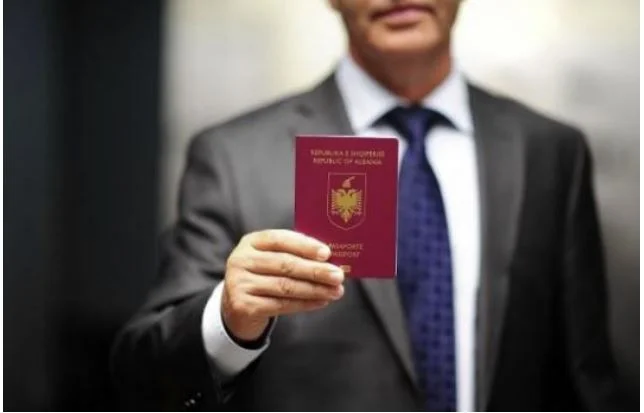
The Albanian government advanced an old idea by Prime Minister Edi Rama to sell the Albanian passport for foreign and wealthy citizens who want to invest in Albania, despite the European Union's repeated criticism that the scheme conflicts with Union values.
Through a decision adopted on 29 July, the government opened the way for an international company's employment to promote the Albanian passport in the world.
The decision envisions “implementing concession procedures public partnership/privates in citizenship programmes”; introducing this sector as a new area in the concession law.
Bledar Sskiner, director of the State Special Software Map Agency, A HPVSH told BIRN that this decision marks the start of building the citizenship programme for investment.
“After this decision a working group will be established in the Interior Ministry that will draft the programme. An international contest will then be opened, where the winning company will be selected on the basis of expertise and experience it offers in this area,” explained Sk everyone.
The Albanian government's idea to apply the citizenship scheme through investment known as “The golden passport” has been sharply criticised by the European Union in 2021 progress.
“Such schemes pose risks related to security, money laundering, tax evasion, terrorism financing and infiltrated organised crime and are incompatible with EU legislation. As a candidate country, Albania must refrain from developing such a scheme,” said in the report.
But the government's representative, Skari, viewed Brussels' concerns as biased, while adding that he had explained to representatives of the EU delegation in Tirana the guarantees the process would provide.
It's a prejudgmental process, but we'll give it all guarantees,”, Scacker said.
“The EU says European values are not for sale, but in France, 100,000 people enter without confirmation,” he added.
Safety Problems
Albania is the third Balkan country after Montenegro and North Macedonia to prepare to apply passports through investment, but implementation of these programmes in other states has shown that security challenges are great.
Fabian Gilla, expert with the Global Initiative Against Transnational Organised Crime, told BIRN that the risk of profiting persons involved in organised crime or terrorism is real to Albania as well.
“This project has some problems,” said Gilla, while isolating the lack of capacity for verification and placing Albania in a difficult position in relation to the EU in the integration process.
How capable are our institutions to filter out contingents we don't want to come here? ”- asks Gilla. According to him, Albanian agencies cannot verify the property of Albanian criminals, questioning the ability to verify international criminals.
According to him, the sale of passports could make Albania a target of countries for which there is no basic information, such as Africa.
Experts also see minimal benefits after this scheme in relation to the costs it could cause in the EU integration process.
Arben Malaj, professor at the University of Tirana and former Finance Minister, said he did not believe this programme would introduce major capital impacting the economy.
Malaj also listed some of the risks the government project holds.
The potential risks primarily involve national security, then with money laundering as a channel,” said Malaj, bringing attention to the case of Indian businessmen who gained Albanian citizenship while being convicted in their country of money laundering.
In February 2018, Nitti and Chatancumar Sanderasa were equipped with Albanian citizenship by the president of the Republic, despite being wanted by India for economic crimes.
“These passports are only gold for their beneficiaries, but in their impact on the economy, especially in the priority sectors, the profit is reduced,” added Malaj.
According to Malaj, implementing the programme for selling citizenship would put Albania in a difficult position in the face of the European Union.
“The EU's critical positions should be respected,” said Malaj, while stressing that the country must be careful that initiatives do not conflict with European legislation. Sperler from the State Special Programme Map Agency told BIRN in response to security concerns that the government could contract a second company for the certificate of applicants”. However, he added, this concession would not burden public finances.
“Zero. The winning company will be paid by applicants who will be declared winners, will be paid by percentage points,” said Skenderaj.
The government has not yet set a price for the Albanian passport, which ranks 53rd in the Henley world index and offers visa-free travel to 115 countries in the world.