11 hours ago
Ukrainian swimmers seek success in the pool, as war continues
Periskopi(4 years ago)
(4 years ago)Overwhelmed by concern over family, anger over Russian colleagues and uncertainty about the future, Ukrainian swimmers are looking for success at the World Championship in Budapest, under the shadow of war, has written AFP, Thursday. Spreaded across Europe since Russia's conquest in February, life for Ukraine's best swimmers, such as Mykhailo [...]
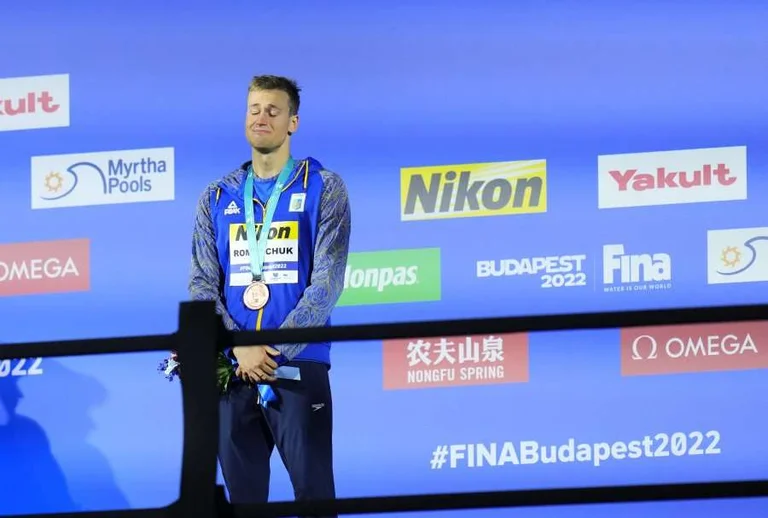
Overwhelmed by concern over family, anger over Russian colleagues and uncertainty about the future, Ukrainian swimmers are looking for success at the World Championship in Budapest, under the shadow of war, has written AFP, Thursday. Spreaded across Europe since Russia's conquest in February, life for Ukraine's best swimmers, such as Mykhailo Romanchuk, whose father “fights on the eastern front of”, has been overthrown.
“Every morning he sends me a message that he's all right”, Romanchuk, 25, said after winning a bronze medal in 800m, freestyle on Tuesday.
My father and son refuse to talk by phone to avoid discovering the Ukrainian army's whereabouts for the Russians.
“I'm not even sure he can see the final”, Romancuk said.
While swimming facilities in cities such as Kharkiv and Marioupol have been destroyed by bombing, foreign swimmer ties came to the aid. A bid by German swimmer Florian Wellbrock ) who won silver in 800m ahead of Ukrainians to join him in Germany for the exercise was accepted by Romanchuk after ten days of discussion.
My guess was to go to war and protect my house”, Romanchuk said, who won the silver medal at 1500m and the bronze medal at 800m last year's Tokyo Olympics. But with my family we decided that I can't do anything with weapons and that I have to keep doing what I do best, to swim fast”, he said.
Other Ukrainian swimmers have taken refuge in Italy, Lithuania, Hungary, and elsewhere. Andriy Govorov, world record holder in 50m butterfly, has walked through training sites, including Hawaii, Monaco and Germany, while his three-year-old wife and son now live in Austria.
“They first fled to Poland, two days before the first Russian missile was dropped”, Govorov said, near the pool in Budapest.
Since the invasion, the 30-year-old has helped send aid to his hometown of Dnipro, and has led them to call for halting races against Russian swimmers.
Our “Our minds were not at all focused on preparation”, said Govorov, a Russian-speaking born on the Crime Peninsula annexed by Russia in 2014. Earlier this week he lost his first final in the 50m butterfly since 2009.
Even last year, after nine months off with Ovidius, I could perform well in the European championships”, he said bitterly. “When you don't have a home, you don't have room to be safe and relax, it's been a difficult time”.
swimmers from Russia and Belarus were suspended in March by the world governing body “FINA” from participation in the Budapest World because of the invasion. Russian double Olympic swimming champion Evgeny Rylov was also detained for nine months by “FINA”, after attending a pro-invasive invasion rally organised by President Vladimir Putin. Rylov was one of several athletes who attended the gathering, who carried the pro-war character of the letter “Z” in their clothing.
“Brend me, I was ready to go and kill”, Romanchuk told Rylov. “Previously was a good friend, but everything changed”.
Govorov said he approached Russian elite athletes at the start of the war, but they blocked him in social media channels.
No single Russian high profile athlete publicly protested against the war, or used his voice, the most important instrument of soft power they have”, he said. “They are also citizens and have responsibilities, if they are silent it means they support their government”.
Govorov said he hopes the ban on swimmers from Russia will last at least as long as the war is continuing.
“Russia must pay a price for what it has done, I'm not sure there will be any future admission for them”, he said.
For swimmer Kamilla Isaeva, 16, who left Ukraine on March 20th after receiving an offer with several teammates for training in Hungary, leaving her family has been especially difficult.
I kept myself away from them, saying it was only for a few weeks, as in a normal training camp”, said Isaeva, the only female on the team with ten swimmers. “But I've lived outside a suitcase for months. You go to training and your thoughts go away, to family, to Ukraine, to war”.
Her team, also preparing for the European Youth Championship next month, holds a minute of silence every day to honour war victims.
<x) /Time