23 minutes ago
What will happen after Russia's gas decrease in Europe
Periskopi(4 years ago)
(4 years ago)It is not the hot summer wave that is making European leaders and businesses perspire. It is concern that the manipulation of Russia with natural gas supplies will lead to an economic and political crisis next winter. Or, at worst, even faster. Here are some of the main issues [...]
Here are some of the main issues related to the energy game as a result of the war in Ukraine:
CFARE HISTORY?
Russia last week reduced gas supplies to five European Union countries, including Germany, the 27-nation bloc's largest economy, which depends heavily on Moscow gas.
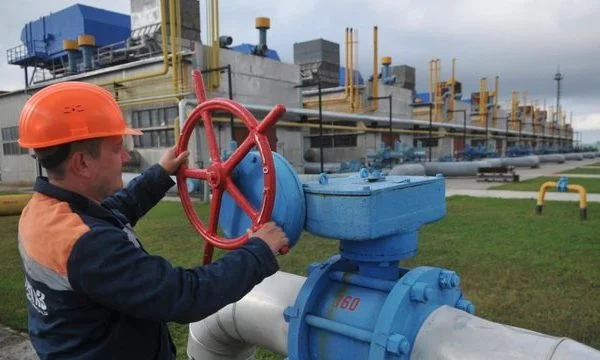
Russian state energy giant Gazprom has cut supplies through the Nord Stream 1 pipeline, which runs under the Baltic Sea from Russia to Germany, the main natural gas pipeline in Europe by 60%. Italy is seeing half its supply. Austria, the Czech Republic and Slovakia have also seen supply reductions.
This comes after cutting off the gas supply of Poland, Bulgaria, Denmark, Finland, France and Holland over the past few weeks. These disruptions were initially viewed as less problematic because Poland, for example, was already gradually removing Russian gas by the end of the year, while others had alternative supplies.
However, recent cuts hit countries, which have large economies and use vast amounts of Russian natural gas. Germany relies on Russia for 35% of its gas imports; Italy for 40%. For now, gas supplies are enough for current needs.
P SE THE PICTURE REVICE FURNIZING?
Europe is trying to fill its underground gas tank before winter. Gas companies operate at a regular pace, filling reserves during the summer when they can buy cheaper gas and then reduce it during winter as heating demand increases. The supply cuts will make refueling of the most expensive and difficult deposit to realise.
The move increases the possibility of a complete closure of Russian gas supplies, which would make it impossible for Europe to ensure the amount it needs for the winter. Natural gas is used by certain industries, such as glass producers and steel producers, which are already facing higher costs, helping slow the European economy.
For the time being, Europe's underground deposits are 57% filled. The European Commission's latest proposal is for each country to reach 80% by November 1st, while Germany has set the target 80% by October 1st and 90% by November 1st.
Analysts at the “Bruegel” Institute in Brussels warn that “Bulgaria, Hungary and Romania will not meet the EU target of 80% if they continue at the current speed”, while “Germania, Austria and Slovakia will find it very difficult to fill their deposit facilities if the supply of gas is stopped by Russia”.
WHAT IS IT SHOW?
The EU, which took about 40% of its gas from Russia before the war, has drafted plans to cut imports by two-thirds by the end of the year and to fully remove dependence on Russian gas by 2017. The bloc has already said it will block Russian coal, starting in August and most Russian oil after six months.
The goal is to deny Russia $850 million a day providing from oil and gas sales in Europe to prevent the financing of its war in Ukraine.
European governments and businesses have purchased expensive liquid natural gas, or LNG, from the United States, which is transported by tankers compared to gas coming from Russia and is usually cheaper. But the war has increased energy prices, which are promoting record inflation in Europe and are helping to maintain high incomes for Russia.
There is effort to get more gas from Norway and Azerbaijan, while accelerating the use of renewable energy and its preservation are expected to play a smaller role. Germany, which has no import terminals for liquid gas LNG, is bringing in four floating terminals, two of which should start operating this year.
Despite focusing on renewable energy, the crisis is pushing countries to turn to fossil fuels. Germany is gearing up to pass the law to reopen coal power plants as a temporary solution, despite plans to give up coal altogether until 2030.
Deputy Chancellor Robert Habeck said it was the bitter “” to turn to coal, but that “in this situation is a must.” The government plans measures to boost industry and societies to use less natural gas. Mr. Habeck also urged the Germans to save their energy.
“The use of gas must be reduced further so that more gas can be stored in storage, otherwise in winter it will be a difficult situation,” he said.
The Dutch government says it will allow coal power plants to operate again with full capacity to maintain natural gas.
Gas security in Europe is fragile despite all these measures.
A fire explosion at an export terminal in Freeport, Texas, released a fifth of the American export capacity out of operation for months, causing another shock to the gas market. Most of the terminal exports went to Europe.
“Situata on the European natural gas market is escalating further,” said goods analyst Carsten Fritsch at the firm Commerzbank Research, noting the planned explosion and closure of the Nord Stream 1, which means that there will be no gas flow through this gas pipeline from 11-21 July. “Consequently, the urgent collection of gas reserves for the winter months can be reduced” and prices will likely be raised even higher.
WHAT IS HAPPEN TO RUSSIA?
Gazprom says he should cut remittances to Europe through the Nord Stream gas pipeline 1, because Western sanctions blocked an important equipment in Canada, where maintenance had been taken. European governments do not believe this explanation and say reducing gas supplies is a political decision.
Gazprom's steps have significantly increased natural gas prices as they have dropped before the start of the winter season. This increases Russia's income at a time when it is under pressure from Western economic sanctions and increases stress over Europe, which is giving Ukraine political and military support.
Gazprom's moves could also be seen as a rejection of Western sanctions and as an obstacle to imposing further sentences. The biggest gas users have been informed that, like younger ones, they are not excluded from a possible interruption.
Germany and Italy saw their supplies cut during the time when their leaders joined French President Emmanuel Macron in Kiev to meet with President Voldymyr Zelensky and to support the EU candidate country's status for Ukraine.
A SUFFECTS THE EVROPANS APO WILL ENGLISH SUCH I THIS Sunday?
This is unlikely because EU law requires governments to ration gas supplies to the industry, so that homes, schools and hospitals will have sufficient supplies. Countries that lack gas can also seek help from others, which may be in better condition, though this depends on gas pipeline connections.
The negative side of rationing would be industrial cuts and closures, which could cost jobs and slowdown of economies facing high inflation and fears of a global slowdown, while central banks raise interest rates. / VoA