23 minutes ago
Homes of the Returns, Selled
Periskopi(4 years ago)
(4 years ago)While efforts are under way to return displaced Serbs from Kosovo to their countries from where they left after the 1999 war, those to whom their return has been enabled are selling new houses built or renovated. This confirms for Radio Free Europe Official Returning to the [...] municipality.
While efforts are under way to return displaced Serbs from Kosovo to their countries from where they left after the 1999 war, those to whom their return has been enabled are selling new houses built or renovated.
The official for return to the Prizren municipality, Spasa Andreyevic, confirms this for Radio Europe Free to return.
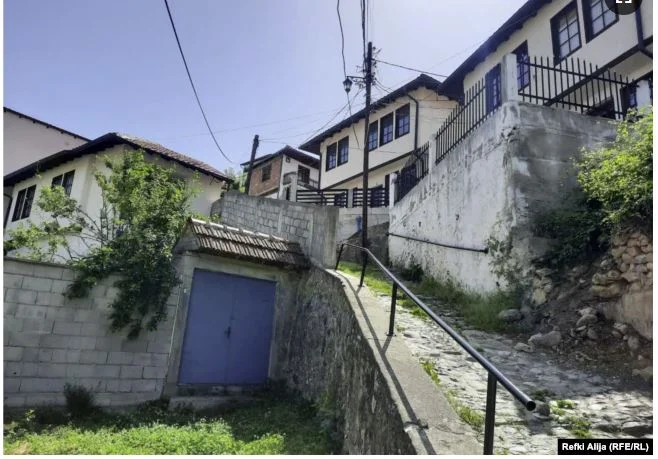
Only in Prizren's settlement, Subkalaja, have 34 houses built by British Embassy tools in Kosovo since 2010. At present, however, only three of them have inhabitants, while the rest are abandoned and some have been sold.
“As an official, I am not satisfied with the choice of users whose homes are built and who are not living in them, and I am more disappointed with the fact that new homes are being sold”, says Andrejevic.
Radio Free Europe has contacted several families who have sold their homes in Prizren, but also in Kline near Pec, but they have not wanted to talk about it publicly.
Spasa Andrejevic points out that there is no precise record of how many houses are sold because “is not in the sale, but in return”.
Unfortunately, circumstances are such, there are sales, I can't say no, but I'm not working on it. But as a phenomenon there is”, he says.
He also claims that displaced persons do not sign any contracts when they decide to return, which means nothing prevents them from selling their property.
What are the conditions for return?
The displaced persons from Kosovo were built homes with funds from international organisations, the European Union, but also the Government of Kosovo, or the Ministry of Communities and Kthim.
Some of the conditions for the return of displaced families are for them to possess property that has been destroyed, with no other property, and not to sell anything.
The competent ministry also offers the so-called aid package that envisions rebuilding of the house depending on the number of members, furniture, food for a certain period and socioeconomic assistance.
Selling Even in Kline
Even the director of the Community and Return Office of the Cline municipality, Silija Raskoviq, confirms to Radio Free Europe that houses in countries where citizens have returned are being sold.
Kline is one of Kosovo municipalities in the Pec region, about 60km from Pristina.
“Private property is private property, they have the right to change their property, we can't do anything about this”, Raskovic explains.
Nor does it have an exact number of houses sold on the territory of the Kline municipality. According to her, the sale is happening because mainly the elderly return, but after a while they decide to go back to Serbia.
Adio Free Europe tried several times to receive an answer from the Minister for Communities and Kthim, Goran Rakiq, for selling houses and misusing aid, but without success.
At an event on 24 May, Rakic told Radio Europe Free Radio team that it was not the time or place to talk about it, but stressed he was aware of the fact that the homes of returnees were being sold.
Rakiq talks with displaced people about returning to Kosovo
On 19 May in Belgrade, Minister Rakiq met with families displaced by the Prizren and Pec municipality, which provided support for their return to Kosovo. Among those present was the director of the Office for Kosovo in Serbia's Government, Petar Petkoviq.
“2zet of them (familys) received support today to return to Kosovo. Most of them will return to Kosovo through the International Organisation for Migration (IOM)”, Rakiq wrote on his Facebook account.
As warned, Minister Rakiq has told families they have the ministry's absolute support, which is leading them back to countries where they have lived after more than two decades.
I believe this is a big day for families, but it's also for us, because we can only move things forward when it comes to the return, which has long stalled”, Rakiq said.
And the director of the Office for Kosovo, Petar Petkov, said the Government of Serbia would also help displaced people to make their return stable.
“We have numerous programmes for the displaced through assistance in construction materials, financial assistance, planting and agricultural material, free legal assistance”, Petkovic said.
Also announced were representatives of the Kosovo Government's Ministry for Communities and Return, together with representatives of the International Organisation for Migration, will visit other towns in Serbia -- Lazarevc, Cacak, Smederevo, Lapovo, Nis, Aleksandrovac and Pyrot -- to talk with the displaced about their possible return.
Help abuse
In addition to the fact that returnees sell their homes after construction and renovation, many displaced Serbs decide to leave again after “returns” and homes remain empty.
Milomir Ribaq, one of the organisers of the collective return of displaced Serbs to Dresnic near Kline, tells Radio Free Europe that 41 houses were built for Serbs in this country between 2002 and 2005, but that most no longer live there.
“Homes are sinking more and more”, he says.
According to him, houses not sold have been abandoned because returnees leave after receiving help and home.
“Takes donations for agriculture and went, sold it and leaves”, he relates.
How did the process of return to Kosovo pass?
The process of returning displaced persons to Kosovo began after the end of the war in 1999, when more than 800,000 Kosovo Albanians expelled during the war initially returned, and at the same time Serbs left.
Under the legislation, all displaced persons have the right to return to Kosovo and the state of Kosovo itself helps them.
According to the Ministry of Communities and Kthim, which has been operating since 2005, about 226,000 Kosovo citizens -- mainly Serbs -- fled their homes after the June 1999 conflict in Kosovo. Meanwhile, about 30,000 citizens have returned, but there is no correct data for those who left again or sold their property.