4 hours ago
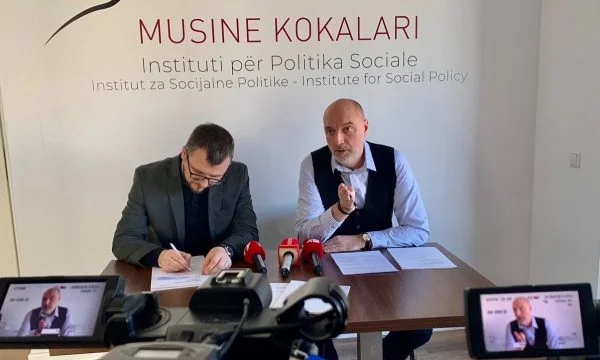
The Institute for Social Policy “Mousine Cocalari” published the three-month research on social policy treatment from the Parliament
Periskopi(4 years ago)
(4 years ago)The Institute for Social Policy Musine Cocalari has published the new quarterly research report “Social Obligement Institutions for Social Policy”. Our researchers have monitored MPs' engagement at the plenary sessions and at the meetings of five parliamentary commissions for the period of the first quarter of this year. MP activity has been dealt with in terms [...]
Our researchers have monitored MPs' engagement at the plenary sessions and at the meetings of five parliamentary commissions for the period of the first quarter of this year. Deputies' activity has been addressed in terms of how and how social issues deal with these issues, which concern the ten principles of the European Programme for Social Rights: Education and training for the job market; Equal options; Social dialogue and involvement of workers; Support for the unemployed; Including disabled persons; Gender equality; Work safety; Care and support for children; Incomes and pensions of old age, as well as access to essential services.
According to the findings, it turns out that during January, February and March 2022, MPs from the Republic of Kosovo Assembly have raised a total of 91 times from social areas to parliamentary sessions. This, including statements outside the agenda, parliamentary questions and issues that are related to specific bills.
<x) Discussions at parliamentary sessions have been objectively defined by the circumstances created due to the economic crisis that has resulted in increased food and electricity prices.
The reason why the principle of gender equality figures as one of the most mentioned topics relates to the session held for International Women's Day. Outside this session, issues affecting gender equality have been discussed only twice. Then parliamentary discussion that has been made concerning the Civil Code draft and the regulation of family relations, the civil community among people with the same sex respectively. The discussion went until the explicit use of hate language and stigmatisation to persons LGBTQI+. Mainly at stake have LVV deputies attended, where the Parliamentary Group was divided over the issue. As long as the AAK parliamentary group and the Multiethnic Group have been open and expressly opposed to Kosovo's citizens enjoying that right, the parliamentary group of The PDK and the LDK have held a abstained position in the face of the issue arguing their position with the fact that the largest parliamentary group (of ruling party) does not have enough votes to pass the law.
According to parliamentary groups, the LVV has largely raised issues related to principles :“Gender Equality” and “equal options”. Parliamentary Group The PDK, LDK and Multiethnic Group mostly issues related to the principle “Cate on core services”, while the AAK parliamentary group has mostly raised issues about the “social dialogue and the involvement of workers”. The LS Parliamentary Group has not raised any issues related to the principles of the SECS.
Although they have a huge difference in the number of deputies, LVV (59) and PDK (18), the gap between them is 2% in terms of parliamentary activity on social issues. The LDK (15 deputies) ranks third with 17% of the event, and AAK (8) with 12% of activity. multiethnic group (8 deputies) with 3% of the activity, and the Serbian List (11) with 0% of activity.
For their part, Parliamentary Commissions have never discussed social dialogue and the involvement of workers, as well as support for the unemployed.
At 34 parliamentary commission meetings have been discussed 27 times principles by the SEDS, mostly for child care and support, equal opportunities, education and training for the labour market and access to essential services.
The Commission for Human Rights since the beginning of this year has been holding meetings with various institutions for monitoring the Law for Protection Against Discrimination, as well as discussions dealing with the problem of school violence. Regarding the latter, the Commission for Education has organised a table where it is discussed integration of policies and services to deal with child violence in schools. The Commission for Health and Social Management has addressed only issues from the health field and has not affected other social issues in this period.
This project is powered and supported by Olof Palme Center.
Download publication here: https://bit.ly/3EZLth2