4 minutes ago
Stradner: To destabilise the West, Russia pushes tanks into new centres
Periskopi(4 years ago)
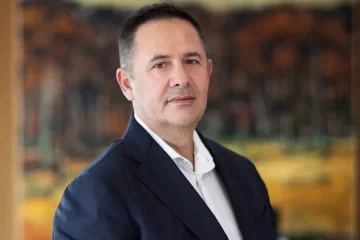
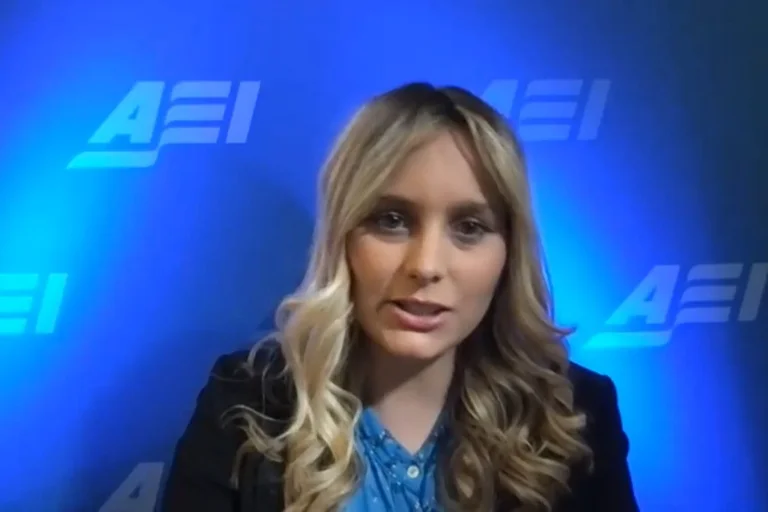
(4 years ago)The situation in northern Kosovo, for contrasting with other times, is more serious and could escalate due to additional provocations, both from Belgrade and Russian influence. So says Ivana Stradner, a research associate at the Foundation for the Protection of Democracy in Washington. In this interview for Radio Free Europe, she says [...]
In this interview for Radio Free Europe, she says NATO must use rhetoric that will let Serbia and Russia know that “is not toy”.
“Russia, to destabilise the West, does not need to push tanks to Washington or Brussels, but needs to create new sites so that the concentration weight can be fully shifted to other actions. And this is not just about Kosovo”, Stradner says.
As she points out, Russia's “corresponds to conflict in the Balkans”, and hybrid warfare is under way.
Stradner says Russia has never invested only in one party or one man, and similar things have happened in Serbia.
It affects current power, in the SNS [Serbian Progressive Party of Aleksandar Vuciqi] and also in the opposition, which very often expresses its Russian positions”.
The escalation of the conflict, according to her, is one of Russia's military strategies, in order to establish itself as mediator. This is happening even in the case of Kosovo, Stradner estimates.
“Russia, as mediator, will not be acceptable to Kosovo. But it wants to be established as mediator, that together with America and the European Union, it will try to solve this conflict, which certainly will not happen”.
She stresses that the so-called French-German plan for normalising Kosovo-Serbia relations is difficult for Serbia and Serbian President Aleksandar Vuciq will not accept it.
The Greatest escalation of the Situation
Radio Free Europe: Mrs. Stradner, in recent days, is witnessing increasing tensions between Kosovo and Serbia due to the situation in northern Kosovo. How dangerous do you see this situation?
Ivana Stradner: Unlike other times, I'm looking at very high pressure from Russia, which is undermining the concrete situation. I think, however, at this moment should not be hasty and talk about war. But I also think that this situation should be seriously seen, because, as it were, different from the other times, when it was scaled up the situation to relax it, I think we should now wait for the end of the week and see how the meeting with the United States and the European Union will take place and in what direction. So we may have a more accurate prognosis after Thursday.
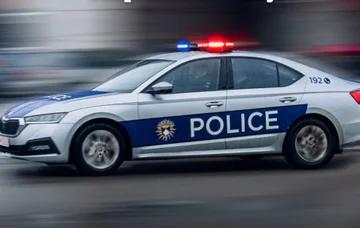
Radio Free Europe: There have been attacks on EULEX and Kosovo Police members in recent days. In fact, a cop was shot. Serbs have placed barricades on several roads in the north, already designated persons have been seen circulated in disguise and armed areas. What is the real possibility of an armed clash or conflict in northern Kosovo? We have read that even the Russian ambassador to Serbia has said the situation around Kosovo is very dangerous and can be achieved until conflict.
Ivana StradnerThat's right. Like I said, this is a much bigger escalation than the last few times. Therefore, special attention should be given to all these details. I agree when talking about Ambassador (rus in Belgrade, Aleksandar Bocan-Kharchenko), who noted his views. That's exactly what I'm trying to point out, that when compared in the past, escalations haven't been this big.
Radio Free EuropeBut we haven't heard the Russian ambassador so concrete before...
Ivana StradnerAbsolutely. I, like someone who follows Russian media and Russian influence in the Balkans, have never heard such rhetoric before. In fact, past times, they have openly said how this is just provocation, that it is just a bluff, and that there will be no conflict at all. This time, the Russian telegram is really hot, and on all sides it speaks of the possibility of conflict. Interestingly, they are not only trolls and plain bots, but they are, if I can say, serious Russian channels, including Konstantin Malofeyev (Russian oligarch), who has declared that he stands by the side of Serbia, stands beside Vucinqi, that they (Serbs) are stable, that the Russians are here and that Kosovo is Serbia. He said so openly.
Let's not talk about some other websites that are connected to the Wagner group, which are calling for conflict. They also talk about how Serbia and Serbian authorities are not sufficiently patriotic and that they must be much tougher to protect Kosovo. That's why I'm worried this situation could escalate due to additional provocations, both from Belgrade and external influence.
NATO “is not toy”
Radio Free Europe: Kosovo authorities have increased the police presence in the country's north. Serbia is seeing this as a threat to the Serb community living there. She has said she will ask KFOR to return about 1,000 members of Serb forces to Kosovo. In fact, what do these initiatives that come from Serbia mean?
Ivana Stradner: Last time, KFOR has openly said that NATO will react in case of any conflict. I think this is a step in the right direction, and this time, absolutely, I have to use the same rhetoric in order to show that NATO is not a toy.
In fact, Russia just wants to testify that through provocation it will push NATO and show that NATO is bluffing. On the other hand, what you mentioned about KFOR and Serbia, which is seeking to send the army (to Kosovo), I don't know how KFOR will react.
But it's not as important as it is that the president (of Serbia, Aleksandar) will have alibi before her citizens and say I gave everything myself, I tried it all. This Vuciki decision has to do with what the ball is to throw on NATO's ground, so that NATO can react and be in defamatory, while President Vuciq had alibis and say I tried them all, but did not succeed. We need to see this situation from a few angles. So let's see which message is being sent to the Serbian people, which order is being sent to the West and which Russia is sending.
Actually, if we look at which orders are going from Belgrade, on the one hand the order that I'm doing everything I can to keep peace. And on the other hand, the order goes, we're sending the army. Then there is a commandment for various parties.
Russia “agrees to create new”
Radio Free Europe: However, Serbian authorities have stressed that the Kosovo side is trying to clear the north of the Serbs. Authorities in Kosovo have estimated that Serbia's actions are aimed at destabilising and dividing the de-phacto state of Kosovo, and that these actions have the geopolitical background of Russian influence. Do these estimates have real basis?
Ivana Stradner: I have seen what Serbian newspapers have published on this subject. I wasn't surprised because it was just aggressive rhetoric, which is taking weeks and maybe months. I agree with you that there is tremendous Russian influence here. In the meantime, to find the cause, we need to ask ourselves why the conflict in the Balkans coincides with Russia.
On one hand, if you look at Russia, it has used Kosovo as a precedent to reason on its intervention in Ukraine. He has done this, not just once, but sometimes for different reasons. But there is something geopolitical that is far more important. Given that Russia is losing in Ukraine because its military opportunities are ever weaker, this is not so important because its military doctrine is based on hybrid warfare.
Russia, to destabilise the West, does not need to push tanks to Washington or Brussels, but is sufficient to create new sites so that the weight of concentration can be fully shifted into other actions. And this is not just about Kosovo. Look at what is happening to Azerbaijan and Armenia, see the existing crisis in Africa dealing with food and additional destabilisation that could spread as a refugee crisis in Europe. Look what's happening to gas propaganda. So this is just a part of Moscow's much larger strategy than one that only connects with Kosovo. You should be looked at in a Celtic way. Would Moscow help Serbia in the sense of sending tanks or additional weapons to Belgrade at this moment is not possible.
But again, I say this is not important, because Russia has recently opened its propaganda machine, such as RT (Russia Today), has opened Sputnik, already working, is the Wagner Center that is open. So all of this contributes to a new intensity of hybrid war in the Balkans. Whether this is going to be a serious conflict or not, that I cannot say right now. But I can certainly say that this is the continuation of the serious informative war and the hybrid war, which serves to destabilise the rest of Europe.
Russian concrete presence in northern Kosovo
Radio Free Europe: Have you noticed, is the concrete Russian impact on developments in northern Kosovo present?
Ivana StradnerAbsolutely. If you look at the Wagner group and what messages send its channels to the telegram, this is absolute evidence of their informational struggle. Let's not talk about their downtown Nis and their activities. Let's not talk about weapons shipments (for Serbia) in recent years. As I said, (Constantin) Mooffeyev stated (on December 12th) that Serbs and Vucinic will stay and that the Russians will do everything they can to help. Thus, the additional tensions that provoke them is a major signal for destabilisation. Not to speak that Russia's own ambassador to Serbia said openly that this is a step towards armed conflict.
Russia influential in Serbian power, opposition
Radio Free Europe: What is the Russian impact on the reports within the authorities themselves in Serbia, and how much later reflect on regional developments?
Ivana Stradner: Russia has never invested only in one party or one man. That is the case in Serbia. It affects current power, in the SNS (Serbian Progressive Party of Aleksandar Vucinqi) and also in the opposition, which very often expresses its Russian stances. You can see that exactly (Alexandar) Volin has been elected director of BIA (Serbia's Security and Information Agency). Let's not talk about his relationship with Russia and the documents he gave (the secretary of the Russian Security Council, Nikola) Pattrusette, putting the opposition in Russia in a very uncomfortable situation a few months ago. All of this talks about how big this is and how long it's going on.
Now, because of the war in Ukraine, many people have started to pay attention to what is happening in the Balkans. But this is nothing new. This is already lasting for years. Their investments in the media, in the energy sector, in sports, are all they've done in recent years, I can tell since 2014 and here.
Radio Free Europe: To be clear, what has Vulini offered Russia?
Ivana Stradner: Russia's opposition has had a meeting in Belgrade. Transliterations from that meeting were handed over to Ptrusev when he met him. That was months ago.
Russia wants media role
Radio Free Europe: Kremlin, through Russian Ministry of Foreign Affairs spokeswoman Maria Zakharova on December 12th, has called for diplomatic resolution of tensions in northern Kosovo. However, Zakharova has said Moscow will continue helping Belgrade, as he has said, to protect national legitimate interests in terms of Kosovo. Do you think there is a diplomatic solution if Moscow continues to help Belgrade?
Ivana Stradner: One of Russia's military strategies is precisely the escalation of conflict so that it can decide itself as mediator. That's what we have a chance to see in the region there. We can take for example the conflict between Azerbaijan and Armenia as one of the strategies. Russia's entry as mediator, at any given moment, will not be acceptable to Kosovo. But it wants to be established as mediator, that together with America and the European Union, it will try to solve this conflict, which certainly will not happen. This will not be acceptable even to Belgrade. Here is (the Kremlin's spokeswoman, Dmitry) Peskov openly said Vuciqi has not sought help from Russia.
Will Serbia accept the plan-franco-German?
Radio Free Europe: Tensions in northern Kosovo, but even between Kosovo and Serbia, have markedly risen at the very time when the European Union has delivered the updated text of the so-called French-German plan for normalising relations to authorities in Kosovo and those in Serbia. Do you see these two developments as interconnected?
Ivana Stradner: I can't find a concrete coincidence in this and whether the French-German plan actually led to this situation. I see this situation as a continuous process, because so we can say it was the preliminary proposal.
Each time we face meetings of the European Union or the United States of America, something that affects escalation is happening. But, anyway, I read about the concrete plan. It is very interesting because it says Kosovo and Serbia should find the solution exclusively by peaceful means and refrain from threats and any use of violence. These are very general things, but what is interesting relates to (Kosovo's) entry into international organisations. Of course, at this moment, this is difficult for Serbia and will not accept, which President Vuciq has spoken about. He has added, too, that Serbia will not be humiliated and will not be forced to recognise Kosovo formally. But, at that moment, he has also said that a solution must be found because Serbia is on the European road.
I have to say that Serbia is on the European road, but I am not so sure that its goal is to enter the European Union itself, because current authorities are more convening grants and additional economic aid to Serbia than entry into the EU itself. That is because EU accession would mean adaptation to institutions of rule of law. Simply, in the hybrid regime, which Serbia currently has, something like that would not be enough.
I'll get back to the topic of the Franco-German plan. We will see how the situation will develop after the meeting with the European Union. But, I don't believe that for Serbia it will be so easy to support Kosovo's full entry into international organisations, including the United Nations, because it would imply recognition of Kosovo at this moment. This does not match Serbia and neither does Russia. The European Union must understand that Serbia must set certain limits. Thus, less financial assistance or other additional measures. Serbia has not yet imposed sanctions on Russia. So it is not enough for the European Union just to initiate such a plan and think the issue will be resolved. Just to remind you that a few weeks ago (European Union Chief diplomat Josep) Borrell said openly he hopes this is the end of the intensive situations between Kosovo and Serbia. Not even a few weeks have passed, and here we are, as the Russian ambassador said, on the brink of conflict.