8 minutes ago
What do Serbs learn in a history book about Recak's Massacre?
Periskopi(4 years ago)
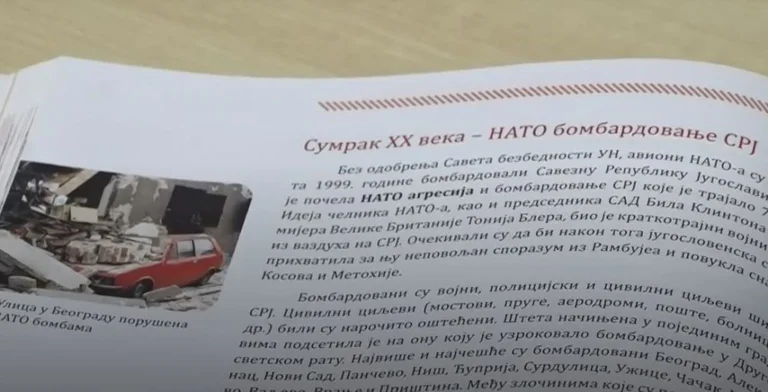
(4 years ago)Within nearly 400 pages of a history book, high school students in Serbia can learn that their neighbour, Montenegro, and Republika Srpska é one of the two main entities that make up Bosnia and Herzegovina é are Serbian “states”. In this book, students do not learn that Serbian forces committed genocide [...]
Within nearly 400 pages of a history book, high school students in Serbia can learn that their neighbour, Montenegro, and Republika Srpska é one of the two main entities that make up Bosnia and Herzegovina é are Serbian “states”.
In this book, students do not teach that Serb forces committed genocide in Srebrenica in 1995, killing more than 8,000 civilians, mostly unarmed. Other war crimes by Serbian forces in the post-Yugoslav wars are hardly mentioned at all.
Along with the Balkan Radio Service Free Europe, Jelena Djurovic, a historian from the University of Vienna, examined the accuracy of the contents of a Serbian school book in a country that in less than three decades emerged from the internal Balkan wars of the 1990s.
She singled out fragments of the book teaching Serbian youth about the collapse of Yugoslavia's Federative Socialist Republic(RSFJ) and its successor states, as a mixture of troubled “declarations, selective presentation of facts, a focus corresponding to Serbian nationalism”.
The book is one of several textbooks teaching high school students in Serbia. It was published by Belgrade-based Novi Logos press in 2021, author Dusko Lola persecuted Ratomir Milikiq and Maja Milinovic.
Serbian “States”
Besides the Republic of Serbia, Serbian states (those where a large percentage of the Serbian population lives and where the Serbian language is spoken) are Republika Srpska (such as the constitutional part of Bosnia and Herzegovina) and Montenegro.
Montenegro and Bosnia and Herzegovina are internationally recognised countries whose constitutions define them as independent and sovereign and not as “serbe”.
The two states were part of RSFJ, which existed between 1945 and 1992, and prior to that, from 1918 they were part of the Kingdom of Serbs, Croats and Slovenians.
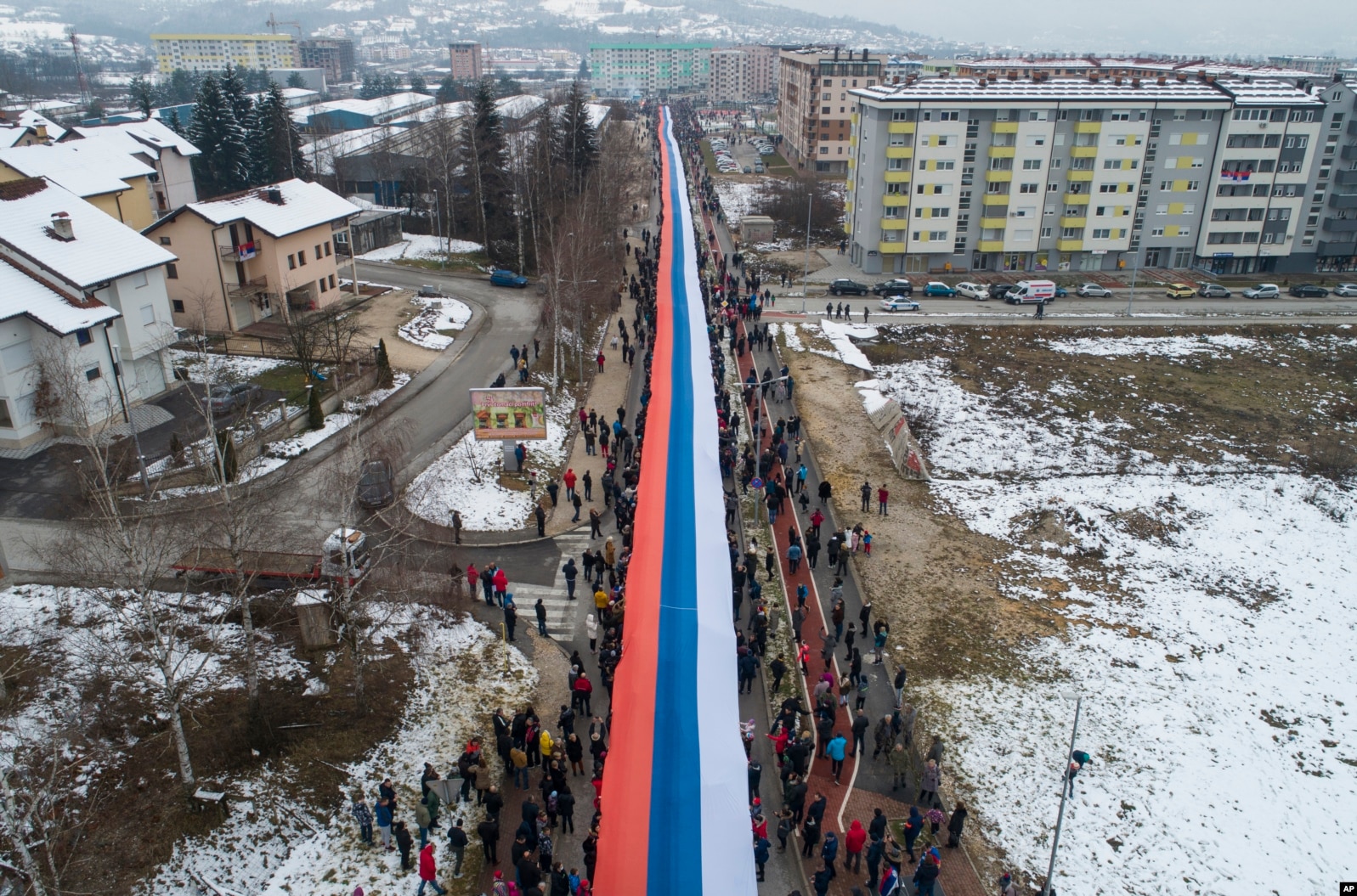
With the fall of the Eastern Block, Bosnia declared its independence after the referendum held on March 1st 1992, (after similar statements by Slovenia and Croatia). The 1992-1995 Bosnian war, which pitted Yugoslav Army units and their Serb descendants against Bosniak and Croatian forces, began after recognising Bosnia from many countries in Europe and beyond.
Bosnia was accepted as a member of the United Nations in May 1992.
The Bosnian Constitution, which consists of Republika Srpska and the Federation of Bosnia and Herzegovina, along with Brcko's self-government district, has emerged from the Dayton Agreement, which ended the war in Bosnia in 1995.
Montenegro declared independence after a referendum held in May 2006 and was soon recognised by the five permanent members of the UN Security Council.
Djureinovic, a historian, notes that the repeated type of school text for Montenegro and Bosnia and Herzegovina as Serbian “states”, in fact, “represents the position of the author, not claims that are scientifically based”.
When we look at the title of the Serbian chapter, we see that it has nothing to do with historical science”, she says.
In a response to the Balkan Radio Europe Free Radio Service, editor Novi Logos said that the use of the Serbian term “orange “has been described through the Serbian state educational programme for the earliest medieval “for the areas of medieval Zeta, Travunia, Rashka, Zahumlje, Bosnia and Paganija, which would partly correspond to the areas of Montenegro, Serbia and the Bosnia and modern Herzegovina”.
Such observology has been used in Serbian history for more than a century and a half”, the editor says.
“Threatening Serbs in Montenegro”
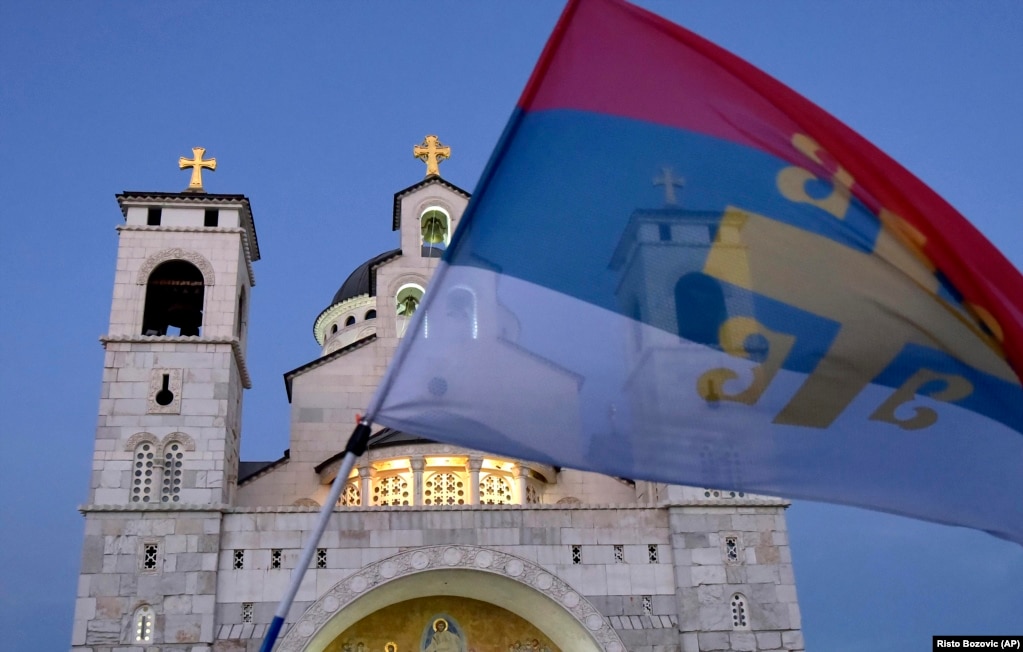
“Serbs in Montenegro found themselves in a difficult situation following the independence of that republic in 2006... Under the rule of Milo Djukanovic, Serbs in Montenegro were dismissed from civilian service and removed from all state positions. Authorities in Podgorica tried in every way to reduce the number of Serbs living in Montenegro”.
Citing these claims, among other things, on 13 October, the Montenegrin civic initiative called “21 Maji” demanded that this school book be removed from use. She argued that “is unacceptable for the literature of textbooks to be based on lies and nationalist positions”. This civic initiative described the characterisation of the alleged cleansing of Montenegro's public sector as the inappropriate and groundless “”.
Novi Logos told the REL that “crictics [for the school text] were probably born as a result of internal political events and interparty friction in Montenegro, and that neither the Republic of Montenegro nor the National Council of Montenegrin Ethnic Minorities in Serbia were behind this initiative” to attract the school text.
However, local media report that Podgorica responded on protest note to Serbia and asked for the removal of controversial pieces in the school book.
Djureinovic, a historian, calls these pieces of text <x0* unfounded files of author” not based on reliable scientific literature since the breakup of Yugoslavia.
The “is not only promoting the torture that Serbs can only be heroes, defenders or victims, but also legitimising Serbian policy of intervention in Montenegro”, she says.
The war in Croatia and the Vukovar siege. Who are the victims?
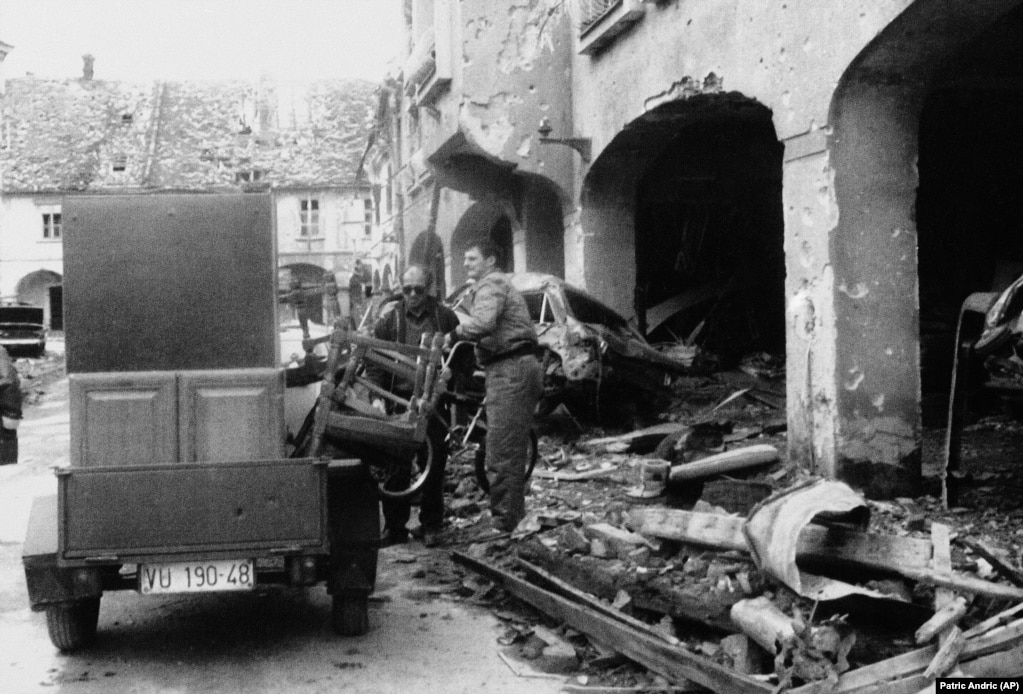
School text teaches students that, <x0 civil war that erupted in Croatia, caused major casualties among Serb civilians”.
War crimes against Croatian civilians during 1991-95 are never mentioned in an experimental way in this school text.
When we talk about crimes committed against [any other than] the Serbian population, the voice is used passive, and we learn simply that crimes have been committed but we don't know who committed or against whom they were committed. In these cases, students can easily assume that the victims are Serbs because of the misery and suffering of the Serbian people who go through the entire lesson”, Djureinovic says.
For example, the quarterly siege of Vukovar, in eastern Croatia, is described as follows:
The “was held a battle for Vukovar, a town on the Danube where an approximately equal number of Croats and Serbs, mayor, lived, was elected a Serb. Croatia sent a large number of irregular military units to Vukovar to implement the new laws that were adopted in Zagreb. Several thousand people died in the city war, including a JNA general [Yugoslav People Army]. During the fighting there have been war crimes against the civilian population”.
Vukovar was under siege by the Yugoslav People's Army and Serb paramilitary formations for 87 days between August and November 1991.
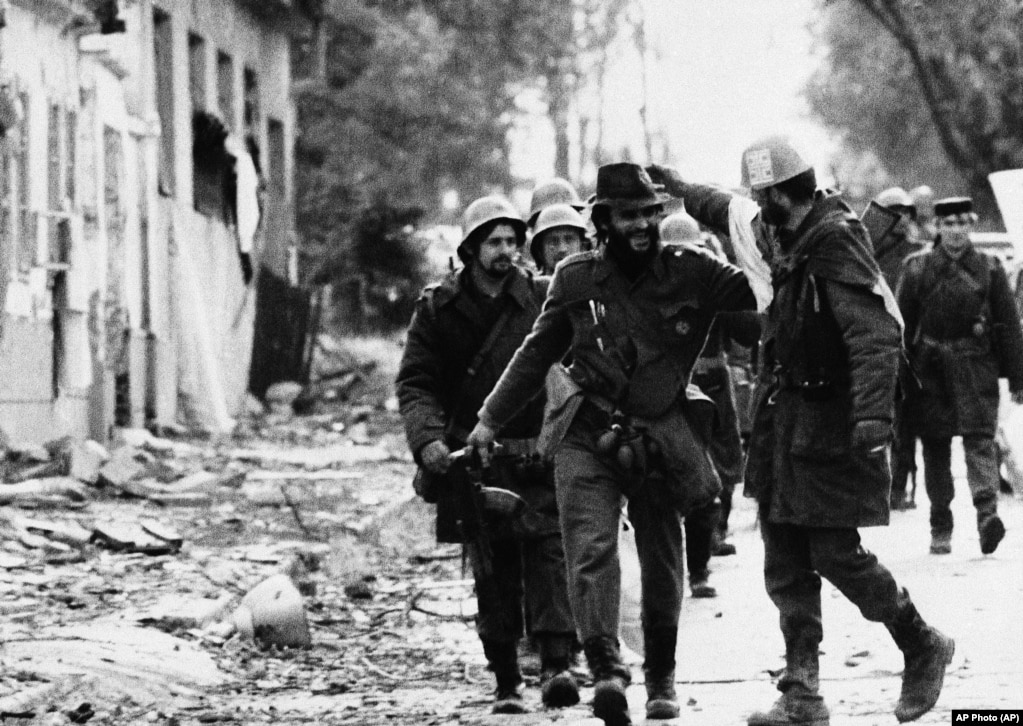
According to Vukovar hospital, 1,624 people died during the nearly quarterly siege, and more than 2,500 were injured. About 5,000 people were sentenced to camps in Serbia, and about 22,000 Croats and other non-Serbs were expelled from the city.
At one point, the Yugoslav People's Army took out many of the wounded, including civilians, from Vukovar hospital. They were killed the night between November 20th and November 21, 1991, at the site of a former agricultural conglomerate and livestock farm known as Ovcara.
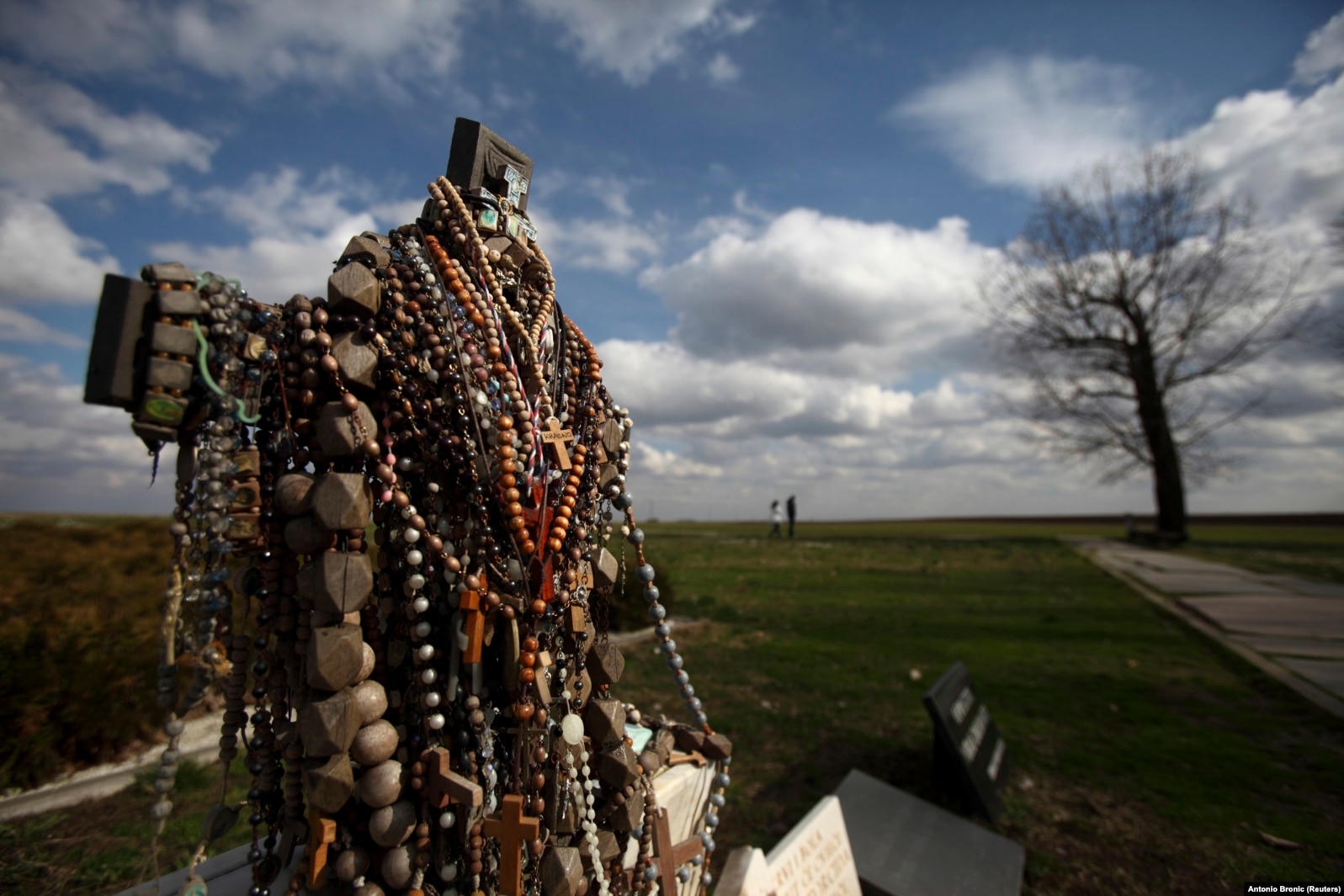
Veselin Sljivancian, former security chief of a Yugoslav People's Army Guard, was sentenced by the International Criminal Tribunal for the former Yugoslavia (ICTY) in The Hague, to 10 years in prison for assistance and inciting the torture of prisoners in Ovcara.
Djureinovic says the lessons of the school book over the 1990s “fully reflect official [historic] memory policy and the [Serb] government's stance on the” wars.
Such an alternative, she says, is common for almost all history texts in Serbia, since wars in the former Yugoslavia were put into program plans.
Text editor disputes that the school book is written “automatically for students in the Republic of Serbia”.
The author's <x0).
They add that the school text “includes examples of horror and suffering from all warring parties, with particular focus on Serbs and Serb-inhabited areas, up to massacre”.
Sarajevo siege
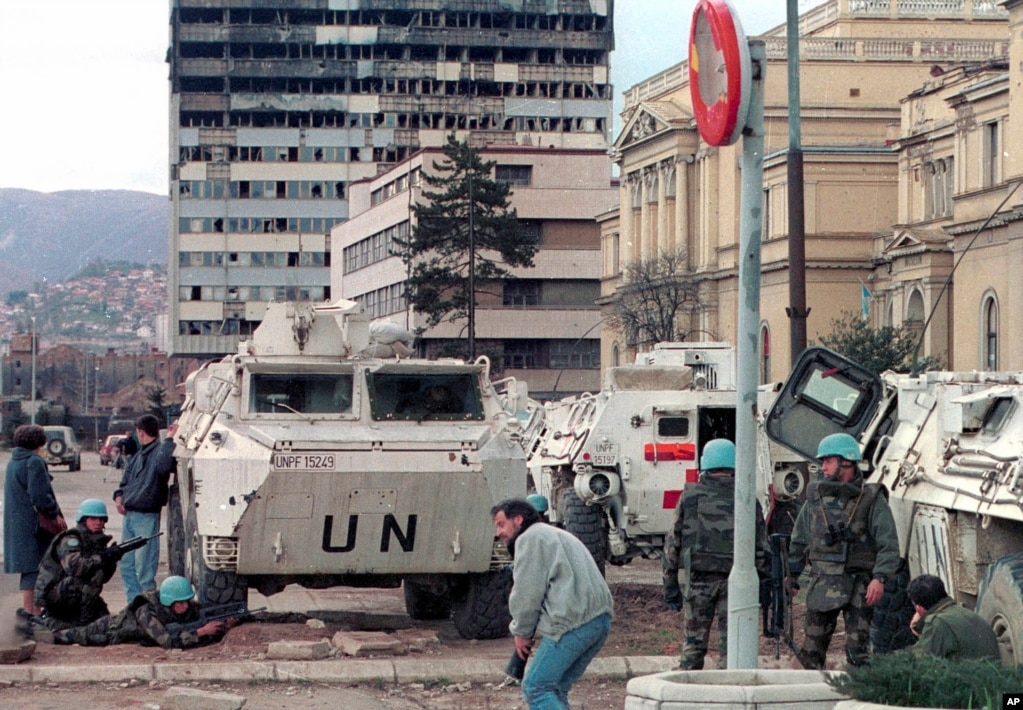
“Sarajevo was under a partial blockade by Serbian forces, and many Serbs remained imprisoned in the city, as Muslim military forces did not allow them to leave. Wars were under way around the city and war crimes against Serbs were committed in the city, as confirmed in 2021 by an independent international commission”.
The Bosnian Serb Army, known as the Republika Srpska Army (VRS), laid siege to Sarajevo in April 1992, a city of over half a million people according to the 1991 census.
The siege ended in February 1996.
During that 1,425 - day period, hundreds of thousands of shells fired the city from the surrounding hills, and more than 11,500 people were killed, including some 1,600 children.
The Hague war crimes tribunal sentenced three commanders Stanislav Galic, Dragomir Milosevic and Momcilo Perisic to prison for their role in the siege.

“Pjesa [where talking] about the siege of Sarajevo is perhaps the most offensive example of distorting the facts”, Djureinovic says.
In response to criticisms for the lessons of the school book for the breakup of Yugoslavia and the impression that “alone Serbs were victims”, Serbia's State Institute for Education Improved says: “We assure you that you can easily achieve a large number of historians, who would also be unhappy with the content of the school text, but would declare that Serbian suffering was not described enough in<3>.
The institute further says Serbia's <x0texts do not present the biggest obstacle to the process of reconciliation on the territory of the former Yugoslavia, taking into account several other educational systems, where textbooks literature often has characteristics of reading propaganda”.
Representatives of the institute refuse to specify which educational systems they refer to.
Genocide at Srebrenica
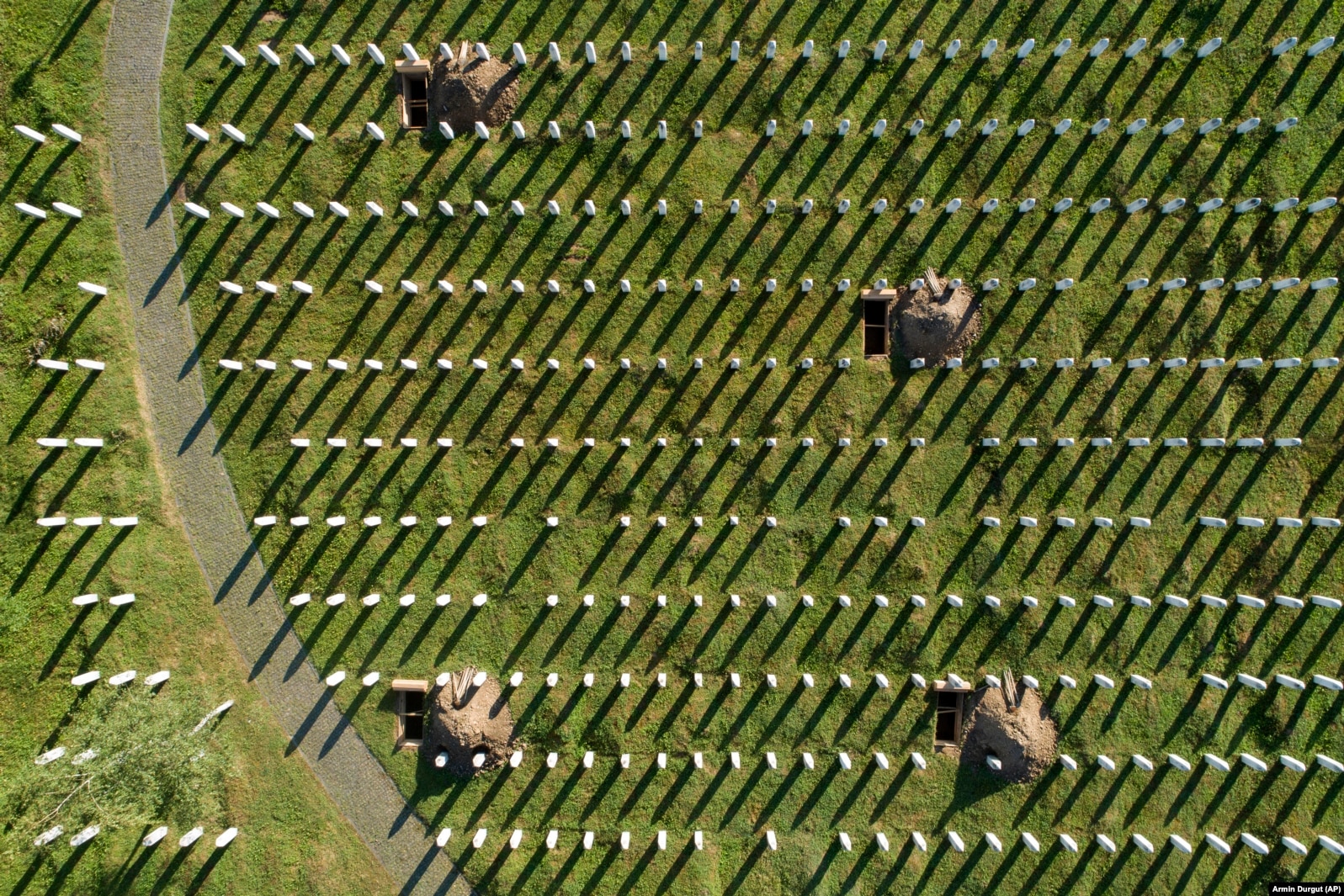
“ ... during the 1995 invasion of Srebrenica, Serbian entities committed serious war crimes against Muslim fighters and men struggling to get out of the city. A number were caught and shot, while others died in combat. Historians still disagree over the number of dead and dead”.
Djureinovic says this is the only war crime committed by the Serb forces mentioned, with every detail, in the school text.
However, more than half of that text is dedicated to crimes against Serbs (about Srebrenica before 1995), so the genocide in Srebrenica was only described as serious war crimes'”, she says.
Authorities in Serbia still deny that genocide was committed in Srebrenica, although the International Court for the former Yugoslavia (ICTY) has concluded differently.
Denying Srebrenica genocide
Republika Srpska Army forces (VRS) killed 8,372 non-Serb men and boys in and around Srebrenica. More than 25,000 women, children and elderly people were expelled from what was defined as a secure “area” under numerous UN resolutions.
More than 50 individuals have been sentenced to over 700 years in prison for genocide or other war crimes at Srebrenica. Besides The Hague, courts in Bosnia and Herzegovina have also characterised crimes there as genocide the only one on the territory of the former Yugoslavia during the 1990s wars.
Radovan Karadzic, The first president of Republika Srpska's entity in Bosnia and Herzegovina, by The Hague war crimes tribunal, was sentenced to life in prison for genocide in Srebrenica, among other crimes.
The commander of the Bosnian Serb Army, Ratko MladicHe was also sentenced to life imprisonment by this court, including a sentence for genocide in Srebrenica.
Some 6,652 victims have been buried so far at the Srebrenica Memorial Centre in Potocari, and another 237 have been buried elsewhere at the request of their families.
Investigators and forensic experts are still searching for the bones of more than 1,000 other Srebrenica victims.
War in Kosovo
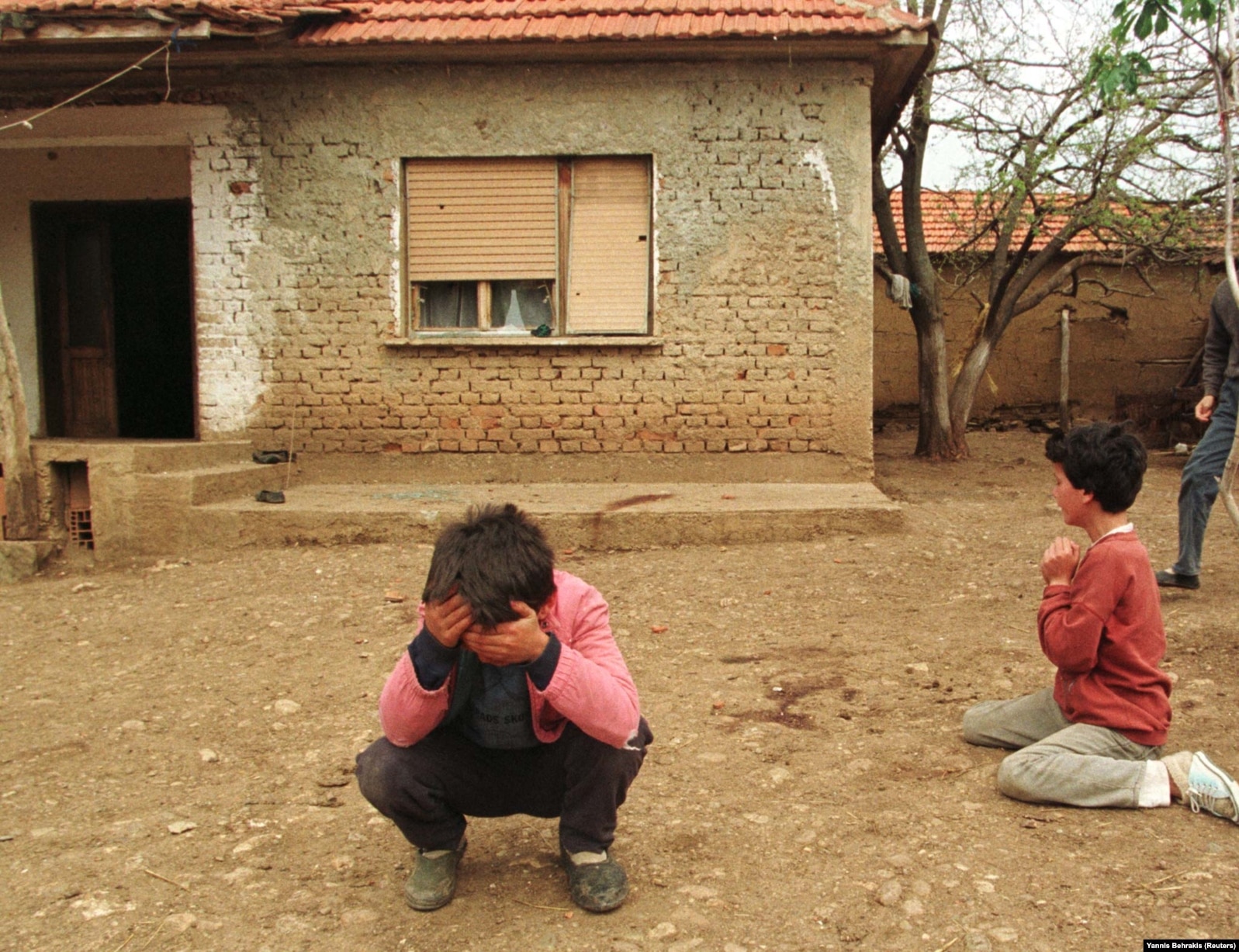
“At the end of the 20th century (1999), the Kosovo crisis and Metohija led to NATO aggression and the bombing of the Federal Republic of Yugoslavia. The NATO pact's aggression ended with NATO troops coming to Kosovo and Metohija, which was followed by numerous crimes against Serb civilians. The Serbian Army and a large number of members of the Serbian people later left Kosovo and Metohia. Violence against the Serb population continued”.
“Nowhere in the school text is there any history of conflict, nor does the numerous war crimes committed by the Yugoslav Army (against ethnic Albanian civilians) for which there is an indictment and bias by the International Criminal Tribunal for the former Yugoslavia”, says Djurinovic.
In March 1999, NATO forces began shelling the Federal Republic of Yugoslavia because of the alleged exodus and crimes committed by Serb military and police forces against Kosovo's ethnic Albanian population.

“early in 1999, Serbian forces clashed with the KLA [Kosovo Liberation Army] and liberated the Kosovo village of Recak from Albanian terrorists. William Walker, chief of the OSCE monitoring mission that was in Recak during the conflict, accused Serbian forces of war crimes against Albanian civilians who were neither in the village of”.
On January 15th 1999, Serbian police and military forces in Kosovo killed 45 ethnic Albanian civilians, including women and children, in Recak.
The Hague tribunal concluded that most of those killed were shot in the head, apparently from a nearby distance.
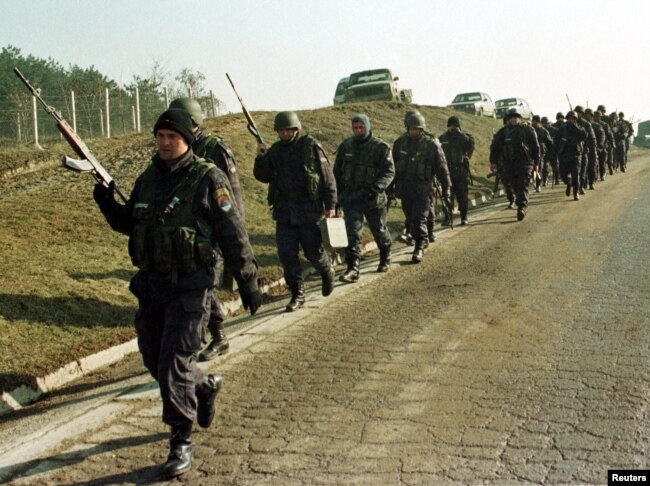
Multiple Reports From O The SEU and Human Rights Watch (HRW) characterise the events in Recak as a massacre against ethnic Albanian civilians by Serb forces.
The massacre was devastating for NATO's decision to launch air strikes against the Federal Republic of Yugoslavia.
Serbian authorities, including current Serbian President Aleksandar Vuciq, describe Recak as an incident of “backed”.
How did the Serbian government and editor respond to criticism of the school text?
Critics concerning the school text, Serbian institutions have responded by saying it has been adopted in accordance with Serbian law.
The Institute for Education Improved told the Balkan Radio Europe Free Radio that the school text, published by Novi Logos, follows the curriculum and “is based on accepted scientific theories, facts, conclusions, interpretations, current data and contemporary achievements”.
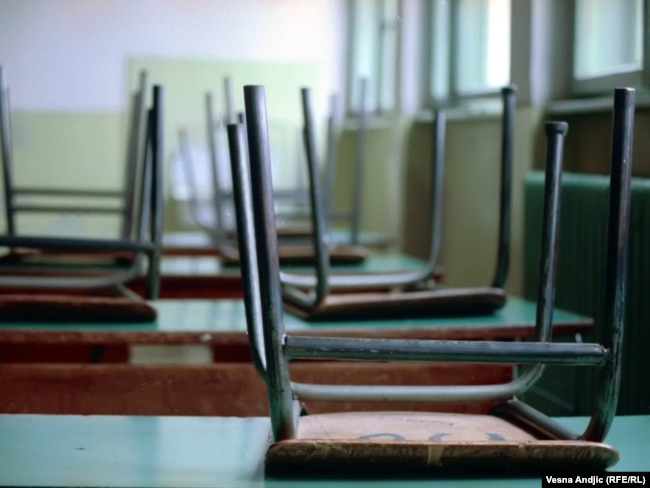
Novi Logos says the school text “is not written under the copyright's free judgment, but exclusively in line with the teaching plan [which is] appropriate for the age of students”.
“Autors tried to present the events or personalities described by the plan-program” objectively and impartially, the publishing house's response said.
What do Serbian students say?
“[ The former Yugoslavia] led an anti-Serb policy at many moments”, says 19-year-old Milica, who graduated from a Belgrade high school last year, for lessons she learned from the history class for the breakup of Yugoslavia. The “was wrong for the Serbian people, devastating for us”.
Although textbooks contain lessons on the breakup of Yugoslavia, another high school graduate, in 2022, Ilija Siljegovic, says that he and his classmates were not taught anything about it.
The last “we had was World War II and its aftermath”, he says. “
Another student, Marko Ogrenjaq, also says he has learned nothing at school about the war on the territory of the former Yugoslavia.
Because of the choreography, we were left behind with lessons. The professor told us to try to investigate and learn from ourselves”, he says.