8 minutes ago
Sarrazine: The crisis in the north is a great opportunity to be exploited
Periskopi(4 years ago)
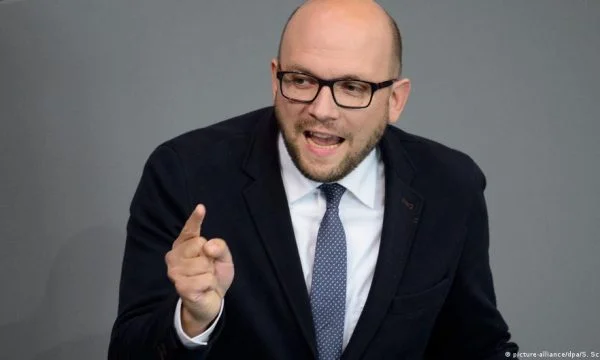
(4 years ago)German government representative for the Western Balkans Manuel Sarrazin said the crisis in Kosovo's north should be used to further boost Kosovo-Serbia dialogue. During a virtual discussion organised by the Atlantic Council in Washington, Sarazin expressed disappointment that the Berlin Process, though recently revived, thanks to a greater commitment [...]
During a virtual discussion organised by the Atlantic Council in Washington, Sarazin voiced disappointment that the Berlin Process, though recently revived, thanks to a greater commitment by Germany to the Balkan region, has failed to produce greater results.
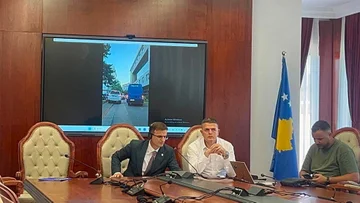
The crisis in Kosovo's north should serve to give a boost to the dialogue between Kosovo and Serbia, German government representative for the Balkans Manuel Sarrazin said during a virtual discussion organised by the Atlantic Council with headquarters in Washington.
Using this crisis as an opportunity to move the dialogue forward, taking into account the European proposal that Mr. Lajcak, Mr. Borell and German Chancellor, are working with the French president. This is a great opportunity to take advantage of, instead of having these countries drill each other's pits at risk of the entire region falling inside of them”, Sarrazin said during the discussion, the Voice of America reported.
He added that the Berlin Process, aimed at strengthening ties between the Western Balkans and several EU countries, revived with the new German government and starting the war in Ukraine. The last meeting, held in October in Berlin, and then the summit in Tirana ended with reaching some agreements that will impact the lives of Balkan citizens. But Sarazin expressed disappointment that this positive atmosphere created did not bring more positive results to the region.
We may have managed to revive the Berlin process, and we have to continue it, but I hoped that this positive atmosphere would bring more results about hot themes. But, we still have time, so let us remain optimistic and loyal to the idea that sometimes we should take even small steps, such as the one with free movement or the awards of telephone calls to be reached in Tirana and not forget to apply these small steps”, Manuel Sarrazin said further.
In a discussion on the “road forward on regional integration initiatives in the Western Balkans,” there were no guests from Kosovo. Serbian Minister for European Integration Tanja Miscevic said that in her country it is very difficult to talk about European integration when the topics that dominate are developments in northern Kosovo or relations with Russia.
“All sides should be ready for dialogue and problem resolution. Serbs decided to leave Pristina institutions after saying their voice was never heard. However, I agree that it is very important for all to use the current crisis to find solutions”, said Mrs. Miscevic.
During the debate, the Balkan countries' EU integration was also long discussed. Albania's former foreign minister, Ditmir Bushati, recalled that next year is 20 years from holding the Thessaloniki summit, where the European bloc pledged that the Balkans has European future.
“I am concerned about continuing the integration process, which after the start of Ukraine's Russian occupation has become a need, is no longer simply a matter of political will. But if there is no predictable deadline for the Western Balkans, then that makes things difficult. Next year is 20 years from the Thessaloniki summit, and only Croatia is the one that joined the EU from the region. The gap between us is unfortunately not shrinking, but it is growing”, Bushati said.
During the discussion, the differences between the Berlin Process and the Open Balkans Initiative were also discussed, the initiative of three countries in the region, Albania, Serbia and Northern Macedonia. The German government's representative compared the Open Balkans to a good football player who is currently sitting on the bench, as the team in this case has revived the Berlin Process and is achieving success even without it.
Even in the future, there will be no need for both processes to join, as the main thing is to provide good results and goals to be good. It's not important whether thoughts are different until the end is the same”, Manuel Sarrazin said.
Serbian Minister for European Integrations said both processes do not create confrontations with each other, while warning that the upcoming Open Balkans summit will be held this month in Tirana.