8 minutes ago
For the return of Serbian forces to Kosovo “puts KFOR”, not Belgrade
Periskopi(4 years ago)
(4 years ago)A day after authorities in Serbia said they are considering sending their security forces to Kosovo, much is unknown whether and in what way this could be done. In response, Kosovo President Vjosa Osmani said that “on the territory of the Republic of Kosovo will not have [...]
In response, Kosovo President Vjosa Osmani said that “on the territory of the Republic of Kosovo would never again have police and soldiers of Serbia”.
At their warning, authorities in Belgrade responded to the increased presence of the Kosovo Police in the northern part of the country, which is inhabited by Serb majority.
To this point came a month after Serbs in the north left Kosovo institutions.
Serbia's prime minister, Anna Brnabiq, reiterated on Friday what the chief of the Office for Kosovo in Belgrade, Petar Petkovic, said the right to consider sending its forces to Kosovo under UN Resolution 1244.
Serbian police and the Yugoslav Army have withdrawn from Kosovo in the summer of 1999, following the signing of the Kumanovo Agreement.
This agreement has ended the war in Kosovo and NATO bombings on the limits of then Yugoslav Army.
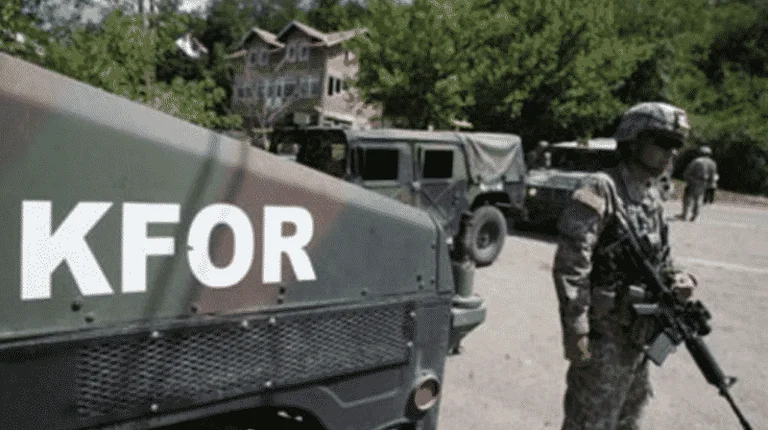
Since then, Kosovo peacekeeping mission has been deployed NATO, KFOR, which currently has about 3,600 troops.
Radio Free Europe questions related to warnings of sending Serbian forces to Kosovo, Serbia's Defence Ministry and the Office for Kosovo to the Government of Serbia did not respond.
Kosovo has declared independence in 2008, but Serbia continues to oppose it. The two countries, since 2011, have been negotiating the normalisation of relations under the European Union's mediation.
“
Constitutional Law Professor at Pristina University, Arsim Bajrami, tells Radio Free Europe that Resolution 1244, but even the constitutional acts of Kosovo clearly show that Serbia cannot have security forces in Kosovo.
“On constitutional legal terms, Kosovo has full territorial integrity guaranteed with its declaration of independence and with its Constitution confirmed with the International Court of Justice's advisory opinion. Any provocation of Serbia for the eventual deployment of Serbian troops is a threat to constitutional aggression”, Bajrami says.
According to him, Resolution 1244 has mandated KFOR's multinational force to guarantee Kosovo's internal and external borders.
Bajrami recalls, too, that with the Kumanovo Agreement, Serbia has accepted the full withdrawal of its forces from Kosovo and stresses there is no right to sending Serb forces to Kosovo.
Former Kosovo Defence Minister Anton Chun, currently deputy of the Kosovo Assembly, tells Radio Free Europe that “no political, legal, moral and historical rights is in favour of the involvement of Serb forces in Kosovo”.
“Not power, but no single Serb soldier has the right to tread on Kosovo territory”, Chun says.
Subtitles:
Nikola Lulunic, executive director of the non-governmental Council of Belgrade for Strategic Policy, tells the REL that Serbia cannot decide for itself when to send troops to Kosovo.
According to him, such a decision cannot be considered without KFOR and the UN.
The “is a populist statement directed at domestic political opinion, but extremely dangerous. It wakes up all the nationalist instincts of our people”, Lounic says.
KFOR's mission did not answer REL's question of how it comments warnings from Serbia.
Dusan Janjic, from the Belgrade-based Forum for Ethnic Relations, says that “is not prohibited” for someone to consider something, but that in this case “is not desirable”.
“ ... because it can and is already causing broader consequences to people, directly promoting fear of war, even to international actors who deal with the Western Balkans”, Janjic says of Radio Free Europe.
He adds that with Kosovo's 2008 independence declaration, a new “reality was established in Kosovo.
Since then, he says, a series of documents have been signed “, both with the European Union and with NATO, with which “the limit” has been regulated.
Janzic says that the EU's failure is that since 2011, when negotiations between Kosovo and Serbia began, until now, “has refused to decide on the agenda a security package which would clearly define channels of co-operation in the security sector”.
The Brussels Agreement says only one thing which Serbia has begun to breach to integrate the various security structures into the Kosovo system. There has been no consistency on the part of the EU in monitoring the implementation of this”, Janiq says.
With the Brussels Agreement signed by Kosovo and Serbia in 2013, it has been determined that a single police force, dubbed Kosovo Police, will be integrated into the Kosovo Police Framework.
In early November, Serbs from the north of Kosovo have left Kosovo institutions, including the police, due to the Kosovo government's decision to replace illegal Serb license plates with the license plates it issues.
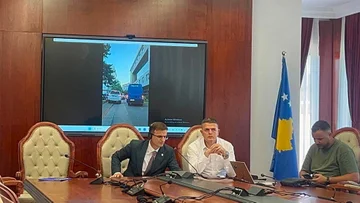
Kosovo Assembly deputies on Friday expressed concern about the situation in the north, while opposition parties demanded the Government be responsible for the actions it takes.
They also demanded that the government coordinate any action with the United States.