12 minutes ago
Rafuna: Kosovo at risk of economic recession
Periskopi(3 years ago)
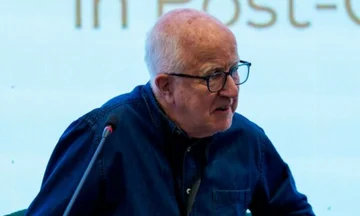
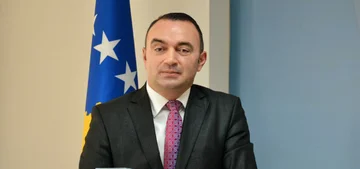
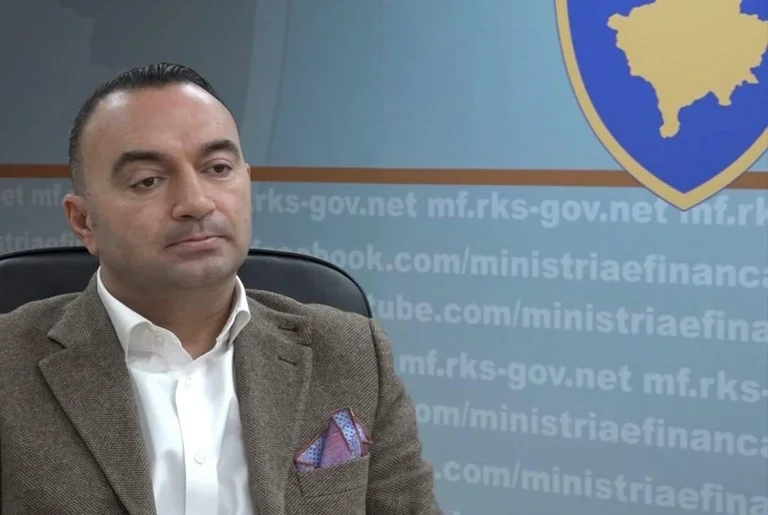
(3 years ago)The chairman of the Kosovo Economic Ode, Lulzim Rafuna, says it is very likely that European Union countries will get into recession, or general decline in economic activity, in 2023. In that case, the recession would also be reflected in Kosovo, Rafuna says in an interview for Radio Free Europe. Rafuna, too, [...]
In that case, the recession would also be reflected in Kosovo, Rafuna says in an interview for Radio Free Europe.
Rafuna, too, says that forecasts for economic growth in Kosovo this year, “will not be enough” for development and employment.
Production and attracting foreign investments are the main points Kosovo should focus on, he says, among other things.
Radio Free Europe: Economic growth in Kosovo this year, according to the World Bank, cannot be more than 3.01 percent, while a year ago it was above 10 percent. What affected this impasse?
Lulzim Rafuna: There are some elements that have promoted this setback. The Ukraine-Russia war was the one that led to the rising inflation, then the high price of electricity and the high prices of derivatives. These are factors that affected slow economic growth not only in our country but also in the region and Europe.
Radio Free Europe: How much is this increase enough to address Kosovo's economic problems?
Lulzim Rafuna: That's not enough. Single economic growth does not create employment. We, over the years, have gone on economic growth of up to 5 percent and have seen that for development and employment, we need the digital economic growth that we haven't achieved this year.
Radio Free Europe: The current Kosovo government has summed up a string of achievements in the economy for 2022, such as export growth, increased employment... How real are these?
Lulzim Rafuna: As for employment, we need to get inside the facility where employment took place, in which sectors. As a total figure, there has been employment, but if business data is seen, most are job forms, especially in the gastronomy sector. This is a part of employment.
The rest is youth leaving. Several jobs have been released by a portion of the young people who have found jobs outside Kosovo, and those countries have been replaced by other people's employment, and this figures us as new employment.
Another part of the employment is done by the development of businesses, which have done with their capital and opened up opportunities for new employment.
As for increasing exports, the absolute majority of exports have been made thanks to private investments in companies that have received different loans to develop. Kosovo's export growth has made businesses themselves without any state subsidies.
It would be good to have Government support the manufacturer. In the past, governments have had great subsidies. Now there is a measure that the current government has undertaken, such as subsidising the interest of the credit for export, but must go away, it is not enough.
Electricity shortages are damaging businesses
Radio Free Europe: Unstable electricity supply continues to remain a problem in Kosovo. It has been warned of a difficult winter in the energy sector. How will this affect businesses?
Lulzim Rafuna: We've had meetings with our community. Kosovo Economy Minister Artane Rizvanolli has warned since August that there will be difficult winters and energy price increases. This has caused uncertainty in businesses.
If electricity prices rise, then it will reflect on the increase in product price, because business calculates it in product and that product comes out to the most expensive citizen.
Second, if there are reductions of electricity, our producers will have problems. They're recent technology devices and they're sensitive. All the first stuff that's in the process of production as the power stops until the generator activates, all that part of the first or half product is wasted. This is an additional cost to our product. Businesses have told me some devices do not know the generator and can't be activated by generator, which is a big problem.
If the price of electricity increases, it should be seen from the state that the higher share of the price should subsidize businesses so that they do not calculate it to the product that the citizen then pays.
Radio Free Europe: Businesses, this year, have reported difficulties in completing free jobs. How much has this affected their development?
Lulzim Rafuna: Businesses cannot carry out their activity without a labour force. Businesses have moved with salary increases for workers, with the aim of better working conditions. The workers I have met in these private businesses have not filed complaints with the pay issue or working conditions. But the workers' flight is continuing.
The trend of workers leaving is a trend not only in Kosovo, but throughout Europe. We have to take measures to stop young people from leaving. Currently, there are many young people who graduate from colleges and cannot find jobs in Kosovo and are leaving abroad.
Education is a problem in Kosovo. Education should be in relation to market demands. You can't go to a job that doesn't require a market. In education in Kosovo that happens.
Radio Free Europe: What can be done by businesses, but what can the authorities do to stop fleeing the workforce?
Lulzim Rafuna: The attraction of foreign investment. Like. In Serbia, German companies are investing in this state and not only are employing workers where they are being deployed, but they also motivate Serbs in Germany to return to Serbia. So this should be our government's [eye] for attracting foreign investment.
It is very important that the Government has a strategy for how to bring back the young people who emigrate. So, to turn them into investors, and investors from the diaspora to subvention production, equipment and fundamental capital.
Foreign workers offer no security for businesses
Radio Free Europe: Because of business difficulties in fulfilling jobs, is there an interest in getting workers from outside Kosovo?
Lulzim Rafuna: There is interest, but it is a challenge, because the absolute majority present to come to Kosovo to work do not tend to stay in Kosovo. Kosovo wants to use it as a transitor to go to Europe, so our businesses still cannot count on that workforce, especially Asian countries. It's business uncertainty.
Recently, Turkish workers' arrivals have arrived. They are more stable, they are coming as workers and then they are establishing their own businesses in Kosovo.
Radio Free Europe: Foreign investments in Kosovo continue to be low. What's the problem? Why don't we have foreign investments?
Lulzim Rafuna: Rule of law. We're stuck. Three to four years lasts an administrative dispute to be resolved only on the first scale, not to talk about whether the item goes to the Appeals Court there will take seven years to settle. But if we have a business dispute that captures numbers of millions or billions... how long would it last? These are elements where the state should intervene.
Radio Free Europe: Is establishing the Commercial Court now a good opportunity to resolve these economic conflicts between businesses faster?
Lulzim Rafuna: It's an opportunity and it started out well, but it's in the beginning. We pray that they will not carry the old Comercial Court. However, this is just a link, it's just a Commercial Court... Where is the fiscal division that deals with Customs, Kosovo Tax Administration, where the Labour Court is... there are many more that should be effective.
Sometimes, for business, it's not important to get requests or complaints about how important it is to get the right answer in time.
Radio Free Europe: The open political problems Kosovo continues to have with Serbia and continuing tensions in northern Kosovo... Have these affected the country's economy?
Lulzim Rafuna: They didn't affect him much until the barricades in the north were placed, weeks ago. Business is not about politics. The established barricades are not a good mirror because all foreign televisions report these barricades and tensions in the north. This for the foreign investor creates uncertainty about investments in Kosovo. So it is a signal to the investor that it should not rush into investing its capital in Kosovo.
We, as institutions, should promote security, should promote Kosovo as a safe state for investments. Kosovo needs foreign investments that restore the economy.
The Focus on Production
Radio Free Europe: In what sectors should you invest in a faster economic recovery?
Lulzim Rafuna: Production is the sector where even the state, with all its power, must engage to direct investments both foreign and domestic.
Production is what brings us economic development, production is what lowers the unemployment rate and production is what raises the social welfare of Kosovo citizens.
Radio Free Europe: What awaits Kosovo's economy in 2023?
Lulzim Rafuna: The year 2023 is being divided into two parts. By June-July I see it as a huge challenge. As the trains are going, and according to some reports I have managed to read, there is a huge possibility that some European Union states will get into recession. If the European market enters recession, it automatically reflects on Kosovo. The European market has not had a recession since 2008.
If we survive this, then the second half of the year is more optimistic. It makes me optimistic that the price of derivatives is starting to fall. European Union countries have provided alternative energy sources and are not dependent on Russian gas. Also, on the European market, the price of gas has not suffered rising and has begun to decline. International transport spending has begun to decline. These are the indicators that take me to the second... If the European market does not enter the recession, the second part will be more optimistic.
Radio Free Europe: What if we have a recession?
Lulzim Rafuna: It remains to be seen in 2023.