3 minutes ago
Murati: North is heavy burden on Kosovo, Kurti approach wrong
Periskopi(4 years ago)
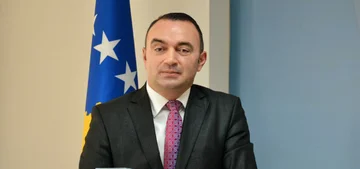
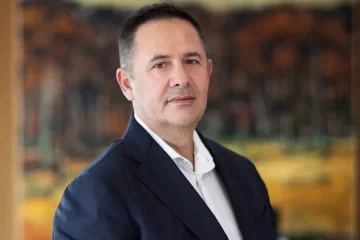
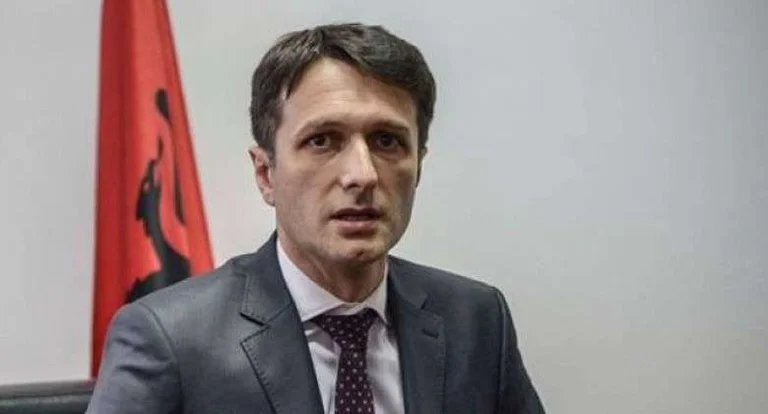
(4 years ago)Movement for the Union Chairman Valon Murati has said the north continues to be a heavy burden for Kosovo. He stressed that politics, not only has ignored the north, but has directed the debate on resolving its problem in the function of internal political war. In this interview for “The age of [...]
He stressed that politics, not only has ignored the north, but has directed the debate on resolving its problem in the function of internal political war.
In this interview for “The new era”, Murati has stated that Prime Minister Kurti's approach has not resolved anything in the country's north.
While talking about the Association of Serb-run municipalities, Murati has said its foundation would turn into a heavy stone on the back of Kosovo's fragile state.
In this context, Murati has said that in the situation Kosovo is in, under pressure to implement association and become part of an agreement that is not the solution to problems with Serbia, the most appropriate approach is for the negotiating table to be applied for resolution, even the issue of Eastern Kosovo.
“Repointing the borders would mark the closure of the chapter of the Albanian-Serbian conflict in the Balkans, and I believe it would mark the beginning of a new era in these relations and within them of Kosovo with Serbia”, Murati has said.
“Murati how are you seeing general developments in Kosovo, especially those in relation to dialogue with Serbia, including the north?
Murati: Whether or not our prime ministers -- governments and political parties -- want the issue of relations with Serbia to determine the fate of any government until the resolution of these relations. This is also about the fact that its dialogue and results are related to regional security, which in light of Russian aggression in Ukraine takes on even greater weight. The recent situation, ranging from “to Targiscrez” to the crisis of these days, which is manifesting itself with random incidents in the north, which was initially related to local elections in the country's north as a result of leaving Serbian representatives' institutions testify. Now, although we have postponed elections, the north continues to be tense and blocked due to the arrest of a former Serb police officer who has been involved in the attack on CEC offices and police in the north. This impasse is actually a reaction and a political message to prove that Kosovo has difficulty establishing order and law in that part of the country. The country's north is a huge burden to Kosovo, which our policy has not only ignored, but has directed the debate on resolving its internal political war problem and as an electoral tool. Of course this whole situation relates to dialogue, with international pressure, with the fact that both sides for different reasons are not enthusiastic about what is being called the Franco-German plan. Although it is important Serbia's position and approach, that we must deal with it, we must primarily worry about the position and steps our government is taking. In my opinion, Prime Minister Kurti's populist policy is nowhere more identified than with his approach to dialogue with Serbia. As a result, his approach so far has not solved anything in the north of the country, but has only strained the situation and spread the truth naked over the north of the country that our governments have created illusions on citizens and public opinion that they have extended sovereignty.
“What about government work Kurt?
Murati: Actually, we need to have more remarks about not the work of government Kurti than remarks about the jobs he's doing. Despite a long opposition government, which has come to power by sharply criticising past governments, it is not proving there is any clear vision of the direction I will give the country in the field of economy, education, health, or even rule of law. Since no vision is seen, we cannot then talk about concrete policies. Like many past governments, we have ad hoc action, and this government is a reaction government, not a government of action. Even in this approach of reaction, the creation of conflicts and the proclamation of enemies from all over society, by trade unions, to continue with media businesses, and to end up in court and prosecution, remains a feature of Prime Minister Kurti's governing mind, the mind that has widely sown it, even as it has been in opposition. And above all so far, this government with all this legitimacy, instead of being the government of big projects, it is the government of big blockades. Under an alleged fear of the possibility of corruption, we have many projects blocked and an inadequate approach to investment initiatives. Let's hope that this governing logic will change so that debate is opened on concrete projects, not their absence.
“What assessment do you have of “the” Kurt had made for the illegal Serbian license plates?
Murati: It's in the nature of populist politicians, and populist policies, to design policies which are apparently principled, thereby gain public sympathy and electorate, but which push forward to create tensions and not solve problems. Such is the question of Serbian license plates in Kosovo. It is at first glance a matter of rule of law, and Kosovo is in its right to extend rule of law throughout its entire territory. But on the other hand, Kosovo is also in a negotiating process. And above all that process is under way because of the country's north and the difficulties Kosovo has had since 1999, with special emphasis from that 2008 to extend sovereignty there. So much more important than solving the problem of the license plates is the political solution to the northern problem, in which the issue of license plates would then be easily resolved. Above all, it is an extraordinary mistake for Serbia to negotiate Kosovo's internal affairs. Whether it is possible to implement Kosovo license plates or any other project, it is better to postpone until an appropriate moment than to dialogue with Serbia. Thus, no relations with our allies were strained, nor would Serbia become a party to the compromises our state makes on an issue of domestic sovereignty.
“The international community is insisting that Kosovo establish the Association of Serb majority municipalities. Would Prime Minister Kurti be able to withstand such pressure?
Murati: Any answer to that question is hypothetical. However, starting with the political discus on which he built his political identity, unfortunately in the function of votes and power struggle, not the solution of problems, I consider that Prime Minister Kurti will not implement association, especially if he comes as a precondition for the Franco-German plan and without official recognition from Serbia. And so far, in my opinion it's okay. The problem begins when this rejection is followed by the lack of alternative options on our side. The lack of these options puts our government in a difficult negotiating position. I am not one of those who think an apocalypse would happen in the event of refusing to implement association, even though Kosovo has accepted it under the 2013 agreement and has internal law. But on the other side. Kosovo has lost much time in resolving the problems it has had with Serbia since 2011, and has subsequently lost time in consolidation and functioning domestic. Kosovo and the political elite should not see talks with Serbia as a condition set by the internationals, but as an opportunity to resolve the remaining problems with Serbia. When the dialogue was seen, then our approach would be much more active, we would have more options, and we would not put red block lines in the talks, but we would use the functioning imagination of political vision that would provide functional solutions through carefully constructed political platforms and consensus.
“What would happen to the country if Kurt accepted the association he had strongly opposed?
Murati: In the first place, implementing association even if it comes with an advance in external subjectivity would mean weakening Kosovo's internal functionality. Kosovo also suffers from internal dysfunction stemming from its constitution derived from the Ahtisaari Pack, due to ensuring privileges for the Serb minority, especially the possibility that Serbian political representatives (under the influence of Serbia, but possibly Moscow) have to block constitutional changes and the adoption of some of the laws in areas considered vital. Now if we add to this arrangement a mechanism like association, whether responsible or without executive ones, we enter a new cycle of dysfunction. The association that would collect Serbian municipalities as an institutional mechanism that has mayor, government and assembly when combined with the constitutional privileges that Serbs have guaranteed from the Constitution of Kosovo is transformed into a heavy stone on the back of Kosovo's fragile state, burdening the daily functionality of our republic. With this solution, problems do not end, they are simply transported to another level. Now, Kosovo will have to deal with the instructions that would come from association, of course under these circumstances promoted by official Belgrade, questioning even the achieved external subjectivity. Moreover, under these new geopolitical circumstances, Russia could also use such a mechanism to destabilise Kosovo and the region. As important as it is for a state and its sovereignty the outside of that sovereignty, I would have placed priority in resolving problems with Serbia's internal sovereignty. There are states that are also part of the UN but have fundamental problems with domestic sovereignty and functionality. Let's not go anywhere further than our region and take Bosnia and Herzegovina as an example. So I think that the approach of our governments, coupled with the slogan of Prime Minister Kurit, that conversations with Serbia should be centrally wrong. Moreover, as seen from what has come up in the opinion from the Franco-German plan there will be no recognition of this plan. The only fair approach in these talks has had to be and should be reciprocity at the centre: whatever solution is found for the country's north is offered for Eastern Kosovo.
“Can he send the country to the elections to reject association?
Murati: I don't think that as alone, refusing to implement association would lead the country to elections, while failing to reach an agreement with Serbia could even create circumstances for new elections. One who can send the country to elections due to pressure for association is only Prime Minister Kurti. Once again, however, it does not seem that we are likely to have a choice soon. In principle we have a government with great popular legitimacy, with the possibility that this legitimacy will be used to solve the thorniest problems with Serbia and it is not in Kosovo's interest for the country to go to the polls. But these circumstances may vary and depend not only on internal developments and internal political factors, but also on the impact that external factors can have on internal processes, and especially on dynamics and the results of dialogue with Serbia.
“When we are on Kosovo-Serbia agreements, what assessment do you have of the Franco-German plan?
Murati: As I noted earlier, this plan (as far as it has turned up in the opinion and commented formally), which is not a final plan, has made efforts to balance the interests of both sides. Kosovo's foreign sovereignty plan opens the way for recognition by five EU member states, membership in the Council of Europe, opening the way for NATO membership, etc. Serbia is not required to recognise the state of Kosovo, but in a way is required to recognise the actual judicial situation. In this direction, this plan is more favourable for Kosovo. However, this plan also appears to contain the part Kosovo owes to implement the association of Serb majority municipalities. In this direction, this association hits Kosovo's internal sovereignty, resulting in its functionality. Also, since the plan is not final, and Serbia is not required to recognise the exhibition at this stage, it gives the plan a perspective, aiming to balance Serbia's interests. Because of this complicated and complex context, I personally don't believe the plan will be accepted by both sides. Although the attitudes of both our government and President Vuciq may be highlighted, there is a tendency for the initial refusal to be attributed to the other side so that any sympathy can be gained in relation to internationals.
“You are of few politicians who are insisting on the idea of correcting borders. Can you make us believe that it might seem to set limits?
Murati: Kosovo must first flee a snare in which it has been introduced since 2011, for talks with Serbia to talk about Kosovo's internal issues. There has been a brief exception to this approach, when in 2018, as a result of a favourable international context, the issue of border correction opened for talks and when former President Thaci stressed that part of this correction should be Eastern Kosovo as well. Otherwise, even this government that has come with such a stir against this form of talks has not come out of this trap, rather it has even gone deeper into it, continuing and implementing agreements concerning Kosovo's internal issues (such as energy, IDs, targats, etc). Kosovo and Serbia have unresolved problems and they are the position of Serbs in Leposaviq, Zubin Potok and Zvecan on one side and the position of Albanians in Presevo, Bujanoc and Medvedja. These problems must be solved by applying the principle of reciprocity. Any solution that will apply to Kosovo's north should also apply to eastern Kosovo. In the situation Kosovo is in, under pressure to implement association and become part of an agreement that is not the solution of problems with Serbia, the most appropriate and fair approach is to have the issue of Eastern Kosovo and Albanians living there on the agenda of reciprocity on the negotiating table. In this direction, if the same association is conveyed by constitutional changes in Serbia, where Albanians would be guaranteed the same constitutional solutions for Serbs in Kosovo, then the implementation of association in Kosovo could be an option. There is no doubt that such an approach, logically, would open the possibility that by not entering such complicated constitutional, judicial and political arrangements, we would solve the problem between Kosovo and Serbia, the Albanian-Serbian issue through the redefinition of borders, based on the self-set of peoples of those parts, respectively. So as a final solution, which Kosovo not only would function in the internal and external plan, but also pave the way for the union between Kosovo and Albania, is the redefinition of borders: the part where Albanians are majority and have territorial stability in Presevo, Bujanoc and Medvedja joining Kosovo, the part where Serbs are majority and have territorial stability in Leposaviq, Zubin Potok and Zvecan join Serbia.
“Do you believe that correcting borders would put an end to Kosovo-Serbia disputes and therefore to association?
Murati: Repointing the borders would mark the closure of the chapter of the Albanian-Serbian conflict in the Balkans and I believe it would mark the beginning of a new era in these relations and within them of Kosovo and Serbia. Of course, centuries of hostility, conquest, and war could not quickly be forgotten, but the important thing is that conditions would be established for new relationships to be established. Above all, after redefining the borders, circumstances would arise for Kosovo to change its constitution and remove constitutional barriers to union with the Republic of Albania. So there would be circumstances to build other reports with Albania and pave the way for the creation of a joint state, if the will of citizens was to be done. To be perfectly honest, I believe that in the event of removing obstacles, and in a favourable international context, the will for unity would be absolute in both our states. That would be so even when recent geopolitical developments are taken into account, which such a state would offer greater security to its citizens, as well as a more compatible and competitive economy. This joint state would create a completely new situation in the Balkans, and would be the ultimate answer to Serbian goals for return to Kosovo. And this situation would also have influenced the opening of the new chapter in Albanian-Serbian relations to occur under completely other circumstances and much more equal than in the past. However with or without unity, through this solution, we would eventually enter a new political era in Kosovo, where the debate centre would be no longer relations with Serbia and the function of the state of Kosovo, but the well-being of citizens, economic development, rule of law, education and health, etc. In such a situation, we would also have a change of political dress. There would always be less and less room for politicians and populist politics, and their country would put rational politicians with elaborate policies in concrete areas. Otherwise with the problems of the north and dialogue with Serbia as ongoing themes, we will have on our necks both these politicians, who have the strongest electoral weapon with populist politics and reports with Serbia.
“Murati as your assessment of Kosovo's foreign policy?
Murati: Foreign policy of small states like Kosovo should be very cautious and balanced and focused and co-ordinated with those it considers strategic allies. My impression is that the foreign policy of this government is confusing and without any clear compass. There is tension with key allies, and especially with the US and the EU, which is mainly related to access to dialogue, and there is an unintelligible isolation in relation to the Albanian state and the apparent lack of co-ordination of foreign policy at the time of Albania's weight lifting in international relations. Certainly in relation to the strategic line, as proved by its attitude toward Russian aggression in Ukraine, this government has also co-ordinated its policies with that of allies. Recently, there is a activism in membership efforts in the Council of Europe, where it was applied in the spring of this year and where the odds are real to membership, despite the failure to process our application and non-public conditioning with the results of dialogue. The application for EU candidate country is also expected, a step that, although it may be considered not to yield concrete results, seems to be making it a kind of political pressure on the European Union, but also as a political action in the function of domestic politics.