16 minutes ago
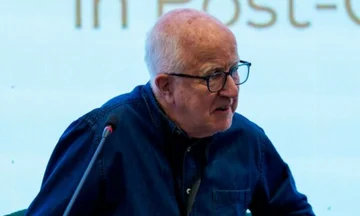
Former KFOR Commander: West tolerated during Serbian war rhetoric
Periskopi(3 years ago)
(3 years ago)Too long has war rhetoric been tolerated from Belgrade, but the Kosovo government should be careful with issues like license plates. Enhance between peoples is required, says former KFOR Commander Erhard Bühler. Deutsche Welle: Mr. General Bühler, how do you see the last situation in northern Kosovo? How dangerous is this situation? Erhard Bühler: I believe [...]
Deutsche Welle: Mr. General Bühler, how do you see the last situation in northern Kosovo? How dangerous is this situation?
Erhard Bühler: I believe the measures Serbia has now announced, the willingness to remove the barricades, are appropriate measures. I believe the situation has been dangerous so far, because there's always a risk of escalation in such a situation. I find it unbearable that in modern Europe the Serbian leadership has ordered the military to go to the border, where a potential threat has been created. It is unbearable for Belgrade's leadership to express itself to this war rhetoric, not only today, but also past months. On the other hand, I don't think it's wise even for the Kosovo government to insist on such details as license plates. You know how this was expected in Europe. This is such a trivial point, when it is known that Europe's attention is currently focused on the Western Balkans. There is much sympathy for the integration of the Western Balkans into Europe, the first steps are there, at last visa liberalisation for Kosovo is coming, so said at least, while now we quarrel about the plates. My God, what is this? That's impossible.
DW: Recent tensions have essentially shown how fragile the situation is in the north of the country. You yourself have been in the Balkans for a long time, you have also been commander of KFOR troops. Is KFOR able to respond to all these challenges?
Bühler: I think so, you can answer. Kosovo is actually in a good position, because NATO troops are stationed there. I think there's no need to worry, that this conflict will really escalate. KFOR is able to carry out its duties and will carry out its duties, even though today it is smaller than it was when I was commander. However, there are necessary plans to enable KFOR to carry out its duties at all times. We shouldn't worry about that. This is more about the image of the Western Balkans. I am more concerned about the question: Is the rule of law worth applying when it comes to license plates if the escalation of the situation is threatened? That worries me.
DW: How, then, should Serbian President Aleksandar Vuciq's statement -- which says Serbs in Kosovo will be protected with military and police measures if endangered. Even you have seen that President Vuciq has ordered the establishment of the situation and has sent troops close to the border with Kosovo?
Bühler: Yes, I have and I just said that I condemn the fact that in Kosovo measures are being taken that are definitely aimed at establishing the rule of law, when on the other hand we have military threats. This is not a Europe as I imagine it. So there is no way a government intended to belong to Europe. On the other hand, law - rule should not be applied by all means when it comes to license plates. The fact should be taken into account that a situation like this could unwittingly escalate at any time.
DW: What should the international community do to resolve the issue because neither can it continue forever? Kosovo Serbs have warned that they will block roads permanently in the north for Kosovo institutions if their conditions are not met?
Bühler: Yes, I think the international community has endured too much during the war rhetoric from Serbia. But these situations are also causing Pristina's incompatibility. Much more should we focus on reconciliation among people. I think that's what people expect. That's how I understand citizens in Kosovo, but those in Serbia. Both governments are partly guilty of this escalation, which, unfortunately, has also been supported by several supportive Kosovo states. I've already said that the rule of law cannot be applied despite the price to be paid. It should always be seen what the price of a matter is, and general developments in Europe should be seen. Kosovo is in good standing. Kosovo is independent. Almost no one questions that, at least not by governments responsible, nor by large supporting states. Kosovo has a security power stationed there, has KFOR. There are also relevant protective plans in the drawer. So nobody should worry about it. But we need to worry about whether someone will apply some things very quickly, though they have already agreed. The problem of the license plates is not an ancient problem, but it is not an issue that should play a dominant role in the overall situation in which the Western Balkans are present.
DW: Mr. Bühler, have recently heard direct threats from the Serbian side, but the Kosovo government has warned KFOR, that if they do not remove the barricades, they will remove Kosovo institutions. How do you see these threats on the one hand by mobilizing troops, and on the other, with the violent removal of the barricades?
Bühler: Both sides must be disarmed blindly because the threats of both sides are wrong. I would rely on KFOR protection force there. KFOR has the right tools. But, of course, parties should be so smart that the situation does not escalate unnecessarily, and there is an unwanted use of weapons. Both sides should be responsible. We have allowed too much during the Serbian government's war rhetoric. But on the other hand, some Western states have also supported issues like that of license plates, despite possible price and side effects. Governments should focus on major problems rather than on these relatively small problems. Both governments, both in Pristina and Belgrade, have other major challenges within the country. If we look at the situation in Kosovo, it should deal much more with issues like education, hungery health. Here should be the focus of commitment.
DW: Yes, Mr. General, but without the definition of reports between Kosovo and Serbia, there will be no lasting peace. What would you recommend, how can the final solution be reached? I'm asking, because even the international community has often been unclear as to the demands and vision for the final solution.
Bühler: I don't want to judge this second case at all. As for the first part, I think we've taken too long with the details of the side, the technical details of cooperation. They are certainly important, but even more important is reconciliation between Serbia and Kosovo. And for this reconciliation there are two parties. In particular, the major responsibility is on the side of the Serbian side, where politicians in power have had responsibilities in Milosevic's time. But politicians in Kosovo should also work towards calming the situation and reconciliation among peoples. And that should be the goal of European politicians. When that is understood, then technical details are easier to reach. So we need reconciliation among people in the Western Balkans. And then, of course, agreements on technical details must be reached and implemented, no doubt.
DW: However, reconciliation and technical details cannot be achieved without a common solution for relations between Kosovo and Serbia?
Bühler: That's right, of course. But relations between Kosovo and Serbia can also be addressed in the spirit of the plan prepared by France and Germany, which is based on the situation in Germany in the 1970s and 1980s. This is the right way. This is actually part of the recently created overall context, where the Western Balkans are getting much more attention than they used to. But it should not be excessive now with relatively small issues about what license plates a car will have, which then causes a major problem, such as placing the Serbian Army in the vicinity of the border, and then the Kosovar side threatens to implement things with violence. There's no reason for these things in Europe. So I think it should always be considered what the consequences of actions at the local level of global Europe can be, because you depend on its support.