9 minutes ago
Former KFOR Commander: Kosovo should implement rule of law at all costs when it comes to plates
Periskopi(3 years ago)
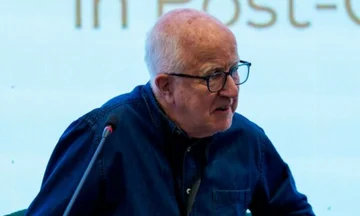
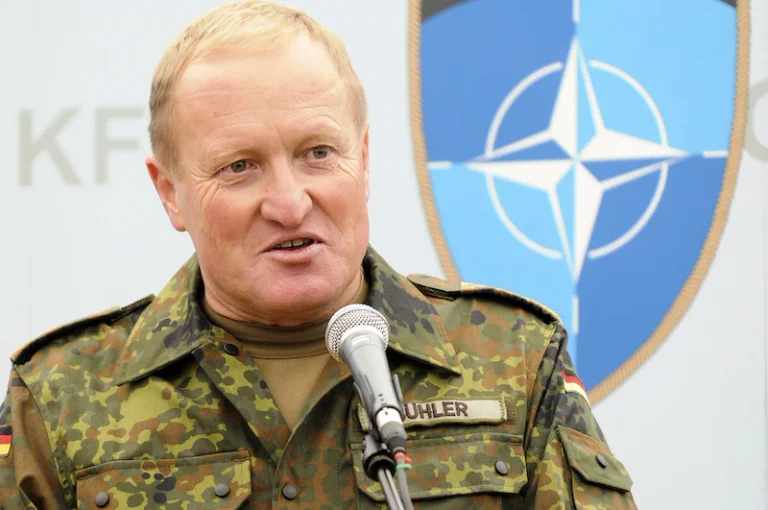
(3 years ago)“Both sides must be disarmed blindly. Threats on the one hand are as dangerous as threats on the other side of”, former KFOR Commander German General Erhard Buhler said in an interview for DW in the Serbian-Croat language. Among other things, former KFOR commander says that before Kosovo and Serbia deal with details [...]
Among other things, the former KFOR commander says that before Kosovo and Serbia deal with technical details, they should deal with reconciliation between themselves.
Similarly, Buhler says the responsibility for this is both sides, but mostly the Serb because in the neighbouring state government, he says, “also have responsibilities for politicians who have been active in Milosevic's time”.
“... I think we've been dealing with secondary details, details of technical co-operation. They are also important, but even more important is the reconciliation of Serbia and Kosovo. That's why both sides -- and above all, the Serbian side -- are also responsible for the politicians who were active in Milosevic's time. This is also true of politicians in Kosovo, who should not now work for escalation, but for despasses and reconciliation. If this goal is accepted by both sides, and that is what the European community is trying for, then would naturally follow technical details”, Buhler stressed in this interview.
Below, full interview:
DW: Mr. Buhler, how do you assess the current situation in northern Kosovo? How serious is that?
Erhard Buhler: I believe that the measures Serbia has now announced, that it will plan to remove the barricades, are appropriate. And the situation was dangerous, because there is always the risk of escalation. It is unacceptable that the Serbian leadership in Europe order the military to come to the border and create a potential threat. I consider it unacceptable that leadership in Belgrade, not only today, but also last months, constantly use war rhetoric. On the other hand, I think it is neither wise for the Kosovo government to insist on those details. Tags? You know how this is seen in Europe? This is very insignificant, if taken into account how much European attention is currently focused on the Western Balkans.
DW: You've been dealing with the Balkans for a long time, you've been commander of KFOR. Is KFOR able to meet all these challenges, or is it really possible for a conflict to occur?
Erhard Buhler: I think it can. You know, Kosovo is actually in a good position because NATO forces are stationed there. I don't think anyone should fear that this conflict will actually escalate to a large extent. KFOR is able to carry out its tasks and will do so, though today it is smaller in size than in my time. There are necessary plans that allow KFOR to carry out its duties at any time, I don't care about it. This, you know, has more to do with the image of the Western Balkans. If the legal state is worth it when it comes to license plates and the risk of escalation is accepted.
DW: How do you assess Serbia's president's statement, Vuciq, that Serbs in Kosovo should be protected with both military and police measures? You saw that Serb forces were more or less mobilised on the border with Kosovo.
Erhard Buhler: Yeah, I saw it. And as I have already said, I condemn the fact that measures aimed at rule of law face military threats. This is not Europe that I imagine. This is not how a government intended to belong to Europe. On the other hand, I have to say that the Kosovo side should not at all costs implement rule of law when it comes to license plates. It should be considered what effect this has on all of Europe. And it should be seen that a situation like this can accidentally escalate at any moment.
DW: There have been threats not only from the Serb side, but also from the Kosovo government, which has essentially said that if KFOR were unable, it would remove the barricades itself. How do you evaluate threats on both sides? How dangerous is it for the security and peace in that area?
Erhard Buhler: Both sides must be disarmed blindly. Thus, threats on the one hand are as dangerous as threats on the other. I would rely on KFOR protection forces there. They have the means to do this and are acting smart enough to keep all of this from escalating so that there is no unwanted use of firearms. But once again, both sides must take responsibility.
For a long time we have allowed such combat rhetoric to come from Serbia. But we, on the West side, have supported efforts to implement certain things related to license plates and documents, despite side effects. I'll remind you of the August discussion. Both governments had much more to do than solve these relatively small problems. Both have challenges, especially within the country. As for Kosovo, I can only mention education or health. And I can sort out a lot of other things. This should be the focus, not the insistence and implementation at all costs.
DW: However, without resolving political relations between Kosovo and Serbia, there will certainly be no peaceful and sustainable solution. What would you recommend in this regard? What political solution should there be? The international community is very unclear when it comes to political solutions and the security situation in that area.
Erhard Buhler: Yeah, I won't appreciate it at all. And as for the first one, I think we've been dealing with secondary details, details of technical co-operation. They are also important, but even more important is the reconciliation of Serbia and Kosovo. That's why both sides -- and above all, the Serbian side -- are also responsible for the politicians who were active in Milosevic's time. This is also true of politicians in Kosovo, who should not now work for escalation, but for despasses and reconciliation. If this goal is accepted by both sides, and that is what the European community is trying for, then the technical details will naturally follow.
DW: But, of course, reconciliation and technical details are not possible without a common solution for relations between Kosovo and Serbia.
Erhard Buhler: Yeah, sure. But relations between Kosovo and Serbia can be resolved in the spirit of the document proposed by France and Germany, which is based on the situation in which Germany was located in the years seventy and eighty. And then you're on the right track. It is actually part of the whole context, to be given much more attention to the Western Balkans than was the case before.
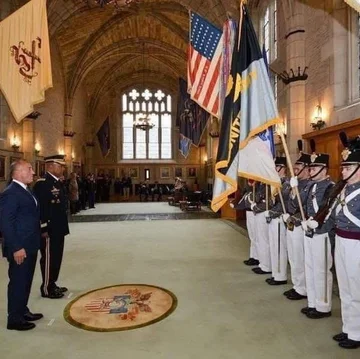
Erhard Buhler (66) is a retired German army general. In Kosovo it was initially engaged between 2004 and 2006 at the helm of the German military contingent, while from September 2010 to September 2011 it was KFOR commander. In that period, in July and August 2011, there were riots and roadblocks, but General Buhler refrained from using the force and the solution was reached by negotiations. /Klankosova. tv