a few seconds ago
Germany: Is Bundeswehri functional?
Periskopi(3 years ago)
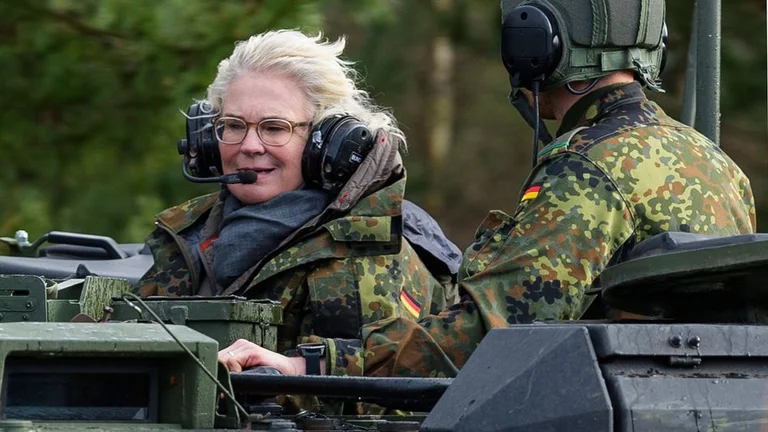
(3 years ago)After Russia's attack on Ukraine, the German government wanted to modernise Bundeswehr by 100 billion euros. The need for this becomes clearer and clearer. The German Army faced another scandal Monday, following news release over the weekend that during a training with its best tanks Puma, [...]
The German Army faced another scandal Monday, following news release over the weekend that during a training with its best tanks, Puma, no one single resulted in the post.
The conservative opposition soon attacked the government, accusing it of mismanaging Bundeswehr by Chancellor Olaf Scholz, especially under the control of Defence Minister Christine Lambrecht.
“It's a nightmare,” said deputy head of the MP group of demographics (CDU), Johann Wadelephul for the first German television programme, ARD. “Puma is supposed to be the main German Army weapons system. And if Puma is not operational, then the army is not operational. ” “Kritika from parliament is fully justified,” said Lambrecht in the statement issued Monday. Our “ ”
Lambrecht said she had ordered relevant army departments and Krauss producers -Maffei Wegman and Rheinmetall to deliver an analysis of what went wrong by the end of next week. The oldest Marder-type tanks will now be used in NATO exercises, she said.
Reports of lack of ammunition
Puma's total failure is by no means the only alarming failure in the German military. Recently it was reported to various media that Bundeswehr had ammunition only for two days of intense fighting. The figure appears to have emerged from unidentified sources from defence circles. If it is true (which cannot be confirmed since it is a state secret), Germany's ammunition reserves are much below NATO standards, which requires that each member country have a 30-day ammunition reserve. According to defence experts, Germany would have to invest 20 billion to 30 billion euros just to compensate for this failure.
But the German army also has straits in other areas. The state of Bundeswehr equipment has long been a disturbing topic: tanks and helicopters stories that need repair, weapons that do not shoot properly, and soldiers that should be trained in cold without thermal underwear have been filling the media for years.
Following the Russian attack in Ukraine, Chancellor Olaf Scholz announced a turning <x0-256x1 points that were welcomed from many inside and abroad as a turning point in the country's foreign policy and military strategy.
To prove how serious it was, Scholz announced an increase in the annual defence budget, making it the largest in all of Europe and a special 100 billion-euro fund for modernisation of the military.
Industry and politics blame each other
About ten months later, the question arises where the hail went. The ammunition dispute already sparked an unpleasant argument between the government and the German arms industry who should have taken the initiative: Is it up to the industry to increase capacity first, or does the government have to make orders faster?
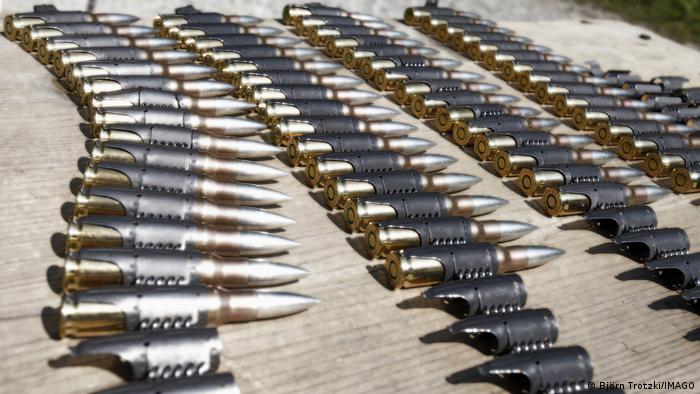 Apparently, Bundeswehr's ammunition is only enough for two days (photo shows ammunition for MG3 offensive weapons)
What I expect now from the arms industry is the construction of capacities,” said Lars Klingbeil, the Federal head of the SPD, for the ARD. “But they can't sit back and wait until they get the order from the state. This is not an attitude we can successfully fill these gaps with.” And he added: “if the German arms industry cannot manage this, then we will have to see what we can buy abroad, for example from other NATO countries.”
Klingbeil has “very wrong”, this was Hans Christop Attzpodeen's immediate reaction, Director General of the Federal Association of German Security and Defence Industry (BDSV). Attzpodeen told German press agency dpa, that German large arms companies had already doubled their capacities in weeks after the war began in Ukraine.
“It's ridiculous that the big noise being made between the defence industry and the government,” says Rafael Loss, defence analyst at the European Council for Foreign Relations (ECFR), in an interview for DW. It recalls regulations preventing defence companies from producing weapons actively or asking banks for loans without a government mandate.
He says Germany lacks the sense of urgency to respond to the geopolitical implications of fighting Russia's aggression in Ukraine. Other “countries, especially in Eastern Europe, have been much faster in establishing relevant government-industry working groups,” says Loss.
Questions About Germany's Faithfulness
Even now, NATO partners in northeastern Europe are concerned they can no longer rely on Germany as a military partner. “We are ready to give life. ” asked his European colleagues at a conference in Berlin in late October, Latvian Minister Artis Pabriks. Speaking directly to the Germans, he said: “Much will depend on your country's military power and, I'm sorry, but at the moment you have no military power. ”
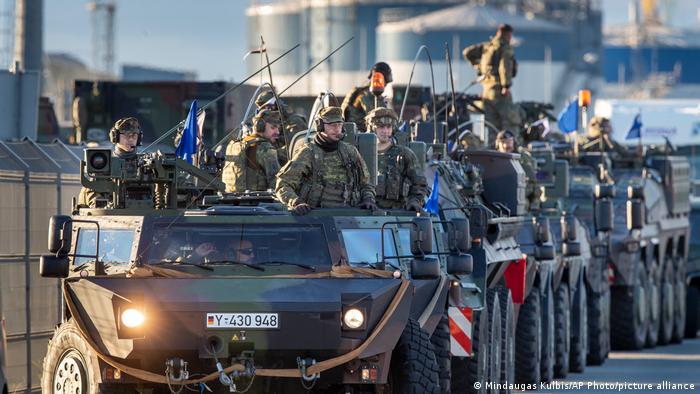 “Forward Forces” NATO based in Lithuania led by Germany, reinforced
“To be fair to Scholz, I think his speech for “the age-old variable” showed that he was aware of this important challenge,” says Loss. “But it seems that the Ministry of Defence and other institutions are unable to keep all these pumpkins under their armpits. ”
The supplies have begun.
The Schelz cabinet, however, has made important orders. Germany has signed an agreement to buy 35 US-35 combat aircraft to replace its old fleet with Tornado, at a cost of 200m euros per aircraft. But planes are not expected to be ready before 2017.
Procuring military supplies is always long, and other Western European countries face similar problems in rebuilding their structures in peacetime. From socks to aircraft, almost all the military needs must be ordered once and then produced. “Some systems you cannot go get from shop shelves,” said Defence Minister Christine Lambrecht in the latest budget debate in Bundestag.
 They're supposed to bring modernisation: American F-35 fighter planes
“to ensure a sustainable supply of ammunition for weapons delivered to Ukraine and at the same time to rebuild Bundeswehr to the required extent,” says Loss, “we need about 15 times more ammunition. ”
But there are many long - term problems. In recent decades, the German Armed Forces have sold much of the storage bunkers they had since the Cold War. That means that even if the military had 30 days of NATO-appointed ammunition, it would have difficulty finding a place to preserve them.
Christmas socks, Easter Pooms?
Defence expert Loss calls “empty words” criticisms of the Christian-democratic opposition. The “Things were no different in the last 16 years when the CDU was in power”, he says. “It's interesting to see SPD and CDU blaming each other for the sad state of Bundeswehr, but I think they both hold the same responsibility”.
Bundeswehr's busy Ewa Högl recently spoke in an interview for the German weekly “Die Zeit” for a combination of logistics inefficiency, difficulties caused by pandemic and bureaucratic inertia: “Unfortunately, sometimes there is indifference and disinterest among officials responsible for Bundeswehr: We don't have any, be patient, it's not that important, we'll send you back later, these are the excuses that soldiers send all the time for such things.
Some bureaucratic barriers are now being removed: It will change the way to deliver smaller orders, in the future there will be no need for orders to be delivered after a tenderation process across Europe, and commanders will be allowed to spend up to 5,000 euros without having to pass an official procurement procedure.
The German government has also promised that basic equipment should be delivered by the end of the year. With little luck, German soldiers can get their new socks before Christmas. Santa Claus won't be able to bring in functional Puma this year, but if things go well, that's what Easter Bunny can accomplish in 2023.