4 minutes ago
How corrupt is the EU really? Last scandal, just the iceberg's tip
Periskopi(3 years ago)
(3 years ago)Some of the corruption scandals within the EU for most Europeans are absolutely unimaginable. To the common man, Katargate was shocking: The idea that elected officials would bribe one of the world's most depressing regimes in exchange for underestimating serious human rights violations is [...]
For the common man, Katargate was shocking: The idea that elected officials would take bribes from one of the most depressing regimes in the world in exchange for the underestimation of serious human rights violations is absolutely unimaginable for a bloc that is governed by completely opposite values.
But for those of us who have worked for years to shed light on corruption in the EU, this recent scandal is not a shock, nor is it a surprise; It's just the tip of the iceberg.
It's a product of years of neglect by European officials when it comes to the lobbying practices of depression regimes. In the European Corporations Observatory (CEO) we work to exhibit these practices, but we also go further than simply seeking transparency: we have repeatedly denounced the serious incompatibility of the rules that govern the lobour towards European politicians and institutions.
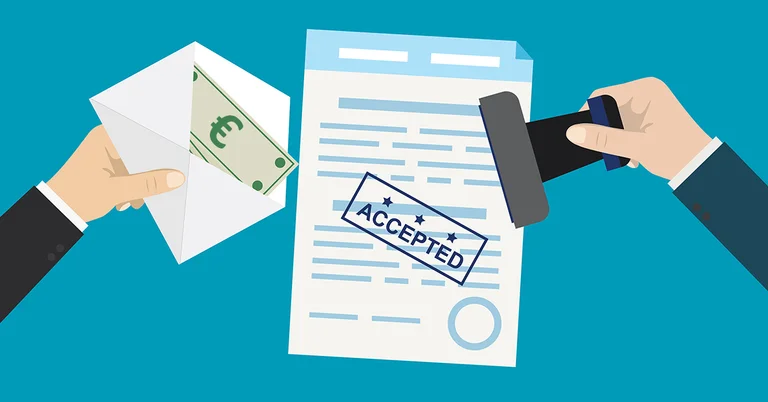
For decades, depressive regimes have directly approached politicians and officials in an effort to influence politics, including gifts and bribes.
And they have also contracted their diplomacy with PR companies, lobbyists and influential groups, as well as big businesses.
The lobbies' work often involves whitening the bloody reputation of dictators, promoting lucrative trade and investment agreements with totalitarian states, lobby against sanctions, or the very stain of dissidents.
Whether they lobbi in EU institutions or in its capitals, they usually work in the shadows without real fear of sanctions, as the EU Transparency Register did not include legal obligations.
Compare this to the U.S. where the U.S. Foreign Agents Record Act (FARA) requires that all lobbyists working for every foreign government register, publish contracts and enforce legal sanctions, and that's exactly where the real scale of the EU may begin to be understood.
In 2015 we published a report on European PR firms trying to whitewash the image of brutal regimes. It includes 18 cases of research by PR firms and consultants working in Europe for suspicious regimes accused of war crimes and human rights violations.
In particular, the report shows that in 2014, Qatar passed Russia as the biggest client of the Portland Communications lobby firm, which was involved by public broadcaster Channel 4 for the practice of the so-called “disasterizing” a technique for counterfeiting a spontaneous popular movement in this case, football fans appeared to be supporting Doha's offer for the World Cup.
Between 2012 and 2014, the Azerbaijann regime sent billions of dollars through open-sea companies to pay bribes, including those involved in the Italian-Azerbaijan mega-tubation, the so-called “South gas co-ordinator”.
European officials later took part in whiteening the image of another boycott regime by minimising election fraud and serious human rights violations. Sounds familiar?
And then comes the lobby for the Kremlin, his rich friends and Russian companies like Gazprom, which has been going on in Brussels for years. When President Vladimir Putin annexed Crime in 2014, 20% of European gas imports came from Russia. This figure rose to 40, % early in 2022, thanks to Western fossil fuels companies. Ukraine's invasion exposed the continent's dependence on Russian oil and gas, whose import directly finances Putin's combat efforts.
Still under the direct influence of fossil fuel companies, the EU now wants to replace Russian fossil fuels by doubling gas imports from other depressed regimes like Qatar and Azerbaijan.
The import of liquid natural gas (LNG) from Qatar is mentioned twice in the REPoer plan The European Commission's EU to get rid of Russian gas, a plan run by the same fossil fuels companies that continue to keep us dependent on Repressive regimes.
German Power Company RWE recently signed an agreement to supply 2 million tonnes of LNG annually from Qatar by 2026, with support from the German government.
At Europe's Europe Observatory of Corporations (CEO), we are urging EU institutions to implement long-delayed reforms: a mandatory registration of meetings between all Eurodeputs and lobbyists; a “fire-wept” for lobes in Repressive regimes; a reform of the current lobby registry to make it legally binding.
Moreover, laws regulating the actual exclusion of certain lobster categories from bad regimes must be strengthened in order to protect the European decision-making process from such intervention.
There must be an organ within the institutions given the competencies needed to monitor and actively investigate the violations of these strict rules.
And there must be a sharp blow to the policy of rotating doors (the rotation of staff between lawmakers' offices and positions in industries directly affected by legislation adopted by the same lawmakers) and recently, a blow to the financing of political parties by extremist and depressive governments.
In conclusion, we have to publicise ownership of companies and assets so that we can track dirty money in the EU and worldwide.
European politicians who have just scored autogogues with this scandal would do well to invest in right and ethical policies. /Euobserver