4 minutes ago
Abraham: Currently missing root for Serbian Association in Kosovo
Periskopi(3 years ago)
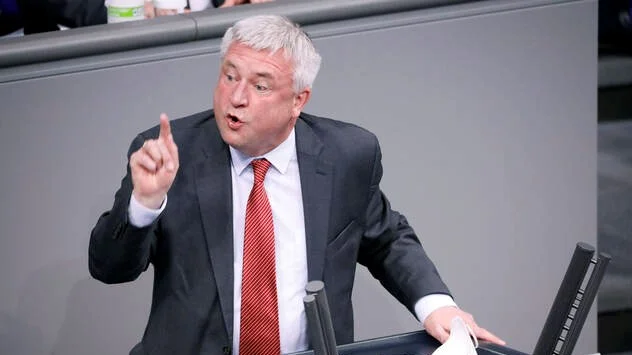
(3 years ago)In an interview with the German MP, Knut Abraham, conducts analysis of current developments in Kosovo and Germany's balance of politics towards the Western Balkans. Deutsche Welle: Mr. Abraham, we want to briefly analyze German policy in the Western Balkans in 2022, but we cannot overlook some recent developments. So let's start [...]
In an interview with the German MP, Knut Abraham, conducts analysis of current developments in Kosovo and Germany's balance of politics towards the Western Balkans.
Deutsche Welle: Mr. Abraham, we want to briefly analyze German policy in the Western Balkans in 2022, but we cannot overlook some recent developments. So let's start with the actual situation: Tensions in northern Kosovo have increased in recent days. What do you think of the situation?
Knut Abraham: I am very concerned about developments in northern Kosovo, because the situation here is getting worse. And this is absolutely harmful for Serbia and Kosovo's common aspirations towards Europe.
Deutsche Welle: Do you have any idea how to prevent further escalation?
Knut Abraham: It is necessary to talk to both sides. Above all, I see that the Serb side must understand that it cannot have a double approach. It is not possible to normally develop membership negotiations with the European Union and at the same time play fire in northern Kosovo.
Deutsche Welle: Has Germany recently done enough to prevent one-progress?
Knut Abraham: I can already see that the federal government is active on the diplomatic level. But of course, when we see how bad the situation is, it's more likely. I think it would be good to have an intensive diplomacy with visits from Berlin to the region very soon so that we can do ours, along with what Brussels must do to calm the situation.
Deutsche Welle: What can the Kosovo government do to escalate the situation?
Knut Abraham: Of course, I fully understand that the Kosovo government, as the government of a sovereign state, wants to implement the rules that apply to all people on its territory. However, the Kosovo government should think about each step, whether it helps the goal or not. So I have understanding that she wants to implement the decision on license plates, but she needs to consider whether it is so wise to implement the sentences. Our advice is to think wisely about the second and third consequences of the arrangements taken. Agitators and extremists find it easy when there is an issue that even ordinary people are concerned about, then even ordinary people are willing to welcome things they usually do not welcome.
Deutsche Welle: Germany is trying to lower the sides in dialogue on normalising relations between Serbia and Kosovo. How realistic is this starting with the current situation?
Knut Abraham: Looking at the 2013 Brussels accords, I remember that there were then hopes of normalising relations, talking about border management and regional institutions, etc. Unfortunately today, there is very little left of that spirit. Still, the talks have their value, the parties should sit at the table even if they shout at each other. Thus, dialogue should never be declared a failure. But it must be admitted that there is no movement at present. That is why both sides must clearly be told to return to the talks. Without a visual fashion, without an agreement for coexistence, it will be difficult for both countries to come to Europe.
Deutsche Welle: The so-called French-German plan also speaks of finding a solution for the Serb minority in Kosovo. What is your assessment of the majority Serbian municipalities?
Knut Abraham: I believe this is a solution that can happen in the long-term plan. Such a measure requires absolute trust in the loyalty of citizens of another nationality. And if such loyalty does not exist, as it is now seen, given negative examples in northern Kosovo, then there is no bottom for such an association of the Serb community. In long term, I think this is an idea that a strong and sovereign state can approach. But it requires proper foundation and a plan. And such a step cannot be taken under compulsion when faith is apparently lacking.
Deutsche Welle: On Friday, the Kosovo Special Court in The Hague sentenced a former KLA fighter to 26 years in prison “on behalf of the people of Kosovo”. Kosovo opinion did not welcome the act. Does that question the legitimacy of the special court?
Knut Abraham: It is a harsh act that certainly aroused the memory of terrible events that took place against Kosovo Albanians at the time, but also the suffering of many Serbs. I understand that in Kosovo these things are being discussed and that emotions are high. I would just advise, and that's true for me personally, so that the Special Court's decision will be accepted and, of course, observed how the court will work in other cases.
Deutsche Welle: If we take a look at the federal government's policy in the Balkans in 2022. What's your balance?
Knut Abraham: I think that if we take the entire Western Balkans, including federal government and Germany as a whole, then it's above all because of Merkel's efforts in previous years that Bosnia and Herzegovina now gained EU membership candidate status. I am also happy, though half happy, that now green light has been given to abolish visas for Kosovo. This was a play. And here Germany has always been positioned very clearly. Now at least we have light at the end of the tunnel, and that's a positive thing. So the balance is double. On the one hand, I really see Balkan moves towards Europe. Kosovo's application for membership, in addition to candidate status for Bosnia and Herzegovina, enters. On the other hand, and that's what we've talked about at first, I see with great concern how the situation in northern Kosovo is getting worse.
Deutsche Welle: Kosovo this year also extended membership candidacy to the Council of Europe. You personally have strongly supported this candidacy. How is the federal government supporting Kosovo's application to be successful?
Knut Abraham: This is really a very important issue for me personally and I am pleased that the Federal Government and Foreign Minister share the assessment. Germany is truly a strong supporter of Kosovo's membership in the Council of Europe. We see this beyond party lines as an important step. And the Council of Europe is exactly the right organ in which Kosovo should be joined at this moment. The next steps are that the Kosovo government, and I am in close contact with the government, should now lobbi to the Council of Europe states. It should also speak to those states that have not yet recognised Kosovo. Because even these countries can very well support Kosovo's membership in the Council of Europe. And I'm very optimistic, seeing all the signals. However, the decision-making process in partner countries must be constantly controlled -- that is, monitored. Germany is very clearly positioned and is promoting Kosovo.
Deutsche Welle: Another topic that was really big this year and that the federal government pushed forward was the revival of the Berlin Process. What's your balance?
Knut Abraham: This successful initiative of former canceerara Angela Merkel has continued. On November 3rd, there was a continuation of the Berlin Process in Berlin. And there have been at least three new agreements, especially for the ID trip, then mutual recognition of university diplomas and professional qualifications. And as for Kosovo, the good news was certainly visa-free travel between Kosovo and Bosnia and Herzegovina. This was important for mobility in the region and was just good news in general. In this respect, it can be said that the Berlin Process still has potential. And now the expectation is that the six countries of the Western Balkans naturally ratify these agreements that they themselves have agreed to. And if that doesn't happen, then there are just doubts about their orientation to Europe. To put it bluntly, responsible politicians in the region should not be surprised if Ukraine and Moldova become members of the European Union before them.
Deutsche Welle: Is there any danger that in such a case the Western Balkans will remain out like Turkey?
Knut Abraham: Membership cannot be done with irresponsible policies of governments. Because you know that unanimity is still required in many areas of the European Union. And the European Union certainly has no intention of letting itself be affected, or blackmailed by local disputes.
Deutsche Welle: A problem country in the region is Serbia: In addition to the Kosovo conflict, Serbia still refuses to impose sanctions on Russia. What more can the federal government do to turn Serbia in the right direction?
Knut Abraham: The efforts that have been made have no doubt been successful enough. After all, it is not right to want to join the European Union and flirt with Moscow at the same time. This is impossible, because the European Union has taken a clear stand for sanctions and expects it from those who want to become Union members.
Deutsche Welle: There are voices calling for sanctions against Serbia, others talk about freezing EU funds, what would be the most effective means of pressure?
Knut Abraham: I'm not for sanctions. But what needs to be considered is freezing or stopping membership negotiations. If the base is not fair, then negotiations have no meaning.
Deutsche Welle: Membership negotiations are almost frozen. However, money is still flowing towards Serbia.
Knut Abraham: That means it. I say it bitterly because I want an active, European Serbia that has the will to co-exist peacefully with its neighbour, Kosovo. And I wish a Serbia that actively wants to join the European Union. But her path so far feels halfhearted to me. And the Commission and also member states must say: Dear friends in Belgrade, we'd like to have you at the club, but you should have the same goals as we do.
Failedche Welle: Why is it difficult for the federal government to increase pressure on Serbia? Serbia is a country with a huge amount of raw materials, which are very much sought in some industries. Does this have to do with economic interests?
Knut Abraham: Serbia is very clear. Serbia's importance stems from geographic positions, but political positions as well. Serbia is also an important country for migration issues, where there have been additional difficulties. But contact with Belgrade is important because, of course, it cannot be imagined a Western Balkans without Serbia.
Deutsche Welle: In addition, it is repeatedly heard that Germany is so reluctant for Serbia, because it kills the conscience that Serbia was bombed in 1999.
Knut Abraham: That decision is still there as an extremely difficult question. This part of your observation is correct. But I disagree with the second part that we are influenced by this in our decisions and actions. But after the events of World War II, this was a very difficult decision for Germany. Of course.
Deutsche Welle: And that's still in the mind of the decisionmakers in Germany?
Knut Abraham: It's the mind. But as I said, that doesn't prevent us from talking very clearly to Belgrade.