16 minutes ago
The situation in the north complicates visa work
Periskopi(4 years ago)
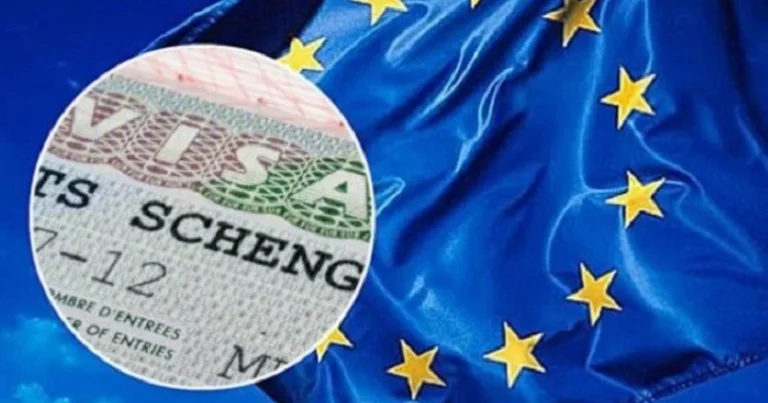
(4 years ago)December 8th, is the date when the Council of Europe's working groups will again discuss visa liberalisation for Kosovo. But it is not yet known whether this meeting will be a gathering that will bring Kosovars joy with visa removal, even though it has been said this could happen. Professor of Relations [...]
But it is not yet known whether this meeting will be a gathering that will bring Kosovars joy with visa removal, even though it has been said this could happen.
International Relations Professor Dritare Arifi, in an interview for Klan Kosovo.tv, says the situation in the north will complicate the Council of Europe's decision making.
“Yes, the public secret to visa liberalisation for Kosovo is political. Everyone knows from powerful states but nobody says it. The situation in the north will only complicate the visa vote on the Council of Europe. So they will expect what will happen, especially after November 21st, knowing that the Government of Kosovo has still made a potentially decision to postpone the decision or the issue of fines which will complicate the situation on the ground, which will reflect on working groups where the decision will be made about what will happen regarding visa liberalisation”, Arifi says.
Arifi stresses that if visas are not lifted, the EU could lose credibility even in the dialogue process between Kosovo and Serbia.
Whatever decision will be made in the Council of Europe's working groups about visas for Kosovo, could they leave December 1st 2023 or not, it is hard to predict the whole process because of it is related even to the political elements in Kosovo's case, and Kosovo cannot do much unless it is listening to the EU and is no longer in relation to the EU policies so compatible. It should be more determined in its report to the EU that if EU visas do not go away, it may lose credibility in terms of the question of dialogue. So there must be a balance if the government has the power to do this”, he says.
According to Arifit, December 8th could produce three visa-related results.
We have three options again. The first option is negative so the process can be delayed indefinitely. The second option is to give the green light for visa liberalisation, but after December 2023 after the introduction of the E system. TIAS, and third option is to provide visa liberalisation at the beginning of the year and for Kosovo to adopt the E system. TIAS by the end of”
According to International Relations Professor, it is difficult that system E TIAS goes into effect.
According to him, EU and Western Balkan countries are still in their initial stages.
From the technical point of view, we know that it is difficult for Kosovo to introduce this system, when it is known that almost all EU countries, but not even the Western Balkans, are in the initial stages working on this project a very strange condition when it is known that the visa liberalisation guide has been defined and cannot seek additional conditions when all are met by the guide. But, here surely France is wanting to show the EU countries that nothing moves if it does not want”, Professor Arifi told KlanKosovo.tv.
As far as our institutions are concerned, it is difficult and almost impossible to prevent any surprise. All they can do is lobbie in skeptical countries, but I'm sure they won't succeed either. So, if there is political will to be done because the criteria have been met, but if there is political will from some EU countries despite the lobbi, you cannot change the mind of these states is very difficult, especially from a weak and small country like the Republic of Kosovo”.
Meanwhile, political analyst Gazmir Raci estimates that dialogue between Kosovo and Serbia will be of great importance for visa liberalisation.
Raci says dialogue based on the proposed Franco-German agreement will also have an impact on skeptical countries.
Kosovo has entered a new phase of dialogue, which will be key to the visa liberalisation issue. Similarly, dialogue will have a direct impact on skeptical countries based on the proposed Franco-German agreement”, Raci says.
Raci said Serbia is vigorously interfering in the north and that it would have to be punished by the international community.
“Veriu must again be addressed in the dialogue because now even officially Serbia is interfering with that part even more strongly. The international community should punish Serbia on its path to EU membership”, according to Racci.